

Comparexpert
Comparison Between Company


BIK BOK Explained: Everything You Need to Know About This Fashion Brand
This blog post explores one of Scandinavia’s popular women’s fashion brands, focusing on its history, style identity, product categories, marketing strategies, and online growth. It explains how the brand connects with young audiences through trendy, affordable, and modern fashion while maintaining a strong Scandinavian influence. The article also highlights its position in the fast-fashion industry, sustainability efforts, and competition with global brands, making it a complete guide for understanding its rise and relevance in today’s fashion market.
Table of Contents
Introduction
Fashion is more than just clothing; it’s identity, expression, and confidence stitched into fabric. Among the many brands shaping modern youth fashion, Bik Bok stands out as a strong Scandinavian name that has built a loyal following across Europe. Known for its trendy, youthful, and affordable fashion, Bik Bok has become a go-to choice for women who want stylish outfits without overthinking their wardrobe choices.
Originating in Norway and now operating under the Varner Group, Bik Bok has grown from a small denim-focused concept into a full-scale fashion brand offering everything from casual wear to party-ready outfits. The brand reflects a blend of Scandinavian minimalism and bold street-style influence, making it relevant in today’s fast-changing fashion world.
Understanding Bik Bok is not just about knowing a clothing label—it’s about exploring how a brand connects with young women through identity, digital culture, and trend-driven design. Let’s dive deep into how Bik Bok works, what makes it unique, and why it continues to remain relevant in the global fashion scene.
What is Bik Bok?
Bik Bok is a women’s fashion brand that focuses on delivering trendy, affordable, and expressive clothing designed primarily for young women. It is part of the larger Norwegian retail group known as Varner, one of the biggest fashion conglomerates in Northern Europe.
The brand specializes in fast-changing seasonal collections that reflect current fashion trends. Whether it’s denim jeans, chic dresses, oversized hoodies, or party tops, Bik Bok ensures that its products align with what young consumers are wearing on social media and in urban street culture.
At its core, Bik Bok is not just a clothing store—it is a lifestyle brand. It promotes confidence, individuality, and modern femininity through accessible fashion. This positioning helps it compete in the highly saturated fast-fashion market where brands constantly fight for attention.
History of Bik Bok
Founding and Early Years
Bik Bok was originally established in the early 1970s in Norway. In its early days, the brand focused heavily on denim products, especially jeans for young women. This niche positioning helped it gain quick popularity among fashion-conscious teenagers and young adults.
During the 1970s and 1980s, Bik Bok expanded across Scandinavian countries. The brand built its reputation on trendy yet affordable clothing, making it a staple in many wardrobes. Its early success came from understanding a simple truth: young women wanted stylish clothes that didn’t cost a fortune.
As fashion trends evolved, Bik Bok also evolved. It moved from being a denim-focused brand to a complete fashion retailer offering full wardrobe solutions.
Acquisition by Varner Group
A major turning point in Bik Bok’s journey came when it was acquired by the Varner Group in 1991. Varner is a powerful retail group that owns several well-known brands across Scandinavia, including Dressmann, Cubus, Carlings, and Volt.
This acquisition gave Bik Bok access to better infrastructure, larger supply chains, and a stronger retail network. Under Varner’s management, Bik Bok expanded its store presence across Norway, Sweden, Finland, and other parts of Northern Europe.
The support of Varner Group transformed Bik Bok from a regional fashion label into a structured international fashion brand with long-term scalability.
BIK BOK Fashion Trends and Style Evolution
BIK BOK has always been a brand that evolves with fashion trends rather than sticking to a fixed style. Over the years, it has shifted from basic denim-focused collections to a more diverse and trend-driven wardrobe. Today, the brand embraces oversized fits, minimal Scandinavian aesthetics, bold streetwear influences, and seasonal color palettes that reflect global fashion movements.
What makes BIK BOK unique is its ability to quickly adapt. When a new trend appears on TikTok or Instagram, the brand often reflects it in its upcoming collections. This fast adaptation keeps the brand relevant among Gen Z and millennial shoppers who prefer fresh and updated styles. Instead of timeless luxury, BIK BOK focuses on “right now” fashion that fits everyday life.
Why BIK BOK Appeals to Young Women
One of the biggest reasons behind BIK BOK’s popularity is its deep understanding of young women’s fashion needs. The brand focuses on three key factors: affordability, trend relevance, and self-expression.
Young customers don’t just want clothes—they want outfits that reflect their personality and mood. BIK BOK delivers this by offering versatile pieces that can be styled in multiple ways. Whether it’s a casual day out, a party night, or a college look, the brand provides options for every occasion.
This emotional connection makes BIK BOK more than just a clothing label—it becomes part of personal identity and lifestyle.
Brand Identity
Target Audience
Bik Bok clearly defines its target audience: young women, typically between the ages of 16 and 30, who are fashion-aware, socially active, and digitally connected.
This audience values self-expression, affordability, and trend relevance. They are not just buying clothes—they are buying identity and confidence. Bik Bok designs its collections specifically to match this lifestyle.
The brand understands that its customers are influenced heavily by Instagram trends, TikTok fashion creators, and street style culture. As a result, it designs products that feel modern, relatable, and wearable in real-life situations.
Fashion Style & Positioning
Bik Bok’s fashion identity sits between minimal Scandinavian design and bold contemporary streetwear. The brand focuses on clean silhouettes but adds trendy details like bold prints, oversized fits, and seasonal colors.
Instead of high-end luxury or ultra-fast disposable fashion, Bik Bok positions itself in the “affordable trendy fashion” category. This makes it accessible while still maintaining a stylish edge.
Its collections often include party outfits, casual wear, and everyday essentials, allowing customers to build complete wardrobes from a single brand.
Product Categories
Women’s Clothing Range
The main strength of Bik Bok lies in its wide range of women’s apparel. The brand offers:
- Denim jeans and jackets
- Dresses for casual and party wear
- Tops, t-shirts, and blouses
- Knitwear and sweaters
- Outerwear like coats and jackets
Each product is designed with trend awareness in mind. The focus is not only on aesthetics but also on comfort and versatility.
Bik Bok frequently updates its collections, ensuring customers always have access to fresh styles aligned with current fashion seasons.
Accessories & Add-ons
In addition to clothing, Bik Bok also offers accessories that complete outfits. These include:
- Jewelry such as earrings and necklaces
- Bags and handbags
- Belts and scarves
- Hair accessories
These add-ons help customers create full looks without needing to shop elsewhere, strengthening Bik Bok’s position as a complete fashion destination.
Store Presence & Global Markets
Bik Bok operates primarily in Scandinavian countries, including Norway, Sweden, and Finland. Its physical stores are designed to reflect a modern, clean, and inviting shopping experience.
The brand has also expanded its digital presence, allowing customers to shop online across multiple regions. While its strongest market remains Northern Europe, its influence continues to grow through e-commerce and social media visibility.
Store layouts are typically designed with simplicity in mind, allowing customers to easily browse collections and visualize complete outfits.
Digital Presence & E-Commerce Growth
In today’s fashion world, digital presence is everything—and Bik Bok understands this well. The brand invests heavily in online platforms, especially its official website and social media channels.
Its e-commerce platform is designed to be user-friendly, allowing customers to browse collections, filter styles, and purchase items with ease. Frequent product updates ensure that online shoppers always see the latest trends.
Social media plays a key role in Bik Bok’s marketing strategy. Platforms like Instagram and TikTok are used to showcase styling inspiration, influencer collaborations, and seasonal campaigns.
Marketing Strategy
Social Media Influence
Bik Bok uses social media as its primary marketing engine. The brand shares outfit inspiration, styling tips, and campaign visuals that resonate with young audiences.
Instead of traditional advertising, Bik Bok focuses on lifestyle marketing. It doesn’t just show clothes—it shows how clothes fit into real life moments like parties, casual outings, or everyday city living.
Influencer Collaborations
Influencer marketing is another powerful strategy for Bik Bok. The brand collaborates with fashion influencers and content creators who already have strong connections with its target audience.
These collaborations help Bik Bok build trust and authenticity. When influencers wear Bik Bok outfits, it creates organic visibility and drives engagement among followers who relate to their style.
Sustainability Approach
Like many modern fashion brands, Bik Bok is gradually integrating sustainability into its operations. Through its parent company Varner, the brand is part of larger environmental initiatives focused on reducing waste, improving material sourcing, and increasing transparency.
Efforts include using more sustainable fabrics, reducing packaging waste, and improving supply chain responsibility. While fast fashion inherently presents challenges, Bik Bok is moving toward more conscious production methods.
Sustainability is now a key expectation among younger consumers, and Bik Bok’s long-term relevance depends on how effectively it balances trend-driven fashion with environmental responsibility.
Competitors in the Fashion Industry
Bik Bok operates in a highly competitive space. Its main competitors include both global fast-fashion brands and regional retailers.
Key competitors include:
- H&M
- Zara
- Pull & Bear
- Bershka
- Stradivarius
Each of these brands targets a similar demographic and offers trend-driven, affordable fashion. However, Bik Bok differentiates itself through its strong Scandinavian identity and focus on young women’s fashion specifically.
Pros and Cons of Bik Bok
Bik Bok has both strengths and limitations in the fashion market.
Pros
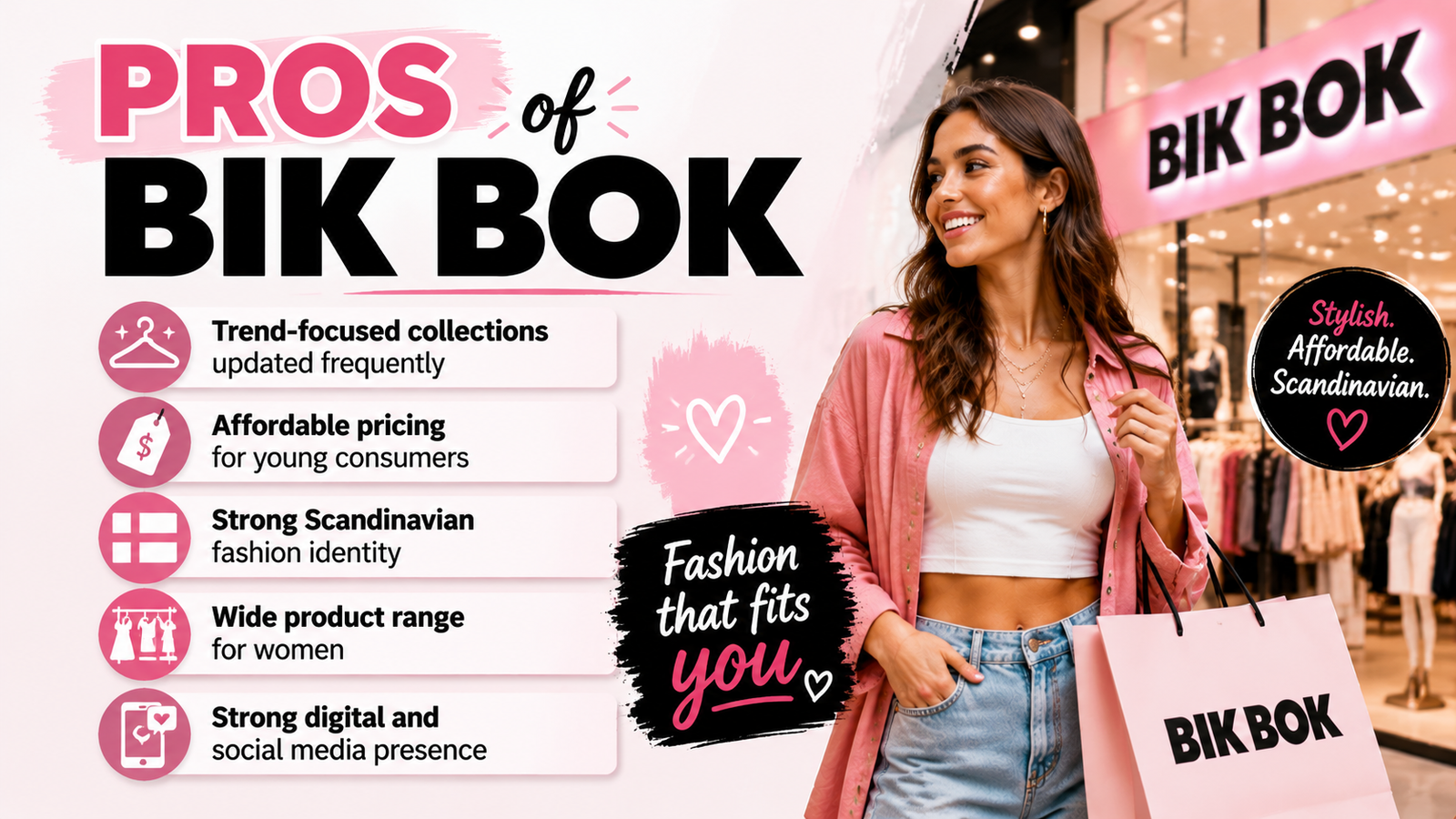
- Trend-focused collections updated frequently
- Affordable pricing for young consumers
- Strong Scandinavian fashion identity
- Wide product range for women
- Strong digital and social media presence
Cons
- Limited global presence outside Europe
- Fast-fashion model raises sustainability concerns
- High competition from global brands
- Dependence on trend cycles
Despite these challenges, Bik Bok continues to maintain a strong brand position in its core markets.
BIK BOK in the Fast Fashion Industry
BIK BOK operates in a highly competitive fast fashion market where speed and trend accuracy are everything. Competing with giants like Zara and H&M, the brand relies on quick production cycles and strong trend forecasting.
The fast fashion model allows BIK BOK to release new collections frequently, keeping customers engaged and excited. However, this also brings challenges like sustainability concerns and increasing demand for ethical production.
To stay competitive, the brand continues to explore more responsible sourcing and improved material choices while maintaining its fast-paced fashion identity.
Material Quality and Fabric Selection
BIK BOK places strong emphasis on offering comfortable and wearable fabrics that suit daily use. Most of its clothing is made using cotton blends, denim materials, polyester mixes, and soft knit fabrics. These materials are chosen not only for style but also for durability and comfort.
While it is a fast-fashion brand, BIK BOK tries to maintain a balance between affordability and quality. The goal is to ensure that customers get stylish outfits that last for a reasonable time without compromising on comfort. This balance is one of the reasons why the brand remains popular among young shoppers.
Also Read
Terravision IT Pricing, Services, and Complete Guide for Beginners
Is Surfshark DE Worth It? Complete VPN Guide for German Users
Monito Review 2026: Features, Benefits, and Everything You Need to Know
How Booking.com North America Simplifies Travel Planning
How Customer.io Helps Businesses Improve Customer Engagement
Seasonal Collections and Fashion Drops
One of the most exciting aspects of BIK BOK is its seasonal collection strategy. The brand frequently launches new collections based on spring, summer, autumn, and winter trends. Each season brings fresh colors, updated silhouettes, and new outfit combinations.
In addition to seasonal drops, BIK BOK also introduces limited-time collections inspired by festivals, parties, or trending fashion aesthetics. This creates a sense of urgency among customers, encouraging faster purchase decisions. The constant rotation of styles keeps the brand exciting and always relevant.
How BIK BOK Builds Brand Loyalty
BIK BOK builds customer loyalty by consistently delivering what its audience wants—trendy, affordable, and easy-to-style clothing. The brand understands that young customers value consistency in style and pricing, which helps build trust over time.
Another important factor is emotional branding. BIK BOK positions itself as more than just a fashion retailer; it presents itself as part of a lifestyle. Through campaigns, social media storytelling, and influencer partnerships, the brand creates a sense of belonging among its customers.
This emotional connection plays a big role in turning first-time buyers into repeat customers.
Future Outlook of Bik Bok
The future of Bik Bok depends heavily on its ability to adapt to changing fashion trends and sustainability expectations. As digital fashion commerce grows, Bik Bok is expected to expand its online presence further.
The brand will likely continue focusing on influencer marketing, fast product cycles, and trend-based collections. However, sustainability will play a bigger role in shaping its future identity.
If Bik Bok successfully balances affordability, style, and responsibility, it has the potential to grow beyond its current European stronghold.
Conclusion
Bik Bok is more than just a fashion brand—it is a reflection of modern youth culture in Scandinavia. From its origins as a denim-focused label to its current position as a full-scale fashion retailer, the brand has consistently evolved with its audience.
Its success lies in understanding young women, responding quickly to trends, and offering accessible fashion that feels personal and expressive. While competition and sustainability challenges remain, Bik Bok continues to be a strong player in the fast-fashion ecosystem.
Frequently Asked Questions
Bik Bok is known for trendy and affordable women’s fashion, especially clothing designed for young women in Scandinavian countries.
Bik Bok is owned by the Norwegian retail group Varner, which manages several fashion brands across Europe.
Bik Bok operates mainly in Norway, Sweden, and Finland, with both physical stores and online shopping options.
Yes, Bik Bok follows a fast-fashion model, offering frequent new collections based on current trends.
Its strong Scandinavian identity, youth-focused designs, and affordable pricing make Bik Bok stand out in the competitive fashion market.
Table of Contents
Related Post

A Beginner’s Guide to Tally for Accounting, Inventory, and Business Management
admin
October 12, 2026
Read More »

Expert Tips for Savvy Car Insurance Savings When Comparing Insurance Policies
admin
October 11, 2026
Read More »


How to Choose the Right Coverage With Pets Best Pet Insurance for Your Pet
admin
October 10, 2026
Read More »