

Comparexpert
Comparison Between Company


Turing Explained: Everything You Need to Know Before Using the Platform

Finding skilled technology professionals has become one of the biggest challenges for modern companies. Businesses today are not limited by geographical boundaries, and many organizations prefer hiring remote developers to build software products faster and more efficiently. This is where Turing comes into the picture. Turing is an AI-powered hiring platform that connects companies with experienced software developers from around the world.
The platform focuses on helping companies find highly skilled remote engineers without spending months on traditional recruitment processes. Instead of manually reviewing thousands of resumes, Turing uses artificial intelligence, automated tests, and data-driven matching systems to identify suitable candidates.
Table of Contents
What Is Turing?
Turing is a global remote hiring platform that uses artificial intelligence to help companies hire software developers and technology professionals. The platform was founded in 2018 with the goal of creating a global network of talented developers who can work remotely for companies worldwide.
Unlike traditional recruitment agencies, Turing uses technology to automate many parts of the hiring process. Companies can use the platform to search for developers based on programming skills, experience level, location, and project requirements.
The main idea behind Turing is simple: connect companies with qualified developers faster. A business that needs a React developer, Python engineer, machine learning specialist, or cloud expert can use Turing to find professionals who match their needs.
Turing mainly focuses on long-term remote employment rather than short freelance projects. This makes it different from many gig platforms where developers complete small tasks for different clients.
The platform is popular among startups, technology companies, and enterprises that want access to global talent without opening physical offices in different countries.
Overview of the Turing Platform
Turing works as a bridge between companies and developers. Companies provide information about their hiring requirements, and Turing uses its AI system to find suitable candidates from its global talent network.
The platform evaluates developers through multiple assessment stages. These assessments check technical skills, problem-solving ability, communication skills, and professional experience.
Once developers pass the evaluation process, they become part of the Turing talent pool. Companies can then review matched candidates and select developers according to their project requirements.
Some common developer roles available on Turing include:
- Software Engineers
- Frontend Developers
- Backend Developers
- Full-Stack Developers
- Data Scientists
- Machine Learning Engineers
- Cloud Engineers
- Mobile App Developers
The platform is designed for companies that need reliable technical experts and developers who want access to international remote work opportunities.
How Does Turing Work?
Turing uses artificial intelligence and automated evaluation methods to simplify the hiring process. Instead of depending only on resumes and interviews, the platform analyzes developer skills through different assessments.
The process usually begins when a company creates a hiring request. The company provides details about the required skills, project goals, experience level, and expected working arrangement.
After receiving this information, Turing’s AI system searches its developer network and identifies professionals who match the requirements.
Selected developers then go through technical assessments. These tests help verify their programming knowledge, coding ability, and problem-solving skills.
After successful evaluation, companies can interview matched candidates and select the best person for their project.
This approach reduces the time needed for recruitment and helps companies avoid hiring mistakes.
AI-Based Talent Matching Process
The biggest advantage of Turing is its AI-powered matching system. Traditional hiring often depends heavily on keywords in resumes, which may not always represent a person’s real abilities.
Turing uses data analysis to evaluate developer profiles and match them with suitable job requirements. The system considers factors such as:
- Technical skills
- Previous work experience
- Programming knowledge
- Project history
- Communication ability
- Availability
This process helps companies find developers who are more likely to succeed in a specific role.
For developers, the AI matching system increases their chances of finding jobs that fit their skills instead of applying randomly to hundreds of positions.
Key Features of Turing
Turing provides several features that make remote hiring easier for companies and developers. The platform combines recruitment technology, skill testing, and global talent management into one service.
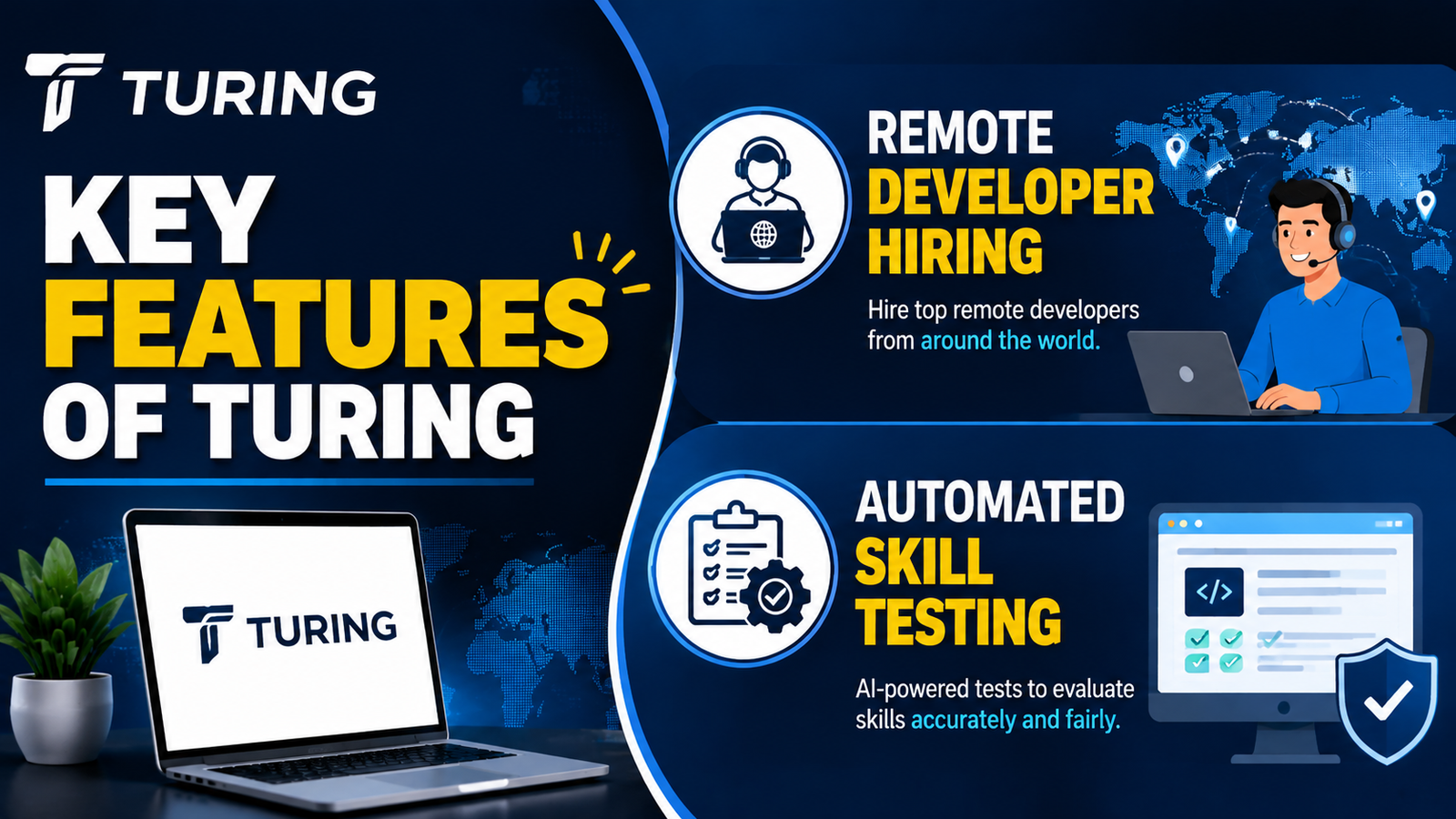
Remote Developer Hiring
One of Turing’s main features is access to a global network of remote developers. Companies can hire professionals from different countries without needing to manage international recruitment themselves.
Remote hiring allows businesses to access a larger talent pool. A company located in one country can work with developers from another country while maintaining effective communication through online tools.
This is especially useful for startups and growing businesses that need skilled developers but may not have enough resources for large recruitment teams.
Automated Skill Testing
Turing uses automated tests to evaluate developer capabilities. These tests help measure practical skills rather than only reviewing educational qualifications or resumes.
Developers may be tested on programming languages, frameworks, algorithms, and technical concepts related to their field.
This helps companies identify candidates who have real technical abilities and reduces the chances of hiring someone who only looks good on paper.
Why Is Turing Becoming Popular?
The demand for remote software developers has grown rapidly over the last few years. Companies are no longer limited to hiring talent from their local area. They want access to skilled developers from around the world, and Turing makes that possible. Its AI-powered matching system helps businesses connect with qualified professionals much faster than traditional recruitment methods.
Another reason for Turing’s popularity is its focus on quality. Developers go through technical assessments before being matched with companies. This helps employers feel more confident that they are hiring experienced professionals. Instead of spending weeks reviewing resumes and conducting multiple interviews, businesses can quickly meet candidates who already match their requirements.
Tips for Companies Before Hiring Through Turing
Before using Turing, companies should clearly define what they need from a developer. A detailed job description helps the AI matching system recommend more suitable candidates. It is also important to determine whether the role is full-time, part-time, or project-based before beginning the hiring process.
Businesses should also prepare technical interview questions that match their project requirements. Even though Turing screens candidates, conducting a final interview allows companies to evaluate communication skills, teamwork, and cultural fit. Setting clear expectations about work schedules, deadlines, and project goals can also improve collaboration after hiring.
Tips for Developers Joining Turing
Developers who want to succeed on Turing should keep their technical knowledge up to date. Learning modern programming languages, cloud technologies, and software development practices can improve the chances of passing technical assessments. Strong problem-solving skills are also important because coding tests often focus on real-world programming challenges.
Creating a professional profile with accurate work experience and project details is equally valuable. Developers should showcase their best projects, certifications, and achievements. Good communication skills also play a key role because many remote jobs require regular interaction with international teams.
How to Get Started with Turing
Getting started with Turing is a simple process for both companies and developers. Companies begin by creating an account and describing the role they want to fill. They can specify the required programming languages, experience level, project duration, and preferred working hours. After submitting these details, Turing’s AI system starts searching for developers who closely match the job requirements.
Developers also need to create a professional profile on the platform. During registration, they provide information about their technical skills, work experience, education, and completed projects. They may also complete coding tests and technical interviews to verify their abilities. Once approved, they become eligible for job opportunities that match their expertise. The better a developer’s profile and assessment results, the higher the chances of receiving interview invitations from companies.
What Makes Turing Different from Other Hiring Platforms?
There are many online hiring platforms available today, but Turing stands out because it focuses on long-term remote software development roles instead of short freelance projects. Unlike general job portals, Turing uses artificial intelligence to match developers with companies based on technical skills, work history, and project requirements.
Another important difference is the quality screening process. Developers are evaluated through coding assessments and technical interviews before becoming part of the talent network. This saves companies valuable time because they receive candidates who have already demonstrated their technical abilities. For organizations that need reliable engineering talent, this approach can make hiring much easier.
Challenges You May Face While Using Turing
Although Turing offers many benefits, users should also understand its challenges. Companies may find that highly specialized developers are in high demand, making competition stronger for certain roles. Businesses should prepare detailed job descriptions to improve matching accuracy and attract the right candidates.
Developers may experience a competitive selection process because the platform maintains high quality standards. Technical assessments require strong programming knowledge and practical problem-solving skills. Those who continue improving their technical expertise and communication abilities usually have better success on the platform.
Pros and Cons of Turing
Strengths of the Platform
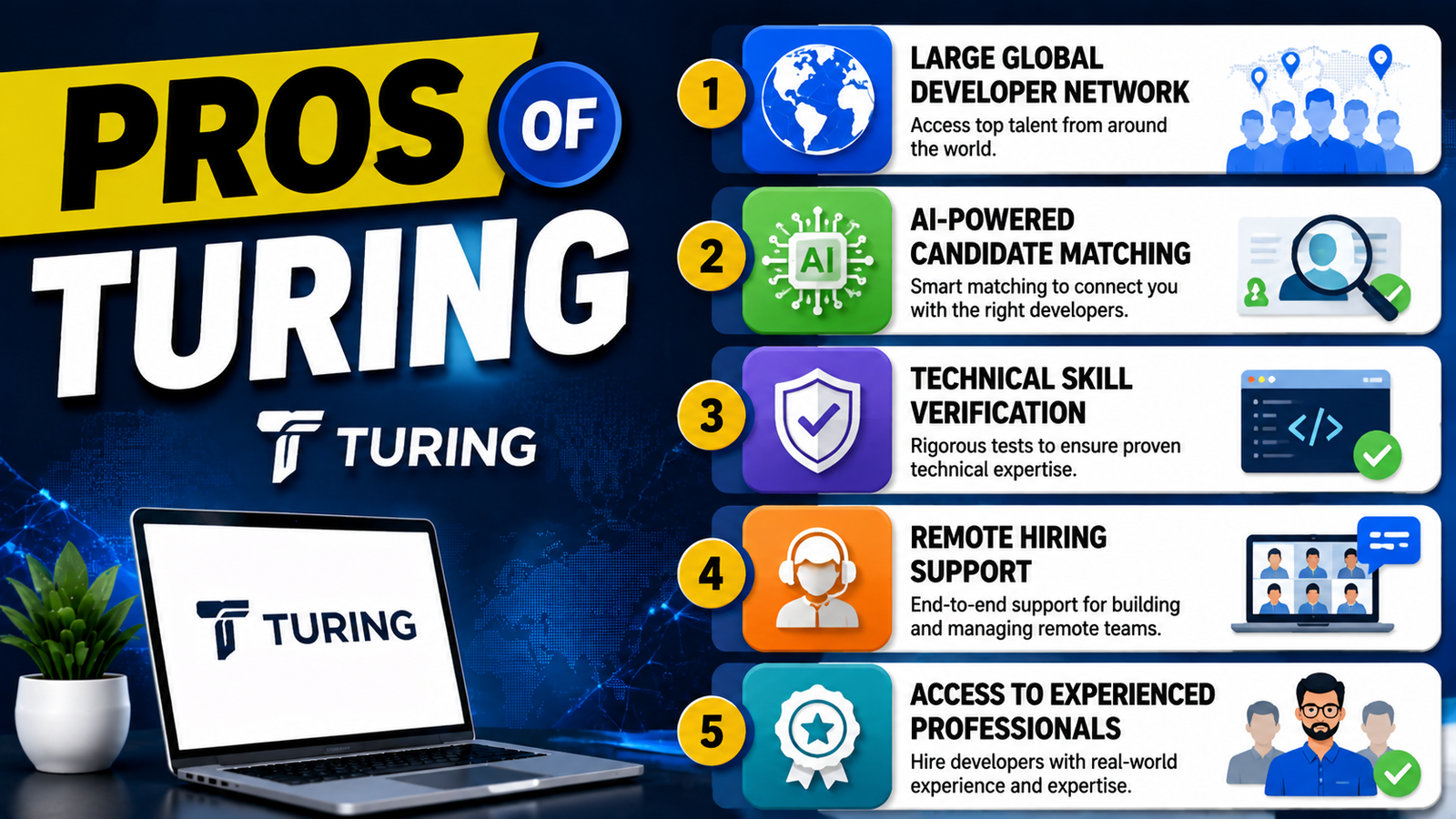
Some major advantages of Turing include:
- Large global developer network
- AI-powered candidate matching
- Technical skill verification
- Remote hiring support
- Access to experienced professionals
These features make Turing attractive for companies that need reliable software developers.
Possible Limitations
Although Turing offers many benefits, it also has some limitations.
Some companies may find the hiring process more expensive compared with traditional freelance platforms.
The platform mainly focuses on technology roles, so it may not be suitable for businesses looking for non-technical employees.
Developers may also face strict testing requirements before getting accepted.
Benefits of Using Turing
Turing offers advantages for both businesses and developers. Its technology-based approach makes the hiring process faster and more efficient.
Advantages for Companies
Companies can benefit from Turing in several ways:
Access to Global Talent: Businesses can connect with skilled developers from different parts of the world.
Faster Hiring: AI-based matching reduces the time required to search for suitable candidates.
Quality Screening: Developers are evaluated before being recommended to companies.
Remote Work Support: Companies can build remote teams without geographical limitations.
Reduced Recruitment Effort: Businesses do not need to spend excessive time reviewing applications.
For companies that require technical talent quickly, Turing can be a useful solution.
Advantages for Developers
Developers can also benefit from joining Turing.
The platform provides access to international companies that may offer better career opportunities compared to local job markets.
Other benefits include:
- Remote work flexibility
- International experience
- Competitive salaries
- Exposure to global projects
- Professional growth opportunities
For skilled developers, Turing can help create connections with companies that value technical expertise.
Turing Pricing and Cost Structure
Turing does not follow a simple fixed pricing model because costs depend on the hiring requirements of each company.
The final cost may depend on:
- Developer experience level
- Required skills
- Project duration
- Technical specialization
- Hiring arrangement
Companies usually pay for accessing qualified developers and managing the hiring process.
Compared with traditional recruitment methods, Turing can reduce costs related to job advertisements, recruitment teams, and lengthy interview processes.
However, companies should evaluate their budget and compare different hiring options before making a decision.
Also Read
Best Websites to Rent Cars: Compare Prices and Features
RoboKiller Alternatives: Best Spam Call Blocking Apps Compared
Top Benefits of The SSL Store for Website Security and Data Protection
BathMate: Complete Guide to Features, Benefits, Usage & Results (2026)
How the Proton Partners Program Helps Businesses Grow with Secure Solutions
Turing Platform Security and Reliability
Security is an important concern when companies hire remote developers. Turing focuses on creating a trusted environment for both businesses and professionals.
The platform uses verification methods to check developer skills and identity information.
Companies can also use secure communication methods and project management systems while working with remote teams.
Data protection and privacy practices help ensure that sensitive company information remains protected during collaboration.
For businesses working on software projects, choosing a reliable platform is important because security problems can affect development quality and business operations.
Turing vs Traditional Hiring Methods
Traditional hiring usually involves posting job advertisements, collecting applications, conducting interviews, and manually selecting candidates. This process can take weeks or even months.
Turing simplifies this process by using AI technology to identify suitable candidates faster.
Feature | Traditional Hiring | Turing |
Talent Access | Mostly local or limited | Global developer network |
Hiring Speed | Slow process | Faster matching |
Screening | Mostly manual | Automated skill testing |
Remote Support | Depends on company | Built for remote hiring |
Recruitment Effort | High | Reduced |
Difference Between Turing and Freelance Platforms
Many people compare Turing with freelance websites. However, their working models are different.
Freelance platforms usually focus on short-term projects where clients hire freelancers for specific tasks.
Turing mainly focuses on connecting companies with developers for long-term remote roles.
Freelance platforms may offer more flexibility for small projects, while Turing is better suited for companies looking for dedicated technical professionals.
Who Should Use Turing?
Turing is suitable for:
- Startups building software products
- Companies expanding remote teams
- Businesses needing experienced developers
- Organizations looking for global technology talent
Developers with strong programming skills and professional experience can also benefit from joining the platform.
However, companies should compare different hiring solutions based on their specific needs, budget, and project requirements.
Conclusion
Turing has changed the way companies hire remote developers by combining artificial intelligence with global talent recruitment. The platform helps businesses find skilled professionals faster while giving developers access to international opportunities.
Its AI-based matching system, technical assessments, and remote work support make it a strong option for companies that need software development talent.
However, like any platform, Turing may not be perfect for every situation. Businesses should consider their requirements, budget, and long-term goals before choosing it.
For companies looking to build reliable remote engineering teams and developers searching for global opportunities, Turing can be a valuable platform to explore.
Frequently Asked Questions
Turing is used by companies to hire skilled remote developers and technology professionals from around the world. It helps businesses find qualified candidates using AI-based matching and technical assessments.
No, Turing is mainly focused on long-term remote hiring rather than short freelance projects. It connects companies with developers for professional remote work opportunities.
Yes, Turing can be beneficial for experienced developers who want international job opportunities, remote work flexibility, and exposure to global companies.
Turing evaluates developers through technical assessments that check programming skills, problem-solving ability, and knowledge related to their professional field.
Turing uses verification and security practices to create a trusted environment for companies and developers. Users should still follow normal security practices when sharing information online.
Table of Contents
Related Post


Finding Student Housing and Communities With Erasmusu: A Practical Guide
admin
September 19, 2026
Read More »

What Travelers Should Know About Iberostar (closed) and Its Hotel History
admin
September 18, 2026
Read More »

Planning a European Trip? Discover the Benefits of Direct Ferries
admin
September 17, 2026
Read More »

What Makes Der Gepflegte Mann a Notable Name in Men’s Personal Care
admin
September 16, 2026
Read More »