

Comparexpert
Comparison Between Company


World Of Warships Explained: Ships, Battles, Modes, and More
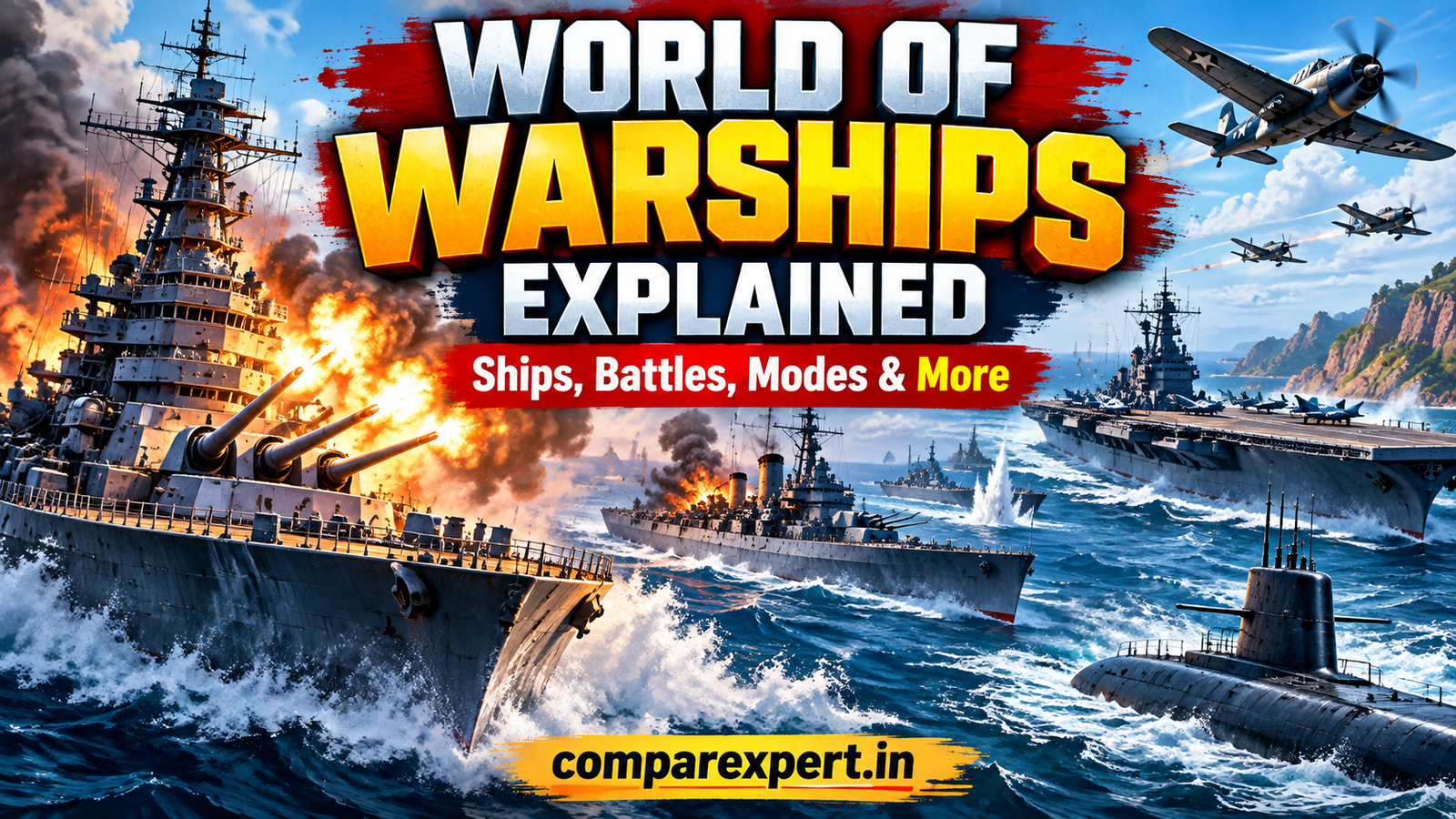
If you enjoy naval combat, strategy games, multiplayer action, or simply the idea of commanding a huge warship across an open ocean, World of Warships offers a lot to explore. Developed by Wargaming, the game places players in team-based naval battles featuring warships inspired by the first half of the twentieth century. The game combines shooting, positioning, teamwork, map awareness, ship management, and long-term progression into one package. The result is a game where simply having a powerful ship does not automatically mean you will win. You also need to understand where to move, when to attack, when to retreat, and how your ship fits into the team’s plan.
Table of Contents
What Is World of Warships?
World of Warships is a free-to-play online naval combat game built around team-based battles. Instead of controlling a soldier or a traditional ground vehicle, you command a warship and fight across large ocean maps. The game focuses on tactical decisions as much as direct shooting, so your position can be just as important as the damage your guns can produce. You may spend part of a battle attacking an enemy ship, another part avoiding torpedoes, and another part helping a teammate capture an important area.
The game features a large collection of ships from different naval nations and allows players to progress through technology trees. Steam currently describes the game as offering an armada of more than 800 ships, while the official game wiki organizes ships by nations and classes. The exact number of available ships can change as new content is introduced and older or special ships rotate through availability.
How the Core Gameplay Works
The basic gameplay loop is easy to understand. You select a ship, choose an available battle type, enter a match, fight against the opposing team, complete objectives, earn rewards, and use those rewards to improve your fleet. The difficult part is learning how to make good decisions during the battle itself.
A typical battle involves movement, aiming, detection, firing, avoiding incoming attacks, and controlling important areas. You need to consider your ship’s speed, turning ability, armor, weapon range, concealment, and health. A ship that looks powerful on paper can become an easy target if it moves into the wrong position.
The game also uses a tier system, which creates a progression path from lower-tier ships toward more advanced vessels. As players progress through technology-tree lines, they gain access to new ships and additional upgrade choices. The official game guide recommends trying different nations and classes instead of rushing through the tiers because different ship lines can produce very different play styles.
Understanding the Five Main Ship Classes
The five major ship classes form the foundation of World of Warships. Each class has a different role, and understanding these roles is one of the first things every new player should learn. Battleships generally bring heavy armor and large guns, cruisers offer flexible combat abilities, destroyers rely on speed and concealment, aircraft carriers use aircraft as their main offensive tool, and submarines specialize in stealth and underwater attacks.
There is no universal “best” class because each one solves different problems. A battleship may survive damage that would destroy a destroyer, but it is usually less agile. A destroyer can move quickly and sneak toward objectives, but mistakes can be punished heavily. Cruisers often sit between these extremes, giving players a flexible role. Carriers operate differently because much of their offensive influence comes through aircraft rather than direct gunfire. Submarines introduce underwater positioning and detection mechanics.
Battleships
Battleships are among the most powerful and heavily armed vessels in World of Warships. They usually have strong armor, large main guns, substantial health pools, and the ability to deal serious damage when their shots connect correctly. Their size and firepower make them intimidating, but they are not simply floating cannons. Positioning is extremely important because a battleship that becomes isolated can be surrounded by faster enemies.
The official World of Warships wiki describes battleships as heavily protected ships with powerful guns, reflecting their historical role as major surface combatants. In the game, their main guns can punish exposed enemy cruisers and battleships, especially when players understand armor angles and ammunition choices.
Cruisers
Cruisers are among the most flexible ships in the game. They can perform several jobs, including dealing damage, supporting destroyers, defending against aircraft, attacking enemy cruisers, and sometimes using special tools such as radar or hydroacoustic search depending on the ship. Their flexibility is also their challenge because they generally cannot absorb punishment like a battleship.
A cruiser often needs to think about positioning several steps ahead. If you sail broadside to a large enemy battleship at close range, you may lose a huge amount of health very quickly. On the other hand, staying too far away may reduce your ability to support teammates. Successful cruiser play often involves finding positions where you can attack while maintaining a safe escape route.
Key Features of World of Warships
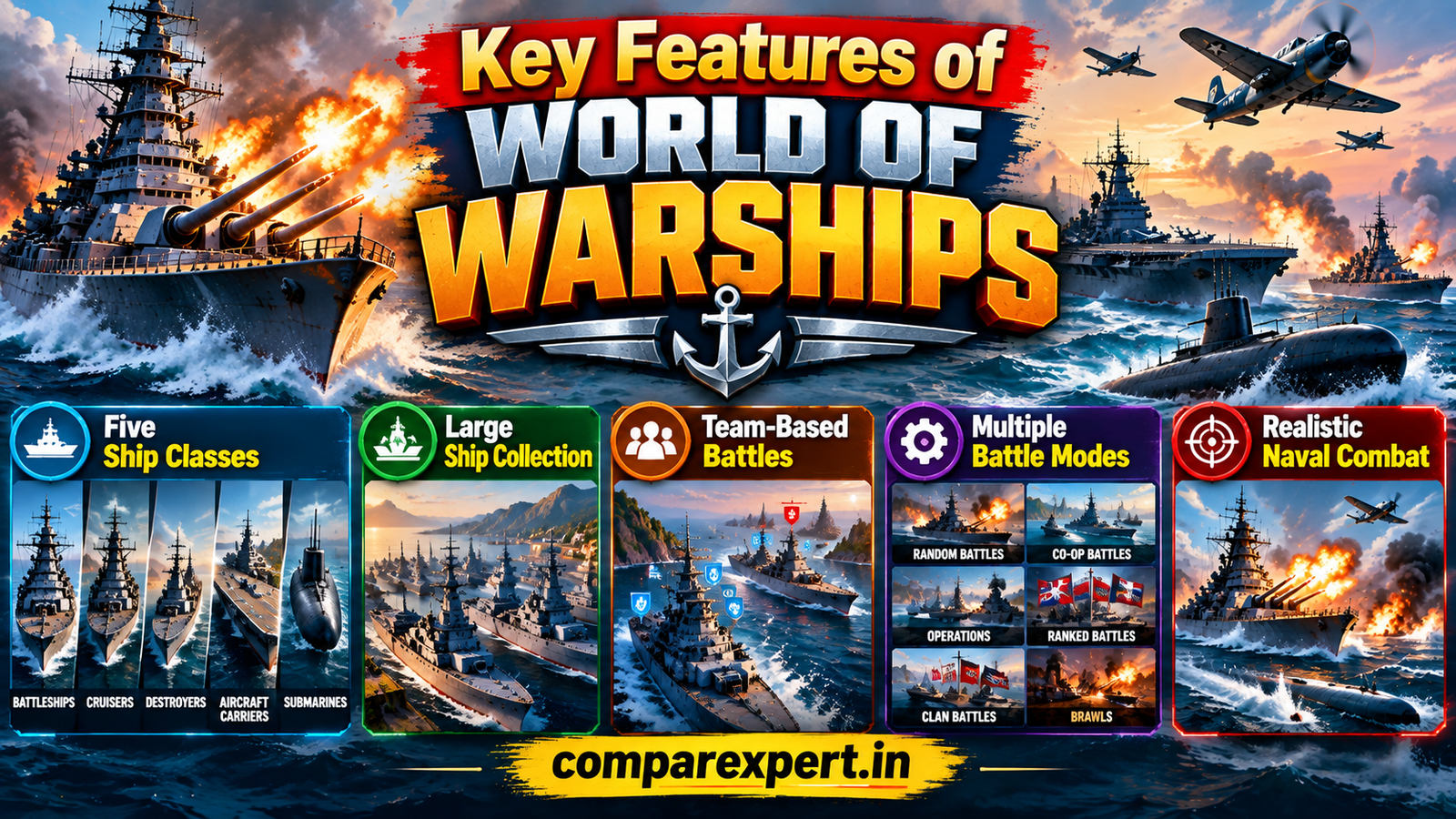
- Five Ship Classes – Play as Battleships, Cruisers, Destroyers, Aircraft Carriers, or Submarines.
- Large Ship Collection – Explore hundreds of warships from different nations and naval eras.
- Team-Based Battles – Work with teammates to attack enemies, defend areas, and complete objectives.
- Multiple Battle Modes – Enjoy Random Battles, Co-op Battles, Operations, Ranked Battles, Clan Battles, and Brawls.
- Realistic Naval Combat – Use guns, torpedoes, aircraft, and other weapons based on different ship designs.
Understand Change-of-Mind Returns
Nations, Tech Trees, and Ship Tiers
World of Warships organizes many ships through national technology trees. The game currently includes nations such as the United States, Japan, Germany, the United Kingdom, France, Italy, Spain, the Netherlands, Pan-Asia, Pan-America, Europe, and others. Each nation can have its own design ideas, ship characteristics, and gameplay strengths.
The tier system represents another major part of progression. Players begin with lower-tier ships and gradually unlock more advanced vessels. Higher tiers generally introduce stronger and more complex ships, but they also place players into battles where mistakes can be punished more severely.
A useful beginner strategy is not to rush directly toward the highest tier. Try multiple ship lines and learn what each class does. The official beginner guide specifically recommends experimenting across different lines and classes up to around Tier VI before committing heavily to a particular play style.
Main Weapons and Combat Mechanics
Combat in World of Warships is built around several weapon systems. Depending on your ship, you may use main guns, secondary guns, torpedoes, aircraft, anti-aircraft defenses, depth charges, and special consumables. Different weapons have different ranges, damage patterns, and ideal targets.
A major part of the game is learning ammunition and target selection. Battleship guns, for example, can be used differently depending on the enemy’s armor and angle. Cruisers may rely heavily on rapid gunfire, while destroyers can combine guns with torpedoes. Aircraft carriers use aircraft to deliver different attack types.
The game also has detection mechanics. A ship cannot always see every enemy on the map. Concealment, spotting, terrain, smoke, aircraft, and other mechanics can affect what becomes visible. This means the battlefield is partly an information game.
Guns, Torpedoes, and Aircraft
Main guns are the most visible weapon in the game. Players must aim ahead of moving targets because shells take time to travel. The faster and farther away the target, the more prediction is required. Good aim improves naturally as you learn how ships move.
Torpedoes work differently. They travel through the water and require players to predict enemy movement. They can be especially dangerous when an enemy is moving through a narrow area or cannot easily turn away.
Aircraft provide another form of ranged attack. Depending on the plane type, attacks may involve rockets, bombs, or torpedoes. Current game documentation identifies several aircraft roles and explains that carrier aircraft are directly controlled by the player during battle.
World of Warships Battle Modes
World of Warships includes several battle formats, giving players different ways to experience the game. The standard options include Co-op Battles, Random Battles, and Operations, while competitive formats include Ranked Battles and Clan Battles. Brawls and temporary events can provide additional formats during particular periods.
This variety is important because not every player enjoys the same level of competition. Some people prefer fighting computer-controlled enemies and learning at their own pace. Others want competitive PvP matches where every positioning mistake can matter.
Random and Co-op Battles
Random Battles are the main competitive PvP experience for many players. The standard format commonly uses teams of up to 12 players, although match sizes can vary in unusual situations. Matchmaking considers factors such as the selected ship’s tier and type rather than simply matching players by personal skill.
Random Battles are where players often develop serious competitive habits. You need to read the minimap, understand enemy positions, manage your health, and work with teammates you may never have met before.
Co-op Battles place human players against computer-controlled opponents. They are useful for learning ship controls, weapons, movement, and basic battle behavior without the same pressure as PvP. The trade-off is that rewards are generally lower than in Random Battles.
Operations and PvE Battles
Operations are scenario-based PvE battles where players work together against computer-controlled enemies while completing objectives. The current game wiki describes teams of up to seven players and scenario missions with specific goals.
Operations can be especially enjoyable if you prefer teamwork over direct competition. Instead of simply destroying every enemy ship, you may have to defend a location, escort something, attack specific targets, or complete secondary objectives. This gives battles a more mission-based structure.
Ranked, Clan Battles, and Brawls
Ranked Battles provide a more structured competitive experience and operate during specific seasons. Teams are usually smaller than standard Random Battle teams, and matchmaking is organized around the Ranked format. Clan Battles are team-based competitive battles where players fight as members of a Clan.
Brawls offer smaller and faster battle formats. The rules can change between events, with formats such as 1v1, 3v3, or 5v5 appearing depending on the current Brawl.
These formats are useful for players who want something different from standard Random Battles. Ranked can add a progression structure, Clan Battles emphasize coordinated team play, and Brawls can create shorter, more direct encounters.
How Objectives and Victory Conditions Work
Destroying enemy ships is important, but it is not always the only path to victory. Objectives and points can decide the result even when several enemy ships remain alive. According to the current game wiki, battles generally use a point system and can end when a team destroys the opposing force, reaches the required score, reduces the enemy team’s score to zero, or has more points when the timer expires.
This is why capturing areas can be just as important as dealing damage. A destroyer capturing an objective early may help the team generate points throughout the battle. A cruiser defending that area can prevent the enemy from gaining the same advantage.
Standard and Domination-style battles use control areas where ships can capture or contest zones. Entering a control area can stop the opposing team from gaining points and can allow your team to begin capturing it.
Upgrades, Commanders, and Customization
Progression in World of Warships is not limited to buying new ships. Players can also improve and customize ships through upgrades, modules, and Commander skills. As you progress along technology-tree lines, additional customization choices become available.
Commanders are especially important because they can develop skills that support different play styles. A Commander can become more effective as you earn experience, and experienced Commanders can be used across ships under the game’s assignment rules.
Customization gives players the chance to adapt a ship rather than simply accepting its default setup. You might choose upgrades that support survivability, concealment, gun performance, or other aspects of gameplay.
Beginner Tips for New Players
The first few battles can feel overwhelming because there is a lot happening at once. Ships are moving, shells are flying, torpedoes are appearing, capture points are changing, and the minimap is constantly updating. The best approach is to learn one skill at a time instead of trying to master everything immediately.
Start by learning your ship’s gun range, concealment, speed, turning circle, reload time, and basic ammunition. Once you know these numbers, your decisions become easier. You can estimate how close you should get to an enemy and how much time you need to react.
Keep checking the minimap. This is one of the most useful habits in the entire game. The minimap can tell you where teammates are disappearing, where enemies were last spotted, and whether one side of the battlefield is becoming dangerously empty.
What Makes World of Warships Different?
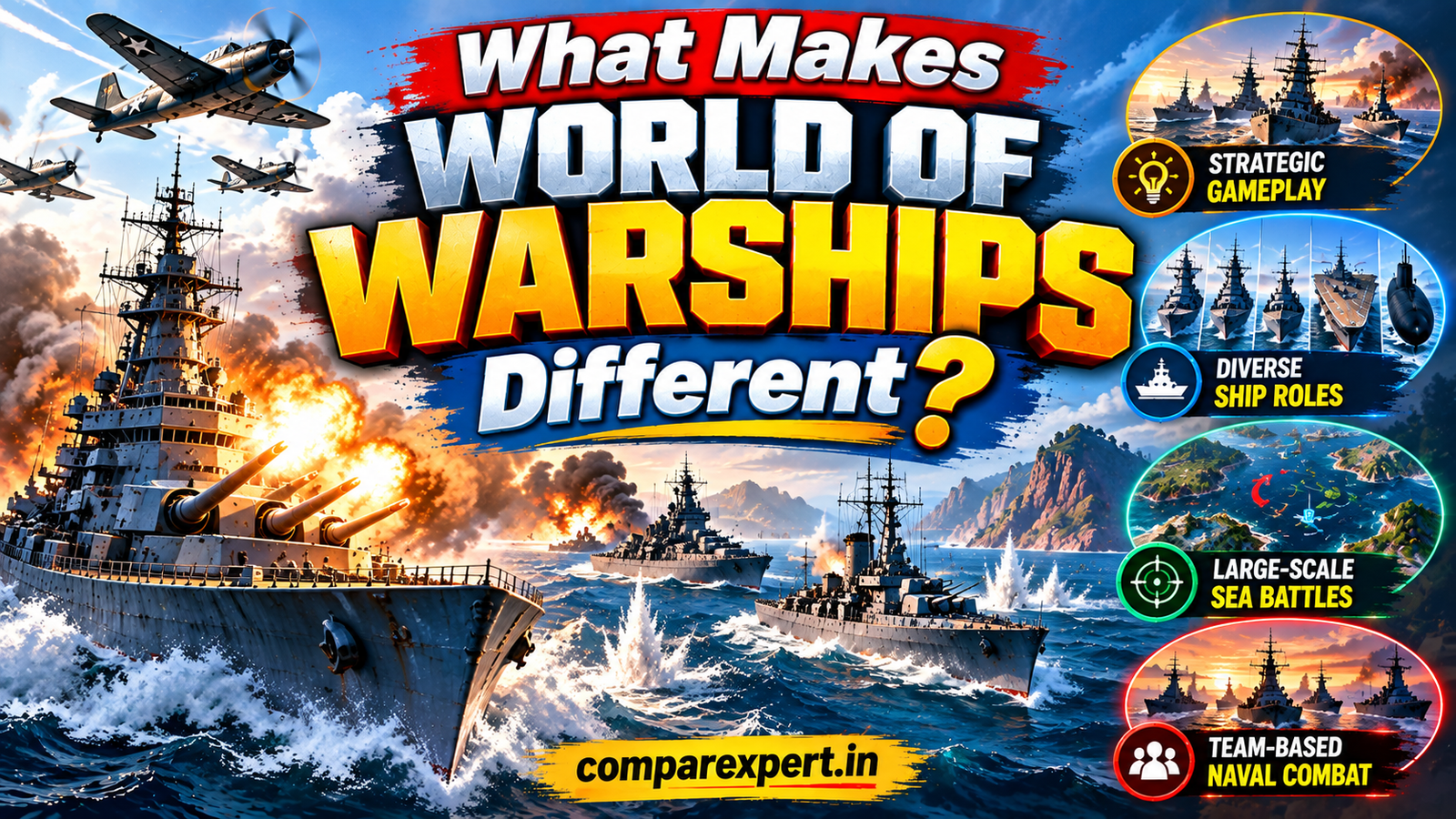
The biggest difference is the combination of naval combat and team strategy. The game is not simply a shooting game where the player with the fastest reaction wins. Ship speed, armor, range, concealment, positioning, map control, and teamwork all affect the result.
The slower pace of naval combat also creates a different kind of tension. When you fire a salvo, you may have several seconds before the shells reach the target. During that time, the enemy can change direction. This means you are constantly trying to predict what another player will do.
The variety of ships also keeps the gameplay fresh. A battleship battle feels very different from a destroyer battle. Carrier gameplay changes the relationship between distance and attack, while submarines create another type of stealth-based interaction.
World of Warships Maps and Battlefields
Maps play an important role in World of Warships gameplay because the location of your ship can affect almost every decision you make. Different maps contain islands, open-water areas, narrow passages, and capture zones that can change how ships approach a battle. Islands can provide cover for some ships, while open water gives battleships and other long-range vessels more room to attack. Learning the layout of a map helps you predict where enemies may appear and where your team should move.
For new players, understanding the map is just as important as learning how to aim. A destroyer may use islands to approach an objective without being easily detected, while a cruiser can use cover to attack enemies from a safer position. Battleships, on the other hand, often need enough open space to maneuver and maintain firing angles. As you play more matches, you will begin to recognize common routes and dangerous areas, making your decisions faster and more confident.
Understanding Armor and Ship Positioning
Armor and positioning are two important parts of naval combat. Simply pointing the strongest part of your ship toward the enemy is not always enough. Your angle, distance, speed, and the type of ammunition being used against you can all influence how much damage you receive.
A common lesson for beginners is to avoid exposing the side of the ship unnecessarily. A poorly positioned vessel can become an easy target for powerful enemy guns. Learning how to angle your ship, change direction, and manage distance can help you survive longer. This is especially important for battleships and cruisers because their large size can make sudden movement difficult.
Also Read
Top Features and Shopping Benefits of GeekBuying Explained
How Miro Can Improve Brainstorming and Project Planning
The Benefits of Using ZipRecruiter for Job Searching and Recruitment
Why Professional Creators Are Turning to JOBY for Better Content
Smart Holiday Planning Tips for Travelers Using Pierre et Vacances
World of Warships Events and Rewards
World of Warships regularly features special events, missions, campaigns, and limited-time activities. These can provide additional ways to earn resources, unlock rewards, or experience different gameplay features. The available events can change throughout the year, so players should check the official game news and in-game event sections for current information.
Events can also introduce special challenges that encourage players to try different ships or battle modes. For players who enjoy progression beyond the standard technology trees, these activities can provide another reason to return to the game.
Common Mistakes to Avoid
One of the most common beginner mistakes is playing too aggressively at the start of the battle. A ship that survives for several minutes can continue helping the team, while a ship that rushes forward and sinks early contributes nothing afterward. Patience is not the same as inactivity; it means choosing the right moment to act.
Another mistake is ignoring the minimap. Looking only at the main screen can make you miss a destroyer approaching from the side or a group of enemy ships moving toward your flank. Good players constantly combine what they see directly with what the minimap tells them.
A third mistake is focusing only on damage. Damage is satisfying, but World of Warships is an objective-based team game. Capturing areas, spotting opponents, defending teammates, and surviving can all contribute to victory.
Is World of Warships Free to Play?
World of Warships is free to play, although the game contains optional purchases and premium content. Steam lists the title as free to play and identifies Wargaming as both developer and publisher.
The free-to-play structure means you can start playing without purchasing the base game. However, players can encounter premium ships, currencies, containers, cosmetic items, progression-related products, and other optional content. The exact offers available can change through events and updates.
It is important to understand the difference between free access and everything being free. You can play the core game without buying every premium item, but the game provides optional ways to spend money.
Conclusion
World of Warships is a naval combat game that combines powerful warships, tactical positioning, teamwork, progression, and different battle formats. Its five main classes—battleships, cruisers, destroyers, aircraft carriers, and submarines—give players very different ways to approach the battlefield. The game also offers PvP and PvE experiences, including Random Battles, Co-op, Operations, Ranked Battles, Clan Battles, and Brawls, with additional temporary formats appearing through updates and events.
For beginners, the most important lesson is not to rush. Learn your ship, watch the minimap, understand objectives, and experiment with different classes. A strong player is not simply the person who produces the largest damage number. It is the player who understands what the team needs at a particular moment and makes decisions that support that goal.
Frequently Asked Questions
World of Warships is a free-to-play online naval combat game developed by Wargaming. Players command warships inspired by naval vessels from the first half of the twentieth century and participate in team-based battles. The game includes PvP and PvE modes and several different ship classes.
The game currently has five major ship classes: battleships, cruisers, destroyers, aircraft carriers, and submarines. Each class has different strengths, weaknesses, weapons, and battlefield roles.
Co-op Battles can be useful for beginners because players fight computer-controlled opponents. It provides an opportunity to learn movement, aiming, weapons, and ship mechanics before spending more time in competitive PvP battles.
Yes. World of Warships is available as a free-to-play game, although optional premium content and purchases are available. Steam lists the game as free to play.
The basic controls are relatively easy to understand, but becoming consistently effective takes practice. Players need to learn aiming, positioning, detection, armor, objectives, ship roles, and map awareness. Trying several ship classes is a useful way to understand the game's core mechanics.
Table of Contents
Related Post


Common Challenges Faced by Instacart – Shoppers and How to Handle Them
admin
September 30, 2026
Read More »


Why Users Explore Www.Swiftpublisher.Com for Publishing Solutions
admin
September 29, 2026
Read More »