

Comparexpert
Comparison Between Company


Understanding the Technology Behind Popular Olympus Imaging Products
Explore the advanced technology behind popular Olympus imaging products, including innovative camera sensors, image stabilization systems, powerful lenses, autofocus features, and computational photography. This blog explains how Olympus cameras combine smart engineering and modern imaging solutions to deliver high-quality photos, professional performance, and a better photography experience for enthusiasts and professionals.
Table of Contents
Introduction to Olympus Imaging Technology
Olympus has been one of the most recognized names in the photography industry because of its focus on compact design, advanced engineering, and practical camera technology. The company built its reputation by creating cameras that combine portability with professional-level features. Today, Olympus imaging products are continued under the OM System brand, managed by OM Digital Solutions, while maintaining many of the technologies developed during the Olympus camera era.
When people think about camera technology, they often focus only on megapixels or sensor size. However, modern imaging quality depends on many connected technologies working together, including sensors, processors, lenses, stabilization systems, autofocus algorithms, and software-based image improvements. Olympus cameras became popular because they balanced these technologies instead of focusing on only one specification.
The technology behind Olympus products is designed around a simple idea: create lightweight cameras that can deliver reliable results in different environments. Whether someone is capturing wildlife, landscapes, street photography, or everyday moments, Olympus systems provide tools that help photographers capture sharper and more creative images.
The company’s approach is similar to building a smart machine where every part has a purpose. The sensor captures information, the processor improves the data, the lens controls light, and stabilization technology reduces unwanted movement. Together, these systems create the final photograph.
Evolution of Olympus Cameras and Imaging Solutions
Olympus started its journey with optical equipment and gradually became a major camera manufacturer. One of its most famous achievements was the development of compact camera designs that challenged traditional ideas about camera size and performance. The classic Olympus OM series became known for creating smaller and lighter cameras without sacrificing usability.
As digital photography developed, Olympus introduced technologies focused on improving image quality while keeping cameras portable. The company moved from traditional film cameras to digital cameras and later became a major supporter of the Four Thirds and Micro Four Thirds systems.
The Micro Four Thirds system became an important milestone because it allowed manufacturers to create smaller interchangeable lens cameras. Unlike traditional DSLR cameras that require a mirror mechanism, mirrorless systems remove this component, reducing camera size and weight.
This technology approach attracted photographers who wanted professional features without carrying heavy equipment. Travel photographers, wildlife photographers, and content creators especially benefited from smaller camera bodies and lenses.
Today, OM System cameras continue many Olympus innovations, including compact designs, computational photography, advanced stabilization, and weather-resistant construction.
Core Technologies Used in Olympus Cameras
Micro Four Thirds Sensor Technology
One of the most important technologies behind Olympus imaging products is the Micro Four Thirds sensor system. This sensor format was created to provide a balance between image quality, camera size, and lens flexibility.
Traditional full-frame cameras usually require larger bodies and bigger lenses. Olympus focused on creating a system where photographers could achieve excellent image results with smaller equipment. The smaller sensor size allows manufacturers to design lightweight lenses while still maintaining strong performance.
The Micro Four Thirds system provides several advantages:
- Smaller and lighter camera bodies
- Compact interchangeable lenses
- Better portability for travel photography
- Longer effective focal lengths for wildlife shooting
For example, a smaller sensor creates a crop factor that helps photographers achieve greater reach with telephoto lenses. This makes Olympus cameras attractive for bird and wildlife photography where photographers often need to capture distant subjects.
The sensor technology also works with Olympus image processors to improve color accuracy, noise reduction, and overall image quality. The combination of hardware and software allows Olympus cameras to produce detailed photographs even in challenging lighting conditions.
Advanced Image Stabilization Systems
One of the strongest technologies associated with Olympus cameras is in-body image stabilization (IBIS). This technology helps reduce blur caused by camera movement when taking photographs.
Traditional cameras often depend on stabilization inside lenses. Olympus developed advanced sensor-shift stabilization systems where the camera sensor itself moves to compensate for hand movement.
The company’s famous 5-axis image stabilization system became a major feature in Olympus OM-D cameras. It helps correct different types of movement:
- Vertical camera shake
- Horizontal movement
- Rotation movement
- Tilting movement
This technology becomes very helpful when capturing photos with slower shutter speeds, as it helps reduce blur and keeps images sharper. Photographers can capture sharper images without always depending on a tripod.
For travel photographers, this feature is extremely valuable because carrying additional equipment is not always practical. A photographer walking through a city or hiking in nature can capture stable images using only a handheld camera.
The stabilization system also improves video recording by creating smoother footage. This makes Olympus cameras useful for photographers who also create online content.
Key Features of Olympus Imaging Technology
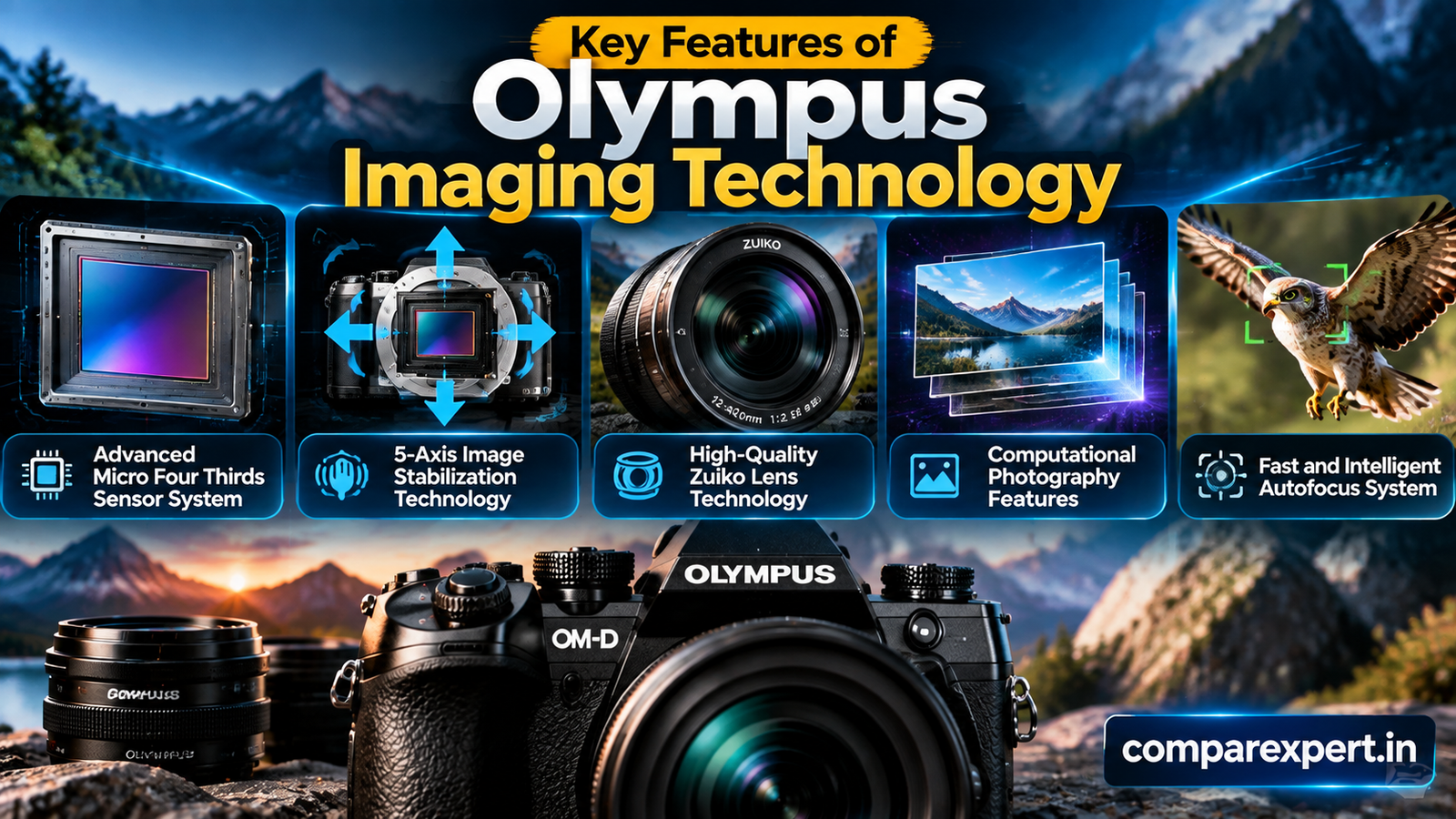
- Advanced Micro Four Thirds Sensor System – Provides a balance between image quality, compact camera design, and lightweight performance.
- 5-Axis Image Stabilization Technology – Helps reduce camera shake and produces sharper images, especially during handheld photography and low-light shooting.
- High-Quality Zuiko Lens Technology – Delivers excellent optical performance, clear details, and reliable results for different photography styles.
- Computational Photography Features – Uses smart software technology to improve image quality through features like High Resolution Shot, Live ND, and Focus Stacking.
- Fast and Intelligent Autofocus System – Enables quick subject detection and accurate focusing for wildlife, sports, and moving subjects.
The Role of Olympus Lens Technology
Zuiko Lens Engineering and Optical Performance
A camera system is only as good as the lenses available for it. Olympus developed the Zuiko lens series, known for optical quality, compact construction, and precision engineering.
Olympus lenses are designed to work perfectly with the company’s sensor technology and autofocus systems. The smaller Micro Four Thirds design allows lenses to be smaller compared with many traditional camera systems.
The main benefits of Olympus lens technology include:
- Sharp image quality
- Lightweight construction
- Fast autofocus performance
- Weather-resistant designs
- Wide range of focal lengths
Professional photographers often choose lenses based on their shooting needs. Wide-angle lenses are useful for landscapes and architecture, while telephoto lenses help capture wildlife and sports.
Olympus also focused on macro photography technology. Many Olympus lenses allow photographers to capture extremely detailed close-up images of insects, flowers, and small objects.
The combination of optical design and camera software creates a powerful imaging system where lenses and cameras work together efficiently.
Computational Photography in Olympus Cameras
Modern Olympus cameras are not only based on mechanical and optical technology. They also use computational photography, where software algorithms improve photographs after capturing image data.
Computational photography has changed how cameras work. Instead of relying only on physical components, cameras now use processors to create better results through intelligent calculations.
Olympus introduced several advanced features based on this technology.
High Resolution Shot Technology
The High Resolution Shot mode combines multiple images captured with tiny sensor movements to create a higher-resolution final image.
This technique allows the camera to collect more image information than a single exposure. The processor combines these images into one detailed photograph.
This feature is useful for:
- Landscape photography
- Product photography
- Architecture photography
However, because multiple images are combined, the subject usually needs to remain still.
Live ND and Focus Stacking Features
Olympus cameras also include creative computational features such as Live ND filters and focus stacking.
Live ND technology digitally creates the effect of a neutral density filter. Photographers can create smooth water effects or motion blur without carrying extra filters.
Focus stacking helps macro photographers by combining multiple images taken at different focus points. The camera creates one image with a larger area in focus.
These features show how Olympus combines traditional photography skills with modern software technology.
Autofocus and Processing Technologies
Autofocus technology plays a major role in modern photography. Olympus cameras use advanced autofocus systems supported by powerful image processors.
The camera processor analyzes the scene and helps detect subjects quickly. This is important for moving subjects such as birds, animals, athletes, and people.
Modern OM System cameras include improved subject detection technologies that help recognize different objects.
The combination of autofocus algorithms and fast processors helps photographers capture important moments without missing the shot.
Processing technology also improves:
- Image color
- Noise reduction
- Exposure control
- Video quality
The camera processor acts like the brain of the system, managing information from the sensor and converting it into a finished image.
Weather Protection and Camera Durability
Many Olympus cameras are designed for outdoor photography. Durability has always been an important part of the brand’s identity.
Weather-sealed camera bodies protect internal components from conditions such as:
- Rain
- Dust
- Cold temperatures
This makes Olympus cameras popular among adventure photographers who work in challenging environments.
A lightweight camera with strong protection provides freedom to explore without worrying too much about equipment damage.
The OM System continues this tradition by focusing on compact, rugged camera designs suitable for outdoor use.
Technology Behind Olympus OM-D Series Cameras
The Olympus OM-D series introduced many advanced technologies in a compact mirrorless design.
These cameras combined:
- Electronic viewfinders
- High-speed autofocus
- Image stabilization
- Weather sealing
- Computational photography
The OM-D series became popular among enthusiasts and professionals because it offered advanced controls without the size of traditional professional cameras.
Models such as the OM-D E-M1 and E-M5 demonstrated how mirrorless technology could compete with larger camera systems.
The design philosophy was simple: provide professional tools in a smaller package.
Olympus Tough Series and Rugged Imaging Technology
Olympus Tough cameras are designed for users who need extra durability. These cameras are built for outdoor activities such as hiking, diving, and adventure travel.
Important features include:
- Waterproof construction
- Shock resistance
- Freeze protection
- Compact body design
The Tough series shows how imaging technology can be adapted for extreme environments.
Instead of creating fragile high-performance equipment, Olympus focused on cameras that people could take anywhere.
Advantages of Olympus Imaging Technology
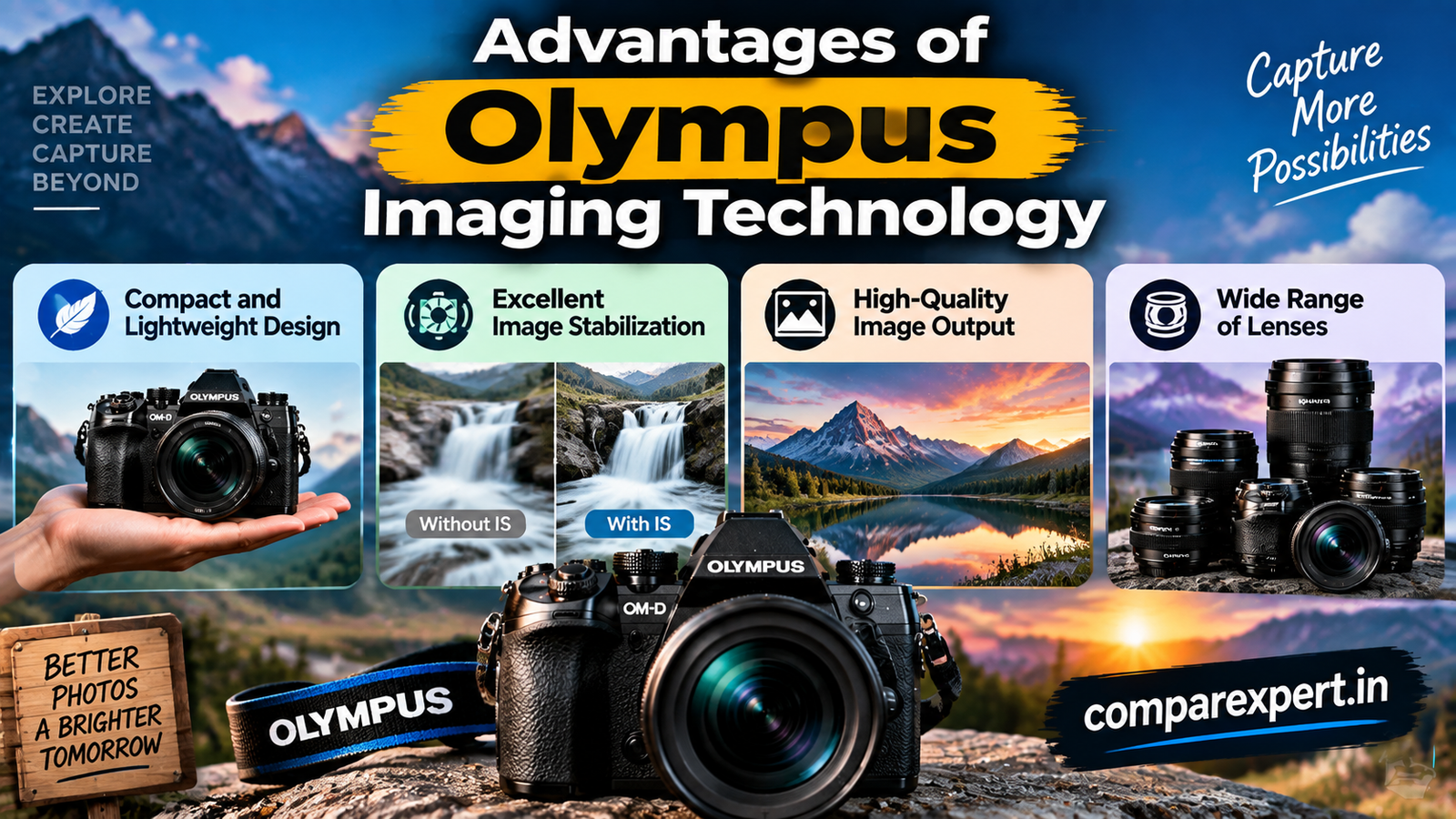
- Compact and Lightweight Design – Olympus cameras are smaller and easier to carry compared with many traditional camera systems, making them suitable for travel and outdoor photography.
- Excellent Image Stabilization – The advanced 5-axis image stabilization system helps reduce camera shake and allows photographers to capture sharper images in different shooting conditions.
- High-Quality Image Output – Olympus cameras provide good image quality with accurate colors, detailed photos, and effective image processing technology.
- Wide Range of Lenses – The Zuiko lens system offers different lens options for landscapes, portraits, wildlife, macro photography, and everyday shooting.
Disadvantages of Olympus Imaging Technology
- Smaller Sensor Size – The Micro Four Thirds sensor is smaller than full-frame sensors, which can affect low-light performance and background blur capabilities.
- Less Performance in Very Low Light – Compared with some larger sensor cameras, Olympus systems may produce more noise when shooting at very high ISO settings.
- Limited Market Availability – Some Olympus camera models and accessories may be harder to find because the brand has moved under the OM System name.
- Lower Resolution Compared with Some Competitors – Certain professional cameras from other brands offer higher megapixel counts and larger sensors.
How Olympus Technology Improves Everyday Photography
Modern photography is not only about having a powerful camera; it is about how different technologies work together to make capturing images easier and more creative. Olympus cameras are designed with a combination of hardware and software features that help photographers achieve better results in different situations.
Whether someone is taking family photos, travel pictures, wildlife shots, or professional images, Olympus technology provides useful tools that support different photography needs. Features like image stabilization, intelligent autofocus, and advanced processing allow users to focus more on creativity rather than technical limitations.
For beginners, Olympus cameras provide automatic shooting modes that make photography simple, while experienced photographers can use manual controls to adjust settings according to their creative vision. This flexibility makes Olympus imaging products suitable for a wide range of users.
Also Read
Finding Student Housing and Communities With Erasmusu: A Practical Guide
How Modern Shoppers Can Discover New Fashion Trends With ABIBY
How Digital Financial Services Are Evolving With Platforms Like Credy ES
Discover Advanced Vehicle Recording Solutions from Rexing
Exploring Nick’s Ice Creams: A Delicious Guide to Flavors and Options
The Importance of Image Processors in Olympus Cameras
The image processor is one of the most important components inside a digital camera. It works like the brain of the camera by analyzing image data collected from the sensor and converting it into a high-quality photograph.
Olympus cameras use advanced image processing technology to improve several aspects of photography, including color accuracy, sharpness, noise reduction, and image details. A powerful processor helps the camera perform faster and supports features like continuous shooting, autofocus tracking, and video recording.
When capturing a photo, the camera does not simply save information from the sensor. The processor adjusts and improves the image by balancing exposure, reducing unwanted noise, and enhancing details. This process helps Olympus cameras deliver better results in different lighting conditions.
How Olympus Technology Supports Different Photography Styles
Wildlife Photography
Olympus technology is especially useful for wildlife photographers. The compact body, powerful stabilization, and telephoto lens options make it easier to carry equipment during long outdoor sessions.
Wildlife photographers often need quick reactions. Fast autofocus and long lens reach help capture animals from a safe distance.
Travel and Street Photography
For travelers, size and weight matter. Olympus cameras provide professional features while remaining easy to carry.
Street photographers benefit from quiet shooting modes, stabilization, and compact lenses that allow discreet photography.
Future of Olympus Imaging Technology
The future of Olympus imaging technology continues through OM System products. The focus remains on improving computational photography, autofocus, stabilization, and lightweight camera design.
As photography becomes more connected with artificial intelligence and software improvements, cameras are becoming smarter. Future imaging systems are expected to provide better subject recognition, faster processing, and improved creative tools.
The main goal remains creating technology that helps photographers capture better images with less effort.
Conclusion
Olympus imaging products became popular because they combined smart engineering with practical photography solutions. The company focused on creating cameras that were compact, reliable, and technologically advanced.
From Micro Four Thirds sensors and 5-axis stabilization to computational photography and powerful lenses, Olympus developed technologies that changed how photographers capture images.
Today, OM System continues this approach by improving mirrorless camera technology and maintaining the philosophy of lightweight, high-performance imaging systems.
For photographers who value portability, innovation, and creative features, Olympus technology remains an important part of modern photography.
Frequently Asked Questions
Olympus cameras are known for Micro Four Thirds technology, advanced image stabilization, compact design, and computational photography features.
Yes, Olympus and OM System cameras are used by many professional photographers, especially in wildlife, travel, macro, and outdoor photography.
It is a technology that moves the camera sensor to reduce different types of camera shake and improve image sharpness.
Olympus uses the Micro Four Thirds system, which allows smaller camera bodies and lenses compared with larger sensor systems.
The Olympus imaging business is now operated under the OM System brand by OM Digital Solutions, continuing development of mirrorless cameras and imaging technology.
Table of Contents
Related Post


Finding Student Housing and Communities With Erasmusu: A Practical Guide
admin
September 19, 2026
Read More »

What Travelers Should Know About Iberostar (closed) and Its Hotel History
admin
September 18, 2026
Read More »

Planning a European Trip? Discover the Benefits of Direct Ferries
admin
September 17, 2026
Read More »

What Makes Der Gepflegte Mann a Notable Name in Men’s Personal Care
admin
September 16, 2026
Read More »