

Comparexpert
Comparison Between Company


Thryv Review 2026: Is This Small Business Management Platform Worth It?
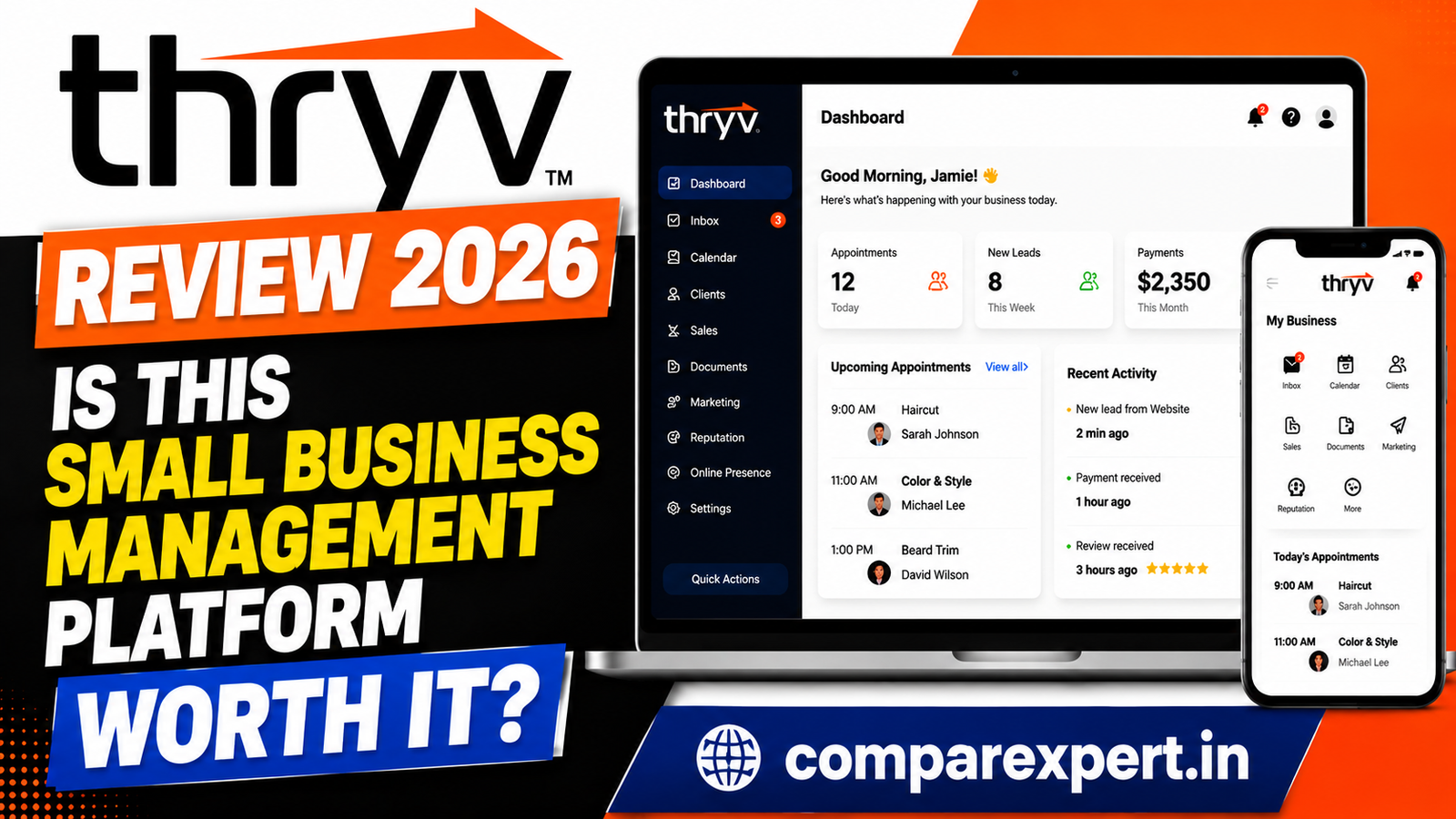
When you run a small service‑based business, one of the biggest challenges isn’t just serving clients — it’s staying organized. Phones are ringing, messages are flooding in, jobs are scheduled across calendars, invoices go out late, reviews pile up unanswered — and suddenly you’re juggling more tools than tasks. That’s where platforms like Thryv promise to step in. They pitch themselves as the all‑in‑one business management solution that replaces a handful of software subscriptions with a single platform. But in 2026, with newer players on the market and small business budgets tighter than ever, the big question remains: Is Thryv worth it? Let’s unpack this in depth.
Table of Contents
What Is Thryv?
At its core, Thryv is a cloud‑based business management and CRM platform designed to centralize the daily tools a small business uses. Think customer relationship management, appointment booking, payments, marketing automation, review monitoring, and online presence management — all inside one dashboard. This is touted as a whole operating system for small service businesses, not a simplified CRM or a light scheduling tool.
A Brief History & Company Background
Thryv’s roots trace back to legacy local advertising brands like Dex Media and the Yellow Pages — companies that once dominated local listings and directory services. Over time, Thryv pivoted from traditional print and leads into software‑as‑a‑service (SaaS) for small businesses. Today, it’s a publicly traded company (ticker: THRY) with tens of thousands of subscribers and a focus on consolidating business tools.
Why Small Businesses Are Talking About Thryv
All‑in‑One Software vs Separate Tools
For many small business owners, the appeal of Thryv comes from the idea of simplicity. Instead of paying for separate CRM software, scheduling tools, payment processors, reputation systems, and email marketing platforms — Thryv tries to bundle them together. For some businesses, this means fewer passwords, fewer vendors, and a single place to track customer interactions.
But “all‑in‑one” products are not always “best‑in‑class.” The trade‑off usually comes in depth vs. breadth: you get a wide variety of tools in one place, but each might not be as powerful as a dedicated tool designed specifically for that purpose.
Target Audience: Who It Best Serves
Thryv does not target every business. It primarily serves small, service‑oriented businesses such as:
- Home services (plumbers, HVAC techs)
- Salons and health & wellness practices
- Dental, medical, or legal offices
- Small agencies and local consultancies
If your business relies on appointments and repeat clients rather than long, complex sales cycles, Thryv’s design might fit well. For businesses with dedicated sales teams or complex pipelines, other CRM platforms might be a better fit.
Core Features That Define Thryv
One reason Thryv attracts interest is because of the breadth of its features. In 2026, here’s what users can expect.
CRM & Contact Management
At the heart of Thryv is its CRM, which keeps track of contacts, communications, and customer history. You can tag customers, log interactions, and keep all communication in one place. However, compared to advanced CRM tools geared toward sales teams, Thryv’s CRM is fairly basic, with limited pipeline visualizations and forecasting tools.
Online Scheduling & Appointments
Thryv’s scheduling tools allow clients to book online, sync with calendars like Google Calendar, and send automated reminders. This functionality is often praised by service businesses for reducing no‑shows and manual scheduling conflicts.
Reputation & Review Management
This is an area where Thryv shines: it can monitor and respond to reviews across platforms such as Google, Yelp, and Facebook from a single dashboard. For local firms in particular, reputation management can have a big impact on acquiring new clients.
Marketing Automation: Email & SMS
Businesses can launch email and text campaigns, send automated follow‑ups, reminders, and promotions — all from the Thryv platform. For companies spending money on separate email marketing tools, this consolidation can be a strategic cost saver.
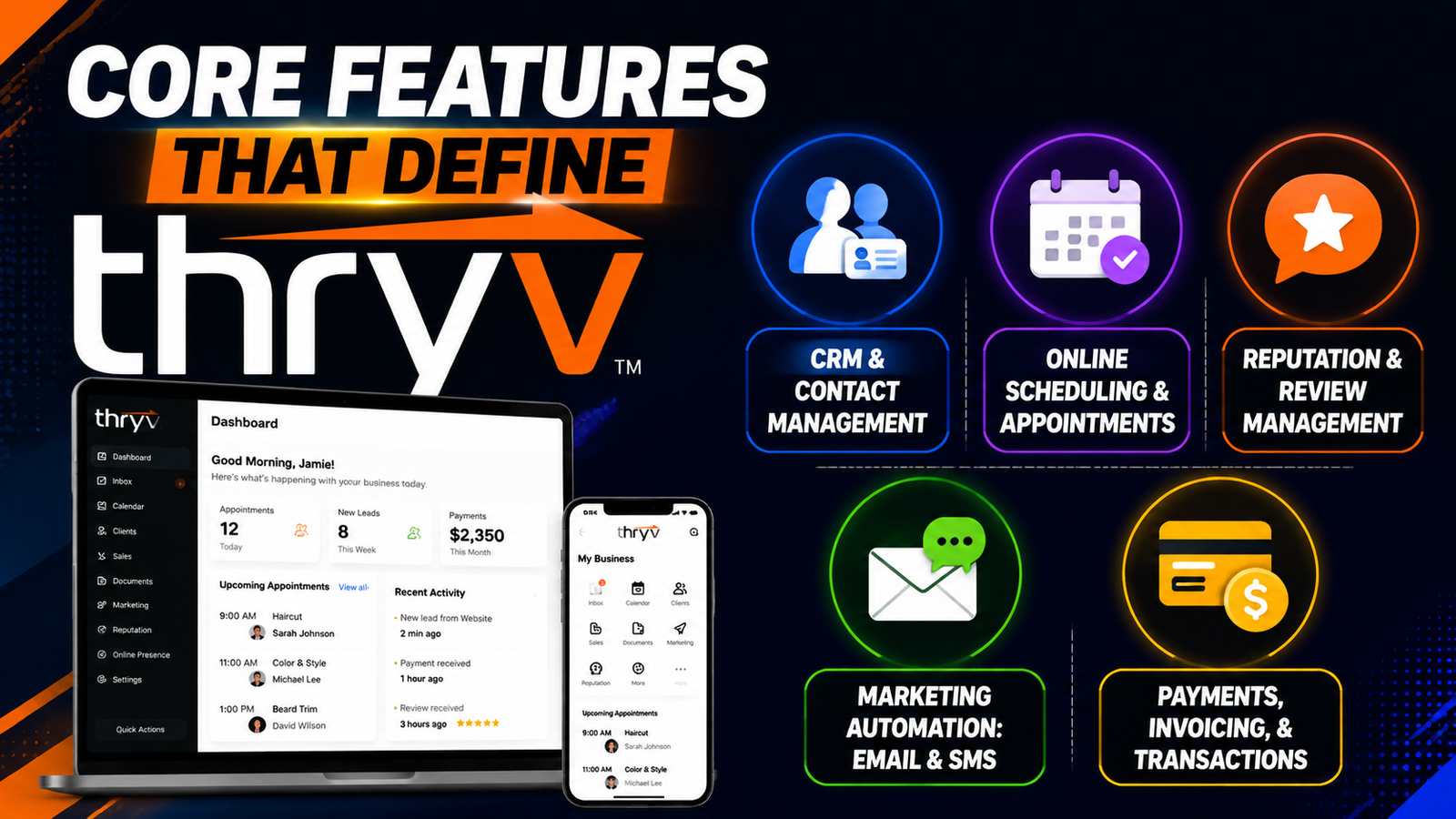
Payments, Invoicing, & Transactions
Invoicing and online payment acceptance are built into Thryv, helping businesses collect money faster and manage billing inside the same system they manage customers. This integration eliminates double entry between separate accounting and CRM systems for many users.
Integrations & Workflow Connectivity
Unlike some CRM systems with extensive ecosystems, Thryv integrates with popular platforms like Google Sheets, Xero accounting, and Zapier, giving businesses flexibility to automate workflow and connect apps they already use.
Pricing Structure in 2026
Understanding Thryv’s pricing can be tricky because it often involves quotes and add‑ons.
Tier Breakdown & What You Actually Pay
Thryv’s pricing is tiered, with base plans often starting around the $199/month range, but real costs tend to rise as businesses add features or choose higher tiers (sometimes into mid‑hundreds in USD). Add‑ons (like workforce management, extra locations, or enhanced payment tools) and onboarding fees can push total spend significantly higher.
Contracts, Hidden Fees & Pricing Transparency
Unlike many modern SaaS tools that offer month‑to‑month billing, Thryv often ties users into 6‑ to 18‑month contracts with auto‑renew terms. Cancellation policies can be strict, and hidden fees (support, SMS overages, per‑location fees) are commonly mentioned in user reviews. This has become one of the most contentious aspects of signing up.
User Feedback: Pros & Cons From Real Reviews
Online reviews paint a mixed picture of Thryv — and it’s crucial to understand both sides before committing.
Common Praise Across Platforms
Thryv gets repeated praise for:
- Consolidating multiple tools into one dashboard
- Improving appointment management and reminders
- Reputation and review automation features
- Responsive onboarding support for some new users
Platforms like BestGuide rating Thryv around 4.3/5 highlight how beneficial integrated tools can be — especially for businesses already spending money on separate subscriptions.
Frustrations and Complaints to Consider
On the flip side:
- Many users report billing and contract disputes as frustrating — which shows up especially in BBB complaint logs and review forums.
- Some find the interface cluttered and steep to learn, especially because it packs so many tools.
- Red flags in user communities often include cancellation difficulties and perceived over‑pricing for smaller operations.
Thryv Mobile App: Manage Business On-the-Go
One of the standout advantages of Thryv in 2026 is its mobile app, designed for business owners who are always on the move. Whether you’re on-site visiting a client, traveling, or just away from your desk, the app allows you to manage appointments, communicate with customers, send invoices, and track payments. Unlike some competitors, Thryv’s mobile interface mirrors the desktop experience, giving users seamless access without sacrificing functionality. For small business owners, this ensures that nothing falls through the cracks — appointments get scheduled, invoices get sent, and reviews are monitored, all from a smartphone. This mobile-first approach is increasingly critical in today’s fast-paced business environment.
Thryv for Marketing: Simplifying Customer Engagement
Thryv doesn’t just help with logistics — it also drives growth. Its marketing automation features let businesses send personalized email campaigns, SMS reminders, and promotional offers directly to clients. Small businesses often struggle to maintain consistent communication with their customer base, but Thryv solves this by providing templates, scheduling, and automation rules. By streamlining marketing efforts, businesses can save time while staying top-of-mind with their customers. Additionally, Thryv offers tools to analyze campaign performance, making it easier to understand which strategies actually bring in revenue.
Security and Data Privacy in Thryv
Security is a concern for many small businesses, especially when handling customer data. Thryv has implemented industry-standard encryption and secure payment processing, giving users confidence that their business and client information is safe. Moreover, compliance with privacy regulations like GDPR and CCPA ensures that businesses using Thryv can operate without worrying about legal repercussions. For service providers handling sensitive client information — such as healthcare or legal services — these security measures are essential for building trust and maintaining professional credibility.
How Thryv Helps Small Businesses Save Time
Time is one of the most valuable resources for any small business owner. Between managing customers, handling appointments, sending invoices, and promoting services, many entrepreneurs spend more time on administrative tasks than actually growing their business. This is where Thryv aims to make a significant difference.
By bringing multiple business functions into a single platform, Thryv reduces the need to switch between different software applications throughout the day. Instead of using one tool for scheduling, another for customer management, and a third for invoicing, users can access everything from one dashboard. This streamlined workflow can help reduce mistakes, improve efficiency, and create a more organized work environment.

Comparison With Competitors in 2026
While Thryv offers an all-in-one platform, some businesses may wonder how it compares with alternatives like HoneyBook, Dubsado, or Zoho CRM. Unlike these competitors, Thryv focuses heavily on local business operations, including reputation management and online review integration. However, for companies needing deep analytics or advanced sales pipeline management, specialized CRM tools might outperform Thryv. Including a short comparison table or side-by-side feature chart can help readers visualize the strengths and limitations of Thryv in today’s market.
Tips for Maximizing Thryv’s Value
- Fully integrate your existing contacts: Upload your customer database to ensure smooth CRM tracking.
- Automate reminders and follow-ups: Use Thryv’s SMS/email automation to reduce no-shows and improve client retention.
- Leverage review monitoring: Responding to online reviews promptly improves reputation and search visibility.
- Train staff on mobile tools: Encourage employees to use the mobile app to ensure continuity when away from the office.
- Analyze campaign results: Use Thryv analytics to refine your marketing strategies for better ROI.
Also Read
Why SwimOutlet.com Is a Popular Choice for Swimmers and Athletes
Curated Crowd Review 2026: Is This Influencer Marketing Platform Worth It?
How Kiwi.com Helps Travelers Save Money on International Flights
Top Benefits of Having Choice Home Warranty Insurance for Your Home
Kapitus Business Financing Options Every Business Owner Should Know
Customer Communication Tools Explained
Effective communication is essential for maintaining strong customer relationships. Thryv provides a unified communication center that helps businesses manage interactions across multiple channels. Whether customers contact a business through text messages, email, social media, or website inquiries, conversations can be managed from a single location.
One of the biggest challenges for small businesses is responding quickly to customer inquiries. Delayed responses can lead to lost opportunities and dissatisfied customers. Thryv helps address this issue by centralizing communication and providing notifications whenever a new message arrives.
Thryv's Online Presence Management Features
Building a strong online presence is no longer optional for small businesses. Customers often search online before deciding which company to contact, making online visibility a critical factor in business success. Thryv includes several tools designed to help businesses manage and improve their digital presence.
One important feature is business listing management. Accurate information across online directories helps customers find businesses more easily while improving local search visibility. Thryv assists with maintaining consistency across multiple online platforms.
Is Thryv Worth It in 2026?
So, is Thryv worth it? That depends heavily on your business’s needs:
If your operation is appointment‑based, managing customer relationships across channels, and you’re already paying for multiple pieces of software — Thryv can reduce complexity and centralize key functions in one place. Its review management and scheduling tools alone can be compelling for service businesses.
But if your costs matter more than consolidation, you prefer month‑to‑month flexibility, or you need advanced CRM features for complex sales cycles, Thryv’s pricing and feature set may not deliver the return you expect. Businesses with limited budgets might find better ROI combining dedicated tools that excel in their specific niche.
In short: Thryv is worth it for certain service businesses who value integration and simplification, but not a one‑size‑fits‑all solution for every SMB.
Conclusion
2026 finds Thryv at a crossroads — still delivering a comprehensive suite of small business tools, yet still challenged by pricing structure and customer service concerns that long have followed it. For the right business, especially local, appointment‑based operations already struggling with tool overload, Thryv can be a valuable partner. But if control, pricing transparency, and depth of specialized features are your priorities, you may want to explore other solutions before signing an extended contract.
Frequently Asked Questions
Thryv works best for small local service businesses — like salons, home services, clinics, and appointment‑based teams looking to consolidate CRM, scheduling, marketing, and payments in one platform.
Yes — especially once you include add‑ons, onboarding fees, and necessary integrations. Most businesses report higher costs than the base price advertised.
Cancellation experiences vary, but contracts typically lock you in for six months or more — and many users report challenges with ending services early.
Yes — it combines CRM, scheduling, reputation management, marketing automation, payments, and more — potentially replacing several subscriptions.
Thryv’s reputation management tools help consolidate reviews and boost response times, but they do not replace dedicated local SEO strategies or specialized review platforms.
Table of Contents
Related Post

Finding Student Housing and Communities With Erasmusu: A Practical Guide
admin
September 19, 2026
Read More »

What Travelers Should Know About Iberostar (closed) and Its Hotel History
admin
September 18, 2026
Read More »

Planning a European Trip? Discover the Benefits of Direct Ferries
admin
September 17, 2026
Read More »

What Makes Der Gepflegte Mann a Notable Name in Men’s Personal Care
admin
September 16, 2026
Read More »