

Comparexpert
Comparison Between Company


Why Manfrotto Equipment Is Popular Among Photography Enthusiasts
Discover why Manfrotto is a popular choice among photography enthusiasts. This guide explores its durable tripods, camera support systems, travel-friendly gear, practical designs, and versatile accessories. Learn how Manfrottoequipment can improve stability, flexibility, and convenience for landscape, studio, travel, macro, and hybrid photography.
Table of Contents
Introduction: Why Photographers Trust Manfrotto
Photography involves much more than simply having a high-quality camera. A great camera and lens can capture impressive images, but the support equipment around them can make a major difference. This is one reason Manfrotto equipment has become popular among photography enthusiasts, professionals, travelers, and creators. When photographers need a tripod that feels stable, a camera bag that protects expensive gear, or a support system that makes shooting easier, Manfrotto is often one of the brands they consider. The company focuses heavily on camera support, including tripods, monopods, tripod heads, bags, backgrounds, and other accessories. Its current product range also covers photography, video, and hybrid shooting, giving users more choices as their creative needs change.
The attraction is not simply about having a famous name printed on a tripod. Photographers usually care about practical things: Does the equipment remain stable? Is it easy to adjust? Can it survive regular travel? Does it work with different cameras? Can it help create a better composition? Manfrotto tries to answer these questions through a combination of engineering, usability, and product variety. For someone who spends hours waiting for the right landscape light or repeatedly adjusts a camera during a studio shoot, small design details can have a surprisingly large effect. The right support system becomes almost invisible because the photographer can concentrate on the image rather than fighting with the equipment. That practical experience is a major reason the brand continues to attract photography enthusiasts.
A Long History in Photography Support
One of Manfrotto’s strongest advantages is its long connection with photography equipment. According to Videndum’s official history, the first Manfrotto tripod was launched in 1974 after being developed by photojournalist Lino Manfrotto and technician Gilberto Battocchio in Bassano del Grappa, Italy. That history matters because the company did not begin as a general electronics brand that later added camera accessories. Its roots are closely connected with the practical needs of photographers. Over the decades, the brand has developed from tripod manufacturing into a broader range of photographic and video support products. Videndum, the parent group, rebranded from The Vitec Group in 2022.
For photographers, a long history can create a sense of confidence. Buying a tripod is different from buying a short-lived gadget because support equipment can stay in a photographer’s kit for many years. A photographer may change from DSLR to mirrorless, upgrade lenses, travel to different countries, or move from still photography into video. A well-designed support system can continue to be useful through these changes. Manfrotto’s long presence in the industry also means that its name is familiar to many photographers who learned photography using traditional tripod systems. That familiarity can influence buying decisions, especially when someone wants equipment that feels established rather than experimental. It is similar to choosing a well-known tool brand when you want something you can use repeatedly without constantly wondering whether it will handle the job.
Strong Build Quality and Professional Design
Build quality is one of the biggest reasons photographers look toward Manfrotto. A tripod has a simple job on paper: hold a camera still. In real photography, however, that job becomes much harder. The tripod may be standing on rocks, sand, concrete, grass, a studio floor, or an uneven mountain path. Wind can push against the camera, a heavy lens can shift the center of gravity, and repeated adjustments can put stress on locks and joints. This is where materials, leg construction, locking systems, and overall engineering become important. Manfrotto products are designed around these practical demands, with different models using aluminum, carbon fiber, magnesium, and other materials depending on the intended purpose.
The Manfrotto 055 series, for example, offers features such as a 90-degree center column, adjustable leg angles, an Easy Link connector, and Quick Power Lock systems on selected models. One current 055 aluminum model weighs 2.5 kg, reaches 170 cm, and has a listed safety payload of 20 kg under the specified standard. These specifications show why the series is aimed at photographers who want substantial support rather than an ultra-small travel tripod.
Stability That Helps Photographers Get Sharper Images
One of the clearest reasons to use a tripod is stability. Even the best modern cameras cannot completely remove the need for physical support in every situation. Image stabilization is useful, but long exposures, precise compositions, macro work, panorama photography, architectural images, and some studio setups still benefit from a stable platform. Current photography guides continue to recommend tripods for these types of work, especially when photographers need controlled framing and long shutter speeds.
Manfrotto’s popularity comes partly from offering support systems that let photographers choose between portability and stability. A large tripod such as an 055 can provide a very different experience from a compact Befree travel tripod, yet both belong to the same broader ecosystem. This means photographers do not have to use the same type of support for every assignment. A landscape photographer might choose a strong carbon-fiber model for mountain trips, while a beginner may prefer a smaller aluminum model. A studio photographer may care more about maximum stability and height than weight.
Key Features of Manfrotto
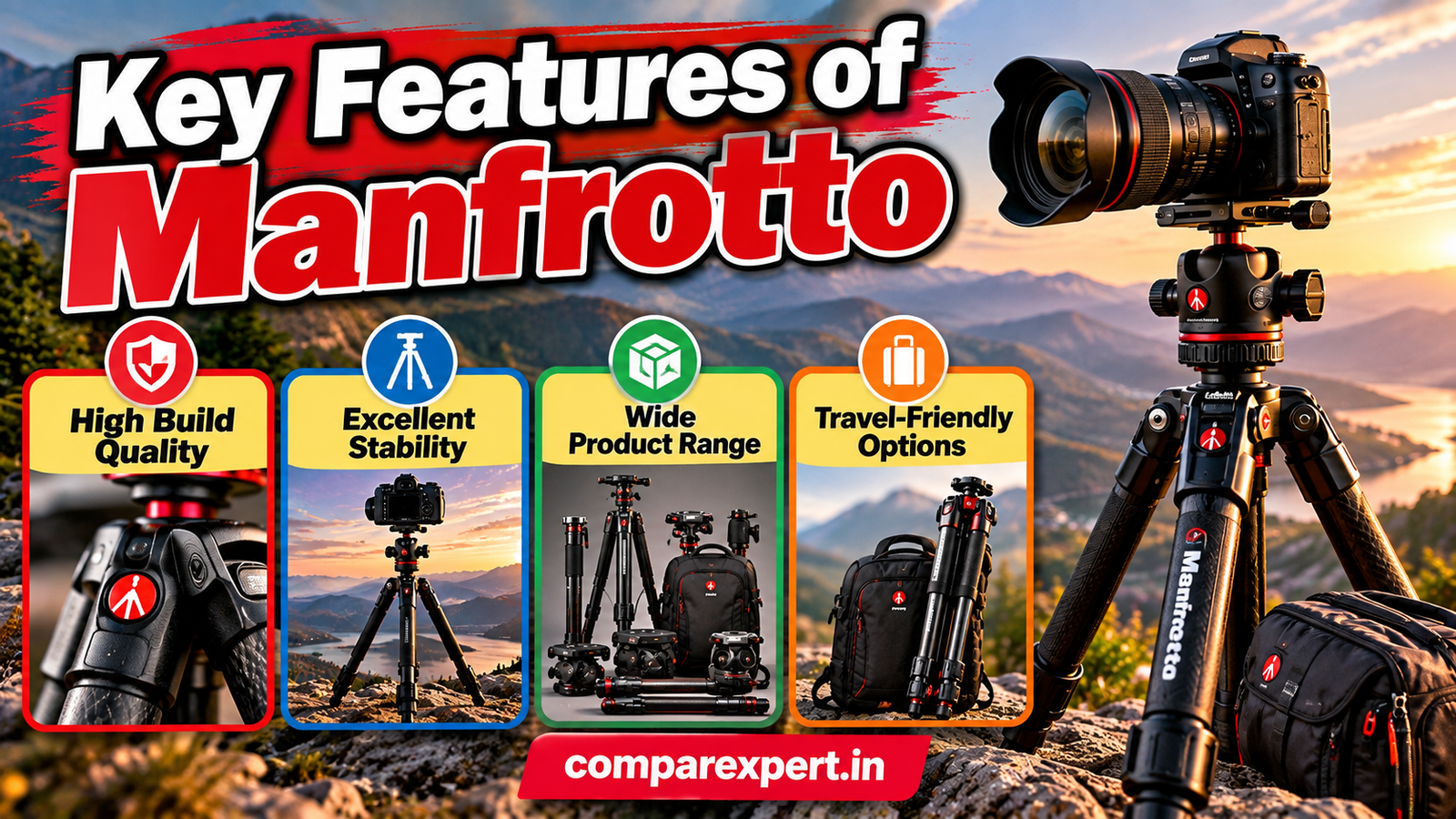
- High Build Quality: Manfrotto equipment is designed with durable materials for regular and professional use.
- Excellent Stability: Its tripods and support systems help keep cameras steady, reducing unwanted movement during photography.
- Wide Product Range: Manfrotto offers tripods, monopods, tripod heads, camera bags, lighting supports, and other photography accessories.
- Travel-Friendly Options: The Befree series provides compact and lightweight tripod options for photographers who travel frequently.
A Wide Range of Photography Equipment
Another reason Manfrotto is popular among photography enthusiasts is the size and variety of its product ecosystem. The company’s current camera and video support section lists hundreds of products and includes tripods, monopods, tripod heads, accessories, and related support equipment. Its tripod and monopod category alone includes many collections such as 055, 190, 290, Befree, Befree Advanced, Element, ONE, Nitrotech, and XPRO Monopod products.
This range is useful because photographers do not all work in the same way. Someone taking family photographs on weekends has different needs from a wildlife photographer carrying a large telephoto lens. A travel photographer needs low weight and compact dimensions, while a studio photographer may prefer a larger and stronger setup. A content creator may need a tripod that can handle both a camera and video accessories. Instead of forcing everyone toward one design, Manfrotto provides multiple categories.
Tripods and Monopods
Tripods are naturally one of the brand’s best-known product categories. They range from compact travel supports to larger professional systems. The Befree family is designed around portability, while the 055 family is built for photographers who want more substantial support. There are also monopods for situations where photographers need mobility and support without carrying a full three-leg tripod. This gives enthusiasts a path to choose equipment according to the kind of photography they actually practice.
A good tripod should not simply stand upright. It should allow photographers to adjust height, leg angles, camera position, and framing without making the process complicated. Current Manfrotto products use features such as quick locks, adjustable leg angles, center-column systems, and quick-release mechanisms. These features are especially useful when light changes quickly and the photographer needs to move from one composition to another.
Tripod Heads and Camera Support
The tripod legs are only half of a support system. The tripod head determines how easily the camera can be positioned, locked, tilted, panned, or rotated. Manfrotto offers different types of heads for different shooting needs, including ball heads, three-way heads, and fluid video heads. A landscape photographer may appreciate precise control, while a photographer working quickly may prefer the speed of a ball head.
Some current 055 kits combine the tripod with either a three-way or ball head. The three-way kit, for example, provides independent controls for framing and includes a quick-release plate, while another 055 kit combines the tripod with a ball head for faster framing.
Bags, Backpacks, and Useful Accessories
Photography equipment does not end with a tripod. Cameras, lenses, batteries, memory cards, cables, filters, and support equipment all need to be transported safely. Manfrotto also offers camera backpacks, shoulder bags, roller bags, tripod bags, quick-release plates, clamps, background systems, and other accessories. Its current bag range is designed around protection, organization, comfort, and travel.
This broader ecosystem is convenient for enthusiasts who want equipment that works together. A photographer can start with one tripod and later add a better head, bag, plate, or support accessory as their needs grow. Instead of replacing an entire system, they can build it gradually.
Equipment Designed for Different Shooting Styles
Photography is a broad field, and Manfrotto’s popularity is partly connected to this variety. A wildlife photographer may spend an entire morning with a large lens, while a street photographer may carry only a small mirrorless camera. A wedding photographer may need quick setup, a product photographer may need precise positioning, and a travel photographer may care deeply about every gram inside a backpack. The best equipment for one photographer can be completely wrong for another. Manfrotto’s product range gives enthusiasts room to choose based on their shooting style rather than simply choosing the most expensive option.
This flexibility is particularly useful as photographers become more experienced. Beginners often start with simple equipment and gradually discover what matters to them. Someone may begin with portraits and later become interested in landscapes. Another person may start with travel photography and move toward video. Instead of buying a completely unfamiliar support system each time, they can explore different Manfrotto collections.
Manfrotto for Studio and Portrait Photography
Studio photography may appear easier because the photographer does not have to deal with mountains, rain, or uneven ground. Yet studio work demands a different type of precision. Cameras often need to remain in a consistent position while lights, models, products, or backgrounds are adjusted. A stable support system can make repeated shooting much easier because the framing does not need to be rebuilt after every adjustment.
Manfrotto also has equipment that extends beyond traditional camera tripods. Its current product range includes lighting and background support equipment, including background systems, paper rolls, chroma-key products, clamps, and other studio accessories. The company’s background catalog currently contains hundreds of listed items across different materials and support systems.
This makes the brand useful for photographers who want to create a more complete studio setup. Portrait photographers can benefit from stable camera positioning, while product photographers can use support systems to create repeatable compositions. A stable camera also makes it easier to compare different lighting arrangements because the frame remains consistent.
Manfrotto for Landscape Photography
Landscape photographers are among the people who benefit most from a dependable tripod. Imagine arriving at a beautiful location before sunrise, setting up your camera, and waiting for the sky to change. You may need a long exposure, a carefully balanced composition, or several frames for a panorama. Even a small camera movement can change the final result. A stable tripod allows the photographer to slow down and concentrate on composition instead of holding the camera.
The 055 series is particularly interesting for landscape and outdoor work because some models feature a 90-degree center column. This allows the column to move from a normal vertical position to a horizontal position, creating different camera-placement possibilities. Manfrotto describes the feature as a way to capture new perspectives, and the mechanism can be folded into the tripod’s upper casting when not required.
Manfrotto and Modern Photography Needs
Photography has changed significantly with the growth of mirrorless cameras, smartphones, social media, and video content. Photographers today often need equipment that can handle several types of creative work. Manfrotto addresses this demand with products designed for photography, videography, travel, studio work, and hybrid content creation. This flexibility makes the brand useful for photographers who do not want to limit themselves to one style.
Lightweight Equipment for Photographers on the Move
Portability is an important factor for modern photographers. Carrying a heavy tripod for several hours can become uncomfortable, especially during travel or outdoor photography. Manfrotto offers compact and lightweight options that are easier to transport while still providing reliable camera support. Products from the Befree range, for example, are designed with travel and portability in mind, making them suitable for photographers who regularly move between locations.
Flexible Camera Positioning
A major advantage of a good tripod is the ability to place the camera exactly where you want it. Manfrotto tripods offer features such as adjustable leg angles and, on selected models, movable center columns. These features can help photographers capture low-angle photographs, overhead compositions, close-up images, and unusual perspectives. This flexibility is particularly useful for landscape, macro, product, architectural, and creative photography.
Why Manfrotto Is Popular for Travel Photography
Travel photography creates a difficult equipment problem: photographers want strong gear, but they do not want to carry a heavy load all day. This is where Manfrotto’s Befree range becomes especially relevant. Current Befree Advanced models are designed for travel and are available in aluminum and carbon-fiber versions. One aluminum model listed by Manfrotto weighs 1.49 kg, folds to 40 cm, reaches 150 cm, and has an 8 kg safety payload. The carbon-fiber version weighs about 1.25 kg, reaches the same 150 cm height, and lists a 9 kg safety payload.
Those numbers help explain the appeal. A travel tripod needs to be small enough to carry but strong enough to support a serious camera. If a tripod is too heavy, photographers may leave it in the hotel. If it is too weak, they may not trust it with their camera. The goal is to find a useful middle ground where portability and stability work together.
Manfrotto also offers travel-focused accessories such as padded tripod bags for the Befree series. These products make it easier to carry the support system from one location to another.
For photography enthusiasts who travel frequently, that convenience can be a deciding factor. A tripod is only useful when you are willing to bring it with you.
Support for Macro and Product Photography
Macro and product photography require precision because the subject may occupy a large portion of the frame. When you photograph a small object at close range, tiny camera movements can change focus and composition. This is especially important when using narrow apertures, focus stacking, or controlled lighting. A tripod gives the camera a fixed position so the photographer can concentrate on the subject rather than constantly correcting framing.
Manfrotto’s flexible support designs can also be useful when the camera needs to move into unusual positions. The horizontal-column capability available on certain 055 models is a good example. Instead of placing the camera only above the tripod center, photographers can extend the column horizontally and position the camera closer to a tabletop subject.
Product photography benefits from repeatability. If you are photographing several products for an online store, the camera should ideally remain at a similar height and angle. A reliable tripod makes that process easier. It becomes much simpler to produce a consistent series of images.
A Good Option for Hybrid Photo and Video Creators
The line between photography and video has become much less clear. Many photographers now record reels, tutorials, interviews, product demonstrations, travel videos, and behind-the-scenes content. This has increased demand for support equipment that can handle more than still images. Manfrotto has responded with products designed for photo, video, and hybrid shooting.
The Befree 3-Way Live Advanced, for example, is designed as a compact support system for both photography and videography. It combines a foldable three-way fluid head with a listed 6 kg payload and supports different plate systems.
This kind of flexibility is useful for creators who do not want separate support equipment for every activity. A photographer might use the same tripod for still landscapes in the morning and video content in the afternoon. That makes the equipment more useful and can reduce the amount of gear required in a camera bag.
Also Read
World Of Warships Explained: Ships, Battles, Modes, and More
What to Consider Before Choosing NordVPN for Your Devices
Essential Trading Concepts You Need to Know About Square Off
Why Professional Creators Are Turning to JOBY for Better Content
Understanding When and How to Cede Rights or Responsibilities
Easy Setup and Practical Controls
Professional-looking equipment is not useful if it takes too long to operate. Photographers often work under time pressure. A bird may fly away, a wedding moment may happen once, the sun may disappear behind a cloud, or a subject may move unexpectedly. Equipment needs to respond quickly.
Manfrotto places significant attention on setup mechanisms. Depending on the model, photographers can find systems such as Quick Power Lock, M-lock twist mechanisms, lever locks, adjustable leg-angle selectors, quick-release plates, and ergonomic head controls. The purpose is simple: make the equipment easier to operate so the photographer can concentrate on the photograph.
This is one of those benefits that may not appear impressive in a product photograph but becomes important after repeated use. If you set up a tripod once, almost any decent model may seem acceptable. If you adjust it dozens of times during a long shoot, differences become obvious. Smooth controls and predictable locks can save time and reduce frustration.
Brand Trust, Warranty, and Long-Term Use
Trust is an important part of any photography equipment purchase. Cameras and lenses are expensive, but support equipment also carries responsibility because it physically holds that expensive gear. If a tripod fails or a locking mechanism becomes unreliable, the result can be more than an inconvenient afternoon. A falling camera can cause serious damage.
Manfrotto emphasizes product protection and warranty support on its current website. The company’s general product pages state that Manfrotto products come with a 2-year standard warranty, with additional coverage available through registration, while certain tripod families have specific warranty arrangements. Individual product pages should always be checked because coverage can vary by product and region.
Long-term support also contributes to brand confidence. Photographers may keep equipment for years, so repairability, replacement parts, compatible plates, and accessories can become important. The value of a tripod is therefore not only its performance on the day it is purchased. It is also about how useful it remains as the photographer’s kit develops.
Is Manfrotto Equipment Worth the Investment?
Whether Manfrotto equipment is worth the investment depends on the photographer. There is no universal rule saying that the most expensive tripod is automatically the best tripod. Someone using a lightweight camera for casual family photos may not need a large professional support system. On the other hand, a landscape photographer carrying expensive lenses may consider stability and build quality much more important than saving a small amount of money.
The biggest value of Manfrotto is often found in the combination of stability, usability, range, and design. A photographer can choose a simple model for basic use or move toward a more advanced system as requirements increase. The current catalog includes compact travel products as well as heavier professional supports, making it possible to compare equipment according to actual shooting needs.
Conclusion
Manfrotto remains popular among photography enthusiasts because it combines heritage, practical engineering, stability, usability, and product variety. Its roots go back to 1974, and its current product range continues to cover tripods, monopods, heads, bags, accessories, backgrounds, and hybrid photo-video solutions.
The real appeal is not simply the Manfrotto name. It is the way the equipment can become part of a photographer’s workflow. A stable tripod can make a landscape session calmer. A compact travel tripod can make it easier to carry support on a trip. A precise tripod head can improve composition, while a well-designed camera bag can protect the equipment between locations.
Frequently Asked Questions
Manfrotto is popular because it offers a broad range of camera-support equipment with an emphasis on stability, practical controls, portability, and build quality. Its products cover beginners, enthusiasts, professionals, travelers, and hybrid creators.
Yes. Manfrotto offers different tripod sizes and designs, so beginners do not necessarily need to start with a large professional model. A compact or mid-range tripod can be a useful first step into more controlled photography.
Yes. The Befree range is specifically designed around travel and portability. Current models include lightweight aluminum and carbon-fiber options that balance compact size with camera support.
Yes. Manfrotto has products designed for photo, video, and hybrid workflows. Some travel models combine photography support with fluid or three-way heads designed to make them useful for video as well.
Start by checking your camera and lens weight, required height, folded size, tripod material, head type, maximum payload, and shooting style. Travel photographers should prioritize portability, while landscape or studio photographers may prefer greater stability and load capacity.
Table of Contents
Related Post




Common Challenges Faced by Instacart – Shoppers and How to Handle Them
admin
September 30, 2026
Read More »