

Comparexpert
Comparison Between Company


Key Features to Explore When Learning About Revopoint 3D Technologies Inc
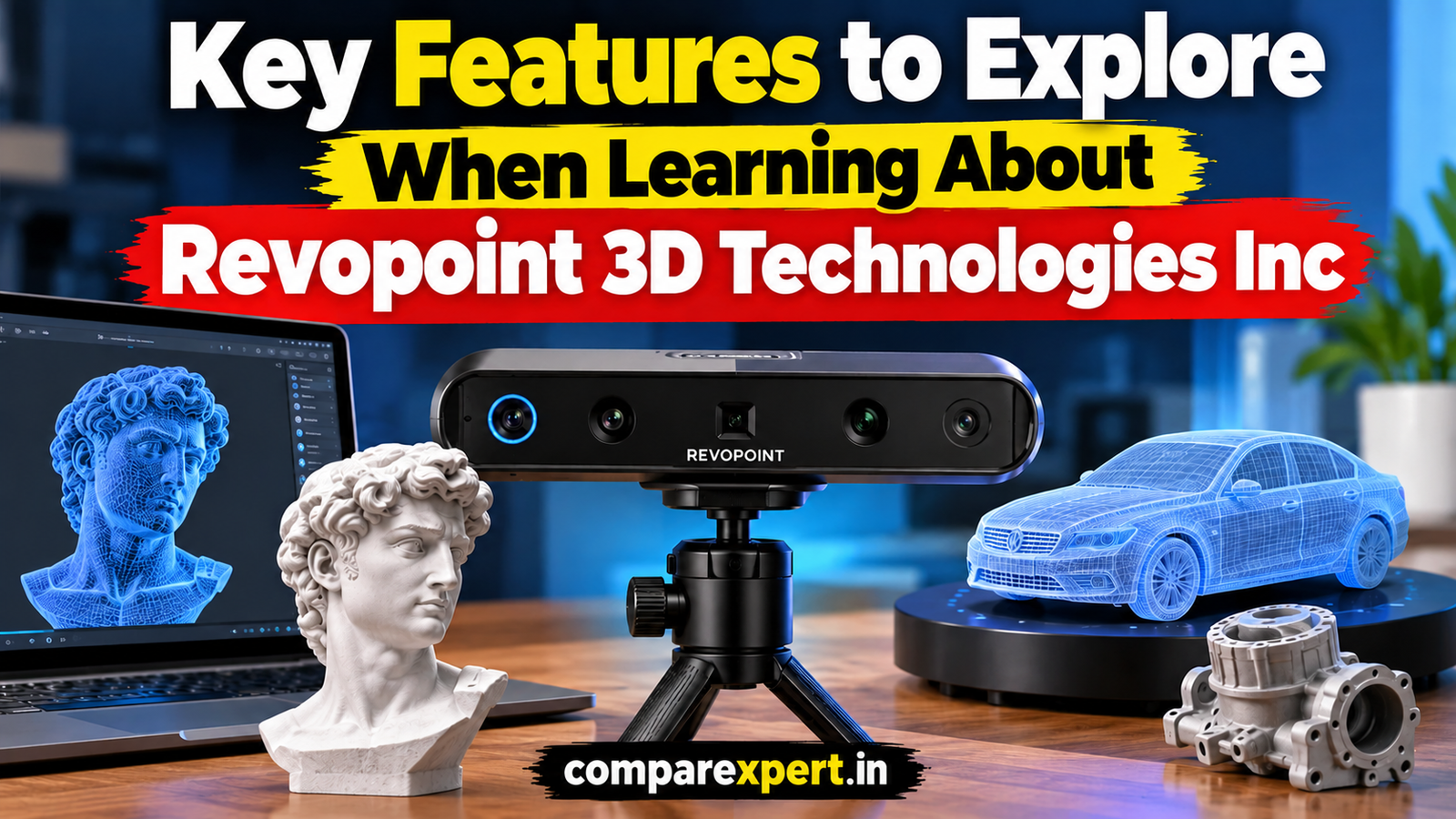
Discover the key features of Revopoint 3D Technologies Inc, including its innovative 3D scanners, scanning accuracy, software capabilities, and practical applications. Learn how Revopoint 3D scanning technology supports 3D printing, product design, reverse engineering, and digital modeling to help you choose the right scanning solution for your needs.
Table of Contents
Introduction to Revopoint 3D Technologies Inc.
3D scanning is changing how people design products, create digital models, and inspect physical objects. One company working in this field is Revopoint 3D Technologies Inc., which develops 3D scanners and related software for different applications. Founded in 2019, the company focuses on making 3D scanning technology accessible to professionals, businesses, and everyday users.
Revopoint offers different scanners designed for tasks ranging from capturing small objects to digitizing larger items. Its products can support applications such as product design, 3D printing, reverse engineering, and quality inspection. When exploring the company, it is helpful to understand its scanning technology, accuracy, software, compatibility, and product range.
Understanding Revopoint 3D Scanning Technology
3D scanning technology captures the shape and, depending on the device, the color and surface details of a physical object. It converts this information into a digital representation that can be viewed, edited, measured, or used in other applications.
Revopoint uses different scanning technologies across its product range, including structured light, infrared scanning, and laser-based methods. Each technology has different strengths depending on the object’s size, surface, and required level of detail.
For example, a small mechanical component may require detailed scanning, while furniture or a human body may benefit from a scanner designed for larger objects. Understanding these differences helps users choose the right device for their needs.
How Revopoint 3D Scanners Work
A Revopoint 3D scanner captures information from an object’s surface using optical sensors and cameras. Depending on the model, it projects structured light or laser patterns onto the object and records how those patterns appear on its surface.
The scanner processes this information to calculate the object’s three-dimensional shape. The captured data is then merged into a digital model by specialized software.
The process generally involves three stages: scanning the object, processing and aligning the captured data, and exporting the final model. Some objects may require several scans from different angles to capture hidden areas and fine details.
Accuracy and Detail Capture
Scanning accuracy is an important factor when selecting a 3D scanner. It describes how closely the captured measurements represent the physical object. Precision, resolution, and volumetric accuracy are related but different specifications, so users should avoid treating them as interchangeable.
Revopoint publishes model-specific accuracy specifications. For example, its professional MetroX series supports detailed scanning workflows, while the MINI series is designed for capturing small objects and intricate features.
Actual results depend on several factors, including the scanner, scanning distance, object surface, calibration, and scanning technique. Reflective, transparent, or very dark objects can be particularly challenging for some optical scanners.
Before purchasing a device, compare its specifications with the requirements of your project rather than choosing solely by the highest advertised accuracy figure.
Key Features of Revopoint 3D Scanners
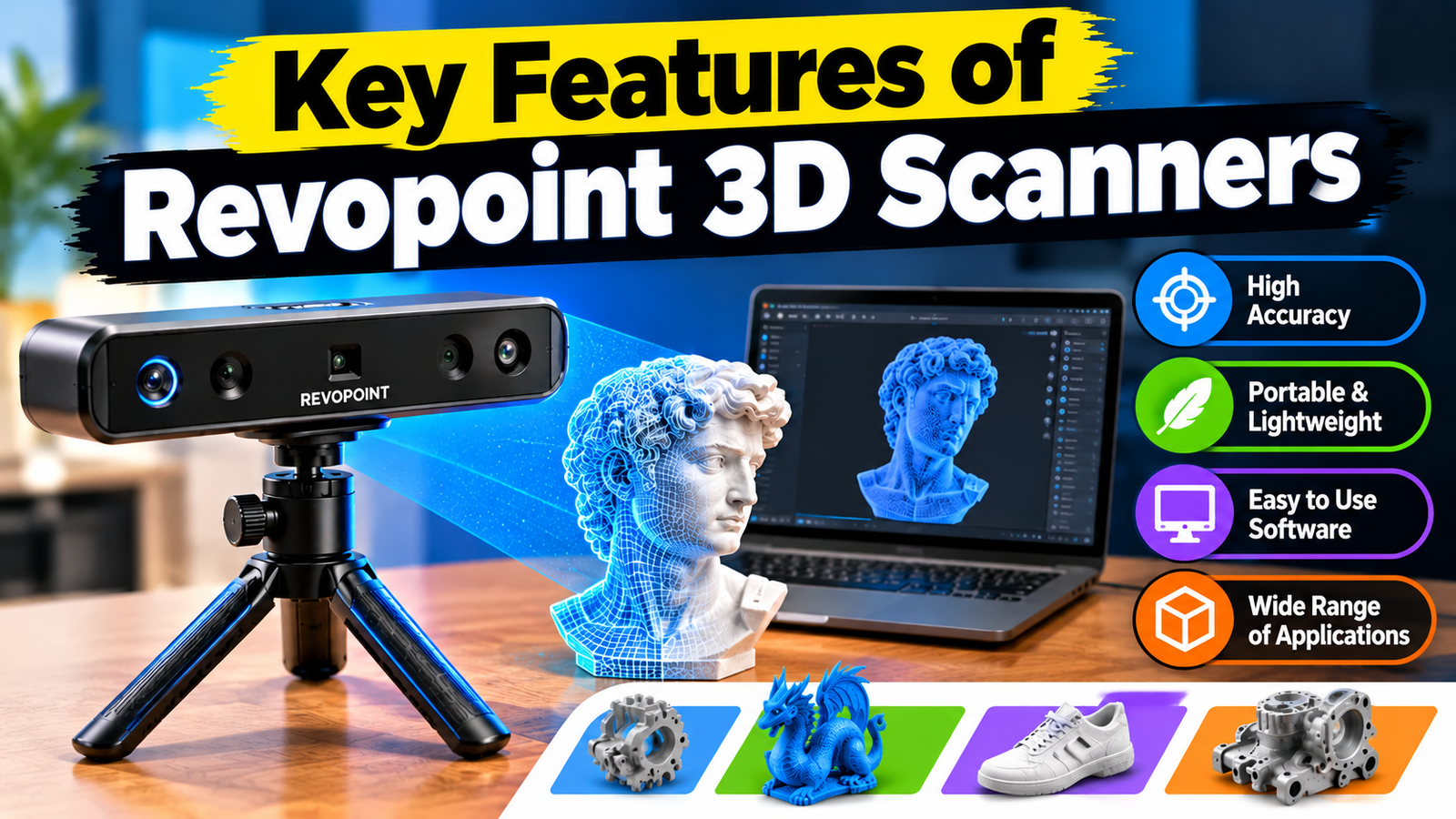
One important feature of Revopoint products is the variety of scanners available for different users and applications. Instead of offering only one type of device, the company provides options for small objects, larger items, and professional inspection tasks.
Depending on the model, users may find features such as multiple scanning modes, color capture, wireless connectivity, portable designs, and specialized processing software.
The right combination of features depends on the intended application. A hobbyist creating 3D-printed models may prioritize affordability and ease of use, while an industrial designer may focus more on accuracy, measurement capabilities, and workflow compatibility.
Portability and Ease of Use
Portability can make a significant difference when scanning objects in different locations. Many Revopoint scanners feature compact designs that allow users to move between a workshop, office, classroom, or other workspace.
Some models support connections to compatible mobile devices, while others are intended primarily for computer-based workflows. Certain products also offer standalone operation, reducing dependence on an external computer during scanning.
Ease of use is equally important for beginners. Software guidance, scanning tutorials, and suitable tracking modes can help new users learn the process. However, achieving consistent results still requires practice, particularly when scanning objects with complicated shapes or limited surface features.
Different Types of Revopoint 3D Scanners
Revopoint offers scanners for different object sizes and scanning requirements. Understanding the general purpose of each product family can help narrow down the options.
Scanner category | Main purpose | Suitable applications |
MINI series | Small objects and fine details | Jewelry, miniatures, small components |
POP series | Versatile object scanning | Prototypes, crafts, product design |
RANGE series | Medium-to-large objects | Furniture, sculptures, equipment |
MIRACO series | Portable, standalone scanning | Fieldwork and general object digitization |
Metro series | Detailed scanning and inspection workflows | Mechanical components and industrial design |
Trackit series | Optical tracking-based professional scanning | Larger parts and industrial measurement workflows |
Software and 3D Modeling Support
Hardware is only one part of the scanning process. Software helps convert captured information into a useful digital model.
Revopoint provides Revo Scan for scanning and post-processing, including point-cloud capture, model alignment, and mesh generation. Depending on the scanner and software version, users can work with different file formats and processing options.
The company also offers specialized tools for professional workflows. Revo Metro supports compatible Metro-series scanning, while Revo Track is designed for Trackit-series devices. Revo Design supports scan-to-CAD workflows, and Revo Measure provides tools for measurement and inspection.
Common export formats include STL, OBJ, and PLY, although the available formats depend on the data type and software.
Before choosing a scanner, check whether its software supports your computer, operating system, and preferred design applications.
Applications Across Different Industries
Revopoint 3D scanners can support a variety of practical tasks.
In 3D printing, users can scan an existing object and prepare its digital model for further editing or printing. This can be useful when recreating a broken part or developing a custom design.
In product design, scanning helps designers capture the shape of physical objects before making modifications. Engineers can also use scanned models as references during reverse engineering, where an existing component is recreated digitally.
Other potential applications include education, art, sculpture, digital archiving, automotive customization, and selected inspection workflows. Some scanners are also suitable for capturing faces or body shapes for compatible digital modeling applications.
However, suitability depends on the device, required detail, object characteristics, and intended use. A general-purpose scanner may not provide the measurement performance required for every industrial or scientific task.
Understanding the Role of Revo Scan Software
Software plays an important role in the overall 3D scanning experience. Revopoint offers Revo Scan, which supports scanning, point-cloud processing, post-processing, and alignment of multiple scans. The software is available for supported devices and operating systems, although compatibility varies by scanner model and version.
After capturing an object, users can process the scan and prepare the resulting model for further work. Supported export formats include STL, OBJ, and PLY, with additional formats available for certain types of models. These formats can help users transfer scan data into compatible 3D modeling, design, and printing applications. Before downloading the software, check the official compatibility information to ensure that it supports your particular scanner and computer.
How Revopoint Supports 3D Printing and Product Design
3D scanning and 3D printing work well together because scanning can help convert an existing physical object into a digital model. For example, a designer might scan a decorative object, adjust its shape using compatible modeling software, and prepare the modified design for 3D printing.
Product designers can also use scanned models as references when developing new products or modifying existing components. This approach can reduce the need to recreate every shape manually, especially when working with objects that have complex curves or irregular surfaces.
Advantages for Beginners and Professionals
Revopoint’s product range gives users several options depending on their experience and budget. Beginners can explore 3D scanning without immediately investing in a specialized industrial system, while experienced users can investigate models designed for more demanding workflows.
Portable designs may make scanning easier in workshops and educational settings. Compatible software also helps users move from raw scanning data to a usable digital model.
For professionals, specialized measurement and scan-to-CAD tools can support product development and inspection processes. Nevertheless, users should consider the time needed for setup, calibration, scanning, and post-processing.
A scanner is most useful when its capabilities match a clear purpose. Choosing based on actual project requirements is generally more effective than paying for features that may never be used.
What Makes Revopoint 3D Technologies Inc. Different?
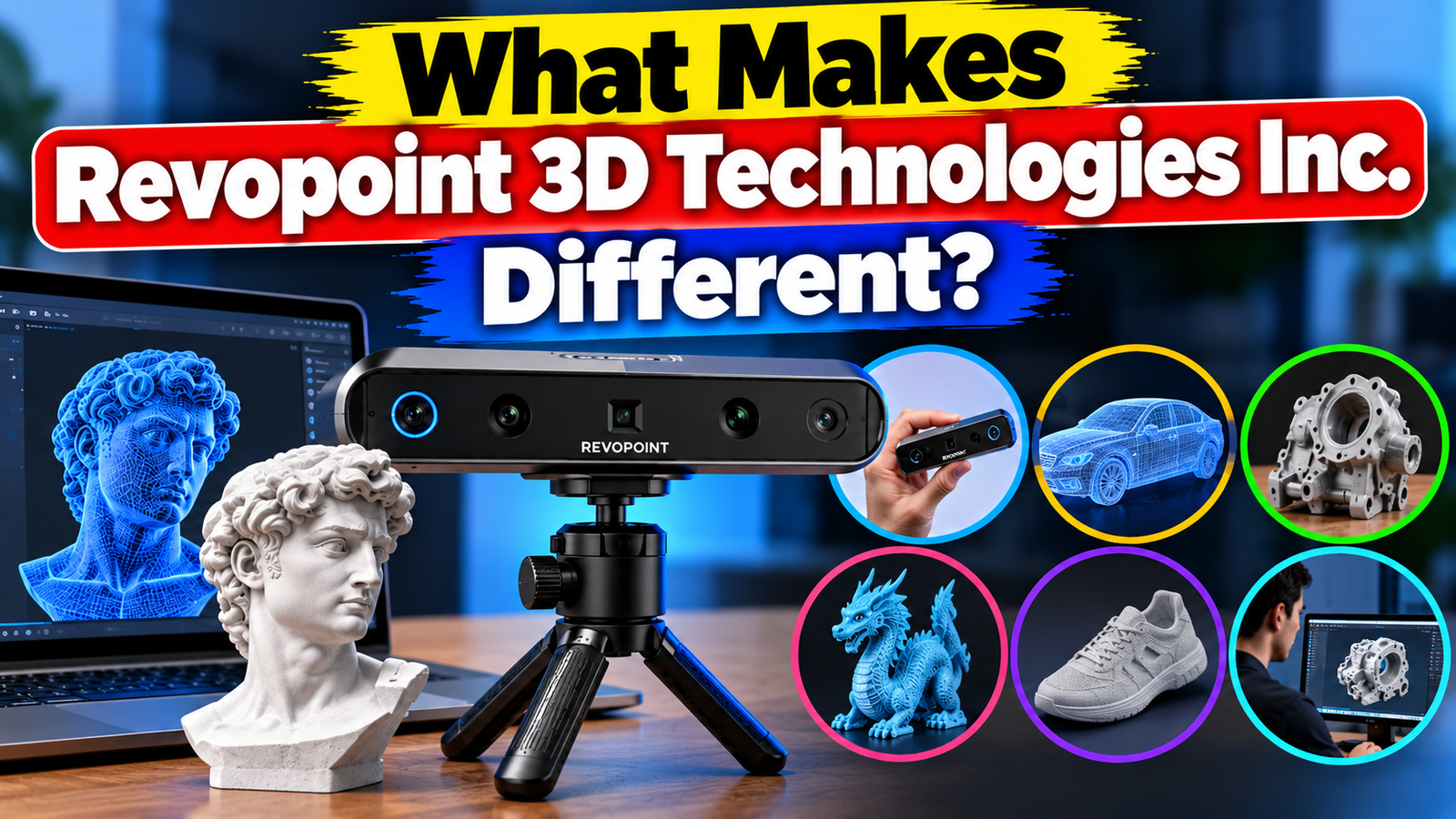
One of the main things to explore about Revopoint 3D Technologies Inc. is its focus on making 3D scanning accessible to different types of users. Its product range includes scanners for beginners, designers, hobbyists, and professionals who need more specialized scanning capabilities. Instead of focusing on a single application, the company develops solutions for tasks such as 3D modeling, product development, digital design, and industrial inspection.
Another important factor is the combination of scanning hardware and software. Users can capture physical objects, process the scanned data, and export digital models for compatible applications. This integrated approach can simplify workflows for people who want to transform real-world objects into digital assets. However, the most suitable solution depends on the scanner model, the required accuracy, and the complexity of the project.
Connectivity and Compatibility
Connectivity affects how conveniently users can operate a scanner and transfer data. Depending on the model, Revopoint devices may support USB connections, Wi-Fi, or standalone operation.
Compatibility also extends to software and exported files. A scanner that produces compatible files can fit more easily into an existing 3D modeling or engineering workflow.
Before buying, check the supported operating systems, computer requirements, mobile-device compatibility, and software versions. Some professional applications may require more powerful hardware than basic scanning tasks.
It is also useful to confirm whether accessories such as tripods, turntables, tracking markers, or portable power solutions are supported by the selected model.
Pricing and Value for Money
The cost of a Revopoint scanner depends on its model, capabilities, accessories, and intended use. Entry-level devices and professional scanning systems can differ significantly in price.
When comparing products, look beyond the initial purchase cost. Consider whether the package includes the accessories you need, whether professional software requires an additional purchase, and whether your computer can handle the processing workload.
Factor | Why it matters |
Scanner price | Determines the initial investment |
Accuracy and detail | Affects suitability for specific tasks |
Software | Determines available editing and measurement tools |
Accessories | May improve scanning convenience |
Compatibility | Helps avoid additional hardware costs |
Support and updates | Can influence long-term usability |
Check current official pricing before purchasing because promotions, regional availability, and product packages can change.
Also Read
An In-Depth Look at R+R Medicinals CBD: Product Range, Quality, and Value
Why The Phoenix Continues to Inspire People Around the World
Top Reasons to Consider Frey When Comparing Popular Brands
How Does Uber Eats Global Delivery Work Across Different Countries?
Why TransferGo Is Worth Considering for International Transfers
Limitations to Consider
Although 3D scanning offers many benefits, it does not guarantee a perfect digital model with every scan. Reflective, transparent, dark, or featureless surfaces may require additional preparation or a different scanning method.
Large objects may take longer to capture and process, while intricate components may require careful scanning from multiple angles. Users may also need to clean up holes, remove unwanted data, align scans, or repair the resulting mesh.
Another consideration is learning time. Even scanners designed for beginners require an understanding of tracking, scanning distance, calibration, and data processing.
For professional measurement, users should also consider validation requirements and the difference between advertised specifications and performance in their actual working environment.
Tips for Choosing the Right Revopoint Scanner
Start by identifying what you plan to scan. Small components, large furniture, human figures, and precision mechanical parts can require different scanning capabilities.
Next, determine the level of detail and accuracy your project needs. If you are creating models for hobby 3D printing, your requirements may differ from those of a business performing dimensional inspection.
Consider how you want to work. A portable scanner may be convenient for field use, while a specialized professional system may be more appropriate for a fixed engineering workstation.
Finally, review the software, supported file formats, accessories, warranty conditions, and current price. Comparing these factors together will help you select a device that fits both your technical requirements and budget.
Future of 3D Scanning Technology
The 3D scanning industry continues to develop as hardware, processing software, and digital design tools improve. Faster data processing and better integration with CAD applications can make scanning more useful across manufacturing, product development, education, and creative work.
AI-assisted processing and improved automation may also help simplify tasks such as data cleanup and model preparation. However, the practical benefits depend on the implementation and the quality of the captured data.
For Revopoint users, software development and compatibility updates are important areas to monitor alongside new scanner releases. Following official product announcements and support documentation can help users understand which improvements are available for their specific devices.
Conclusion
Revopoint 3D Technologies Inc. offers a range of 3D scanning products designed for different users and applications. Its key features include model-specific scanning technologies, portable devices, scanning software, multiple export formats, and tools for professional measurement and reverse engineering.
The best scanner depends on what you need to capture, the accuracy required, your budget, and the software you plan to use. By comparing these factors carefully, you can make a more informed decision and determine whether a Revopoint scanner fits your project.
Learning about the company’s products is a useful starting point for anyone interested in 3D scanning, digital modeling, and the growing connection between physical objects and digital design.
Frequently Asked Questions
Revopoint 3D Technologies Inc. is a company founded in 2019 that develops 3D scanners, software, and related solutions for digitizing physical objects.
Depending on the model, you can scan objects for 3D printing, product design, reverse engineering, digital modeling, and selected measurement applications.
Yes. Some models are designed to make 3D scanning accessible to new users. Beginners should still expect to spend time learning scanning techniques and post-processing.
Revopoint offers Revo Scan for scanning and post-processing, alongside specialized applications such as Revo Metro, Revo Track, Revo Design, and Revo Measure. Availability depends on the scanner and workflow.
Compare the size of the objects you plan to scan, required accuracy, scanning technology, software compatibility, connectivity, accessories, and total cost before making a decision.
Table of Contents
Related Post

An In-Depth Look at R+R Medicinals CBD: Product Range, Quality, and Value
admin
October 24, 2026
Read More »

Discover the Best R+Co Styling Products for Salon-Worthy Hair at Home
admin
October 24, 2026
Read More »


The Secrets to Building a Successful Legacy That Stands the Test of Time
admin
October 23, 2026
Read More »

Exploring the Best Products, Features, and Innovations From Waterdrop (US)
admin
October 22, 2026
Read More »