
Comparexpert
Comparison Between Company


Bolt Business: The Ultimate Guide to Scaling Your Online Business in 2026
Bolt Business is a modern approach to building and scaling online ventures in 2026, focused on speed, automation, and smart growth strategies. This guide explores how entrepreneurs can leverage AI, scalable business models, and efficient systems to grow faster without increasing costs. If you want to understand how Bolt Business works and how to apply it for sustainable success, this article provides practical insights, key trends, and proven methods to scale your online business effectively.
Table of Contents
What is Bolt Business in 2026?
Evolution of Bolt Business Model
If you’re wondering what Bolt Business really means in 2026, think of it less as a specific company and more as a mindset—a fast, scalable, AI-driven business model designed for rapid growth. The term “Bolt” represents speed, efficiency, and seamless execution. In today’s landscape, businesses are no longer built slowly over years—they’re launched, tested, and scaled in months.
The digital ecosystem has undergone a massive transformation. Tools that once required huge budgets are now available for under $50 per month, enabling even small businesses to compete globally. According to recent data, AI adoption among small businesses has reached 58%, and over 75% are actively investing in AI tools. This means the barrier to entry is practically gone, but competition has skyrocketed.
So, what separates a winning Bolt Business from the rest? It’s not just about launching quickly—it’s about building something that scales without increasing costs proportionally. That’s the core principle. A true Bolt Business grows revenue faster than expenses, creating exponential growth potential instead of linear expansion.
Why It Matters for Online Entrepreneurs
Let’s be real—starting an online business today is easier than ever. But scaling it? That’s where most people fail. The Bolt Business model is important because it focuses on sustainable, scalable growth, not just short-term wins.
Imagine running a traditional business where every new customer requires more employees, more time, and more resources. That’s not scalable. Now compare that to a digital product or SaaS platform where serving 1,000 customers costs nearly the same as serving 10,000. That’s the magic of scalability.
In 2026, success isn’t about working harder—it’s about building smarter systems. Entrepreneurs who adopt the Bolt Business approach can leverage automation, AI, and smart distribution to grow faster than ever before.
The New Rules of Online Business Scaling
From Growth to Scalability
Here’s something most people don’t realize: growth and scalability are not the same thing. You can grow a business and still struggle financially. Scalability means your business can handle growth without breaking.
In simple terms:
- Growth = More revenue + more costs
- Scalability = More revenue with minimal cost increase
This distinction is crucial in 2026 because traditional scaling methods are becoming outdated. Businesses now prioritize structural speed and adaptability over just adding more features or products.
Think of scalability like building a highway instead of a narrow road. The highway can handle thousands of cars without congestion. That’s what your business should aim for—infrastructure that supports massive growth effortlessly.
Key Metrics (LTV, CAC, Profit Margins)
If you want to scale like a pro, you need to understand three critical metrics:
Metric | Meaning | Ideal Benchmark |
LTV (Lifetime Value) | Total revenue per customer | High |
CAC (Customer Acquisition Cost) | Cost to acquire a customer | Low |
LTV:CAC Ratio | Profitability indicator | 3:1 or higher |
A healthy Bolt Business ensures that customer value significantly outweighs acquisition cost. If you spend ₹1000 to acquire a customer but only earn ₹800, scaling will destroy your business.
Successful entrepreneurs treat these numbers like a GPS system. Without them, you’re just guessing—and guessing doesn’t scale.
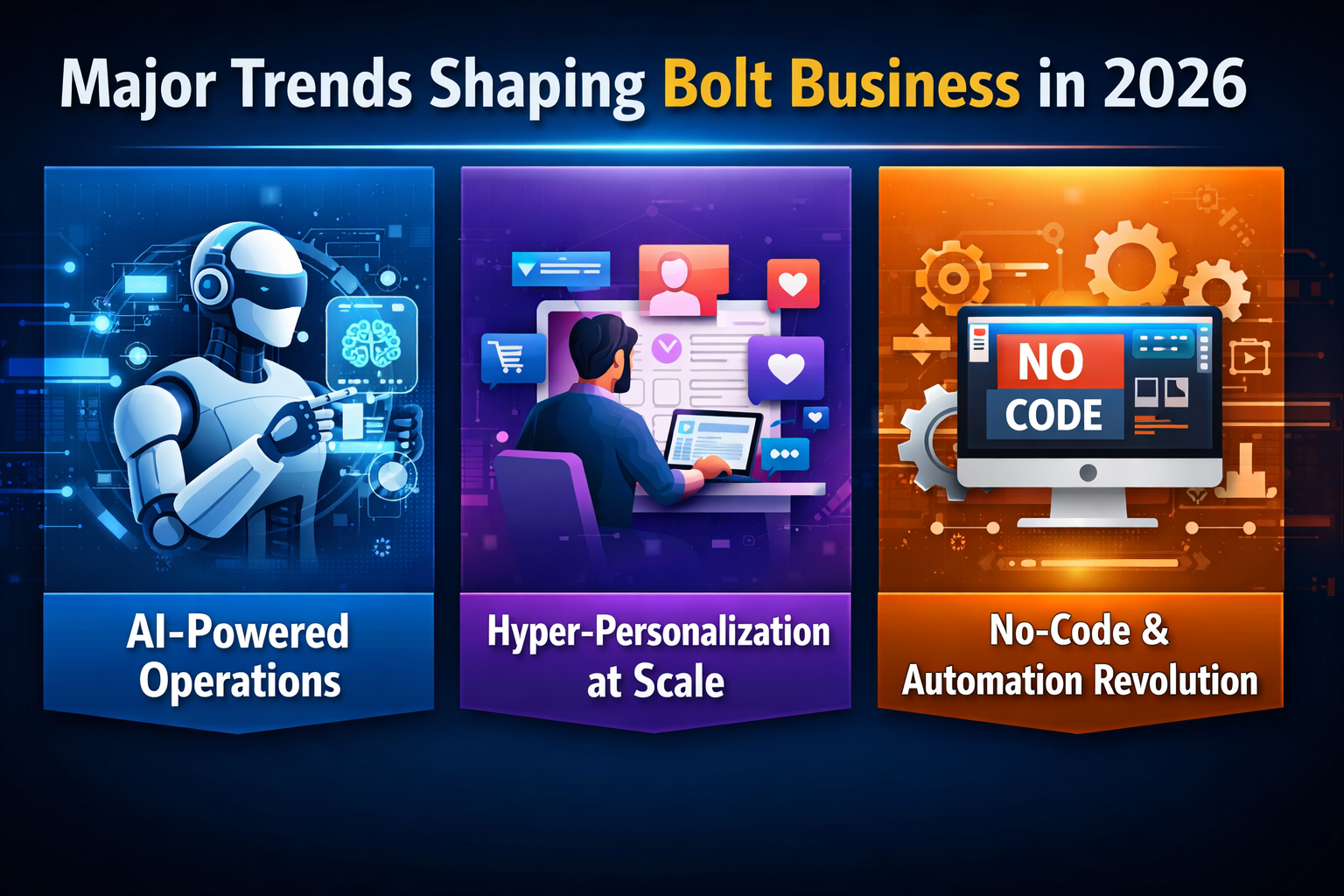
Major Trends Shaping Bolt Business in 2026
AI-Powered Operations
AI is the foundation of contemporary business and is no longer optional. From chatbots to predictive analytics, AI is transforming how businesses operate daily. In fact, 53% of small businesses now use AI-powered chatbots for customer service.
Imagine having a virtual assistant that works 24/7, handles customer queries instantly, and never gets tired. That’s what AI brings to the table. It reduces costs while improving efficiency—a perfect combination for scalability.
Hyper-Personalization at Scale
Customers today expect personalized experiences. Generic marketing? It doesn’t work anymore. Studies show that 71% of consumers expect personalized interactions, and most get frustrated when they don’t receive them.
Bolt Businesses use AI to analyze customer behavior and deliver tailored experiences automatically. It’s like having a personal shopper for every customer—but without the cost.
No-Code & Automation Revolution
Here’s the game-changer: you no longer need to be a developer to build powerful tools. No-code platforms allow businesses to create apps, automate workflows, and launch products faster than ever.
Some reports suggest businesses can reduce development time by up to 90% using low-code tools. When you consider it, that is absurd. Instead of months, it now takes days.
Building a Scalable Foundation
Choosing the Right Business Model
Not all business models are created equal. If you want to scale, you need a model that supports exponential growth. The best options include:
- SaaS (Software as a Service)
- Subscription-based businesses
- Digital products
- Marketplaces
These models work because they decouple revenue from effort. You’re creating technologies that automatically produce revenue rather than exchanging time for cash.
Infrastructure & Technology Stack
Your tech stack is like the engine of your business. Your growth will stall if it is weak. In 2026, scalable businesses rely on:
- Cloud infrastructure
- Automation tools
- AI integrations
- Data analytics platforms
The goal is simple: build a system that runs smoothly even when demand spikes.
AI as the Growth Engine
Automation of Customer Service
Customer service used to be a bottleneck. Not anymore. AI chatbots and automation tools can handle thousands of queries simultaneously.
This doesn’t just save money—it improves customer satisfaction. Faster responses = happier customers.
AI in Marketing & Analytics
Marketing has become smarter, not harder. AI tools can analyze data, predict trends, and optimize campaigns automatically.
Instead of guessing what works, you’ll know exactly what drives results. That’s a huge advantage in a competitive market.
Distribution Strategies That Actually Scale
Product-Led Growth (PLG)
Product-led growth is one of the most powerful strategies in 2026. Instead of relying on sales teams, your product becomes the main driver of growth.
Think about apps like Slack or Zoom. Users try the product, love it, and invite others. That’s organic scaling.
Community & Viral Loops
Building a community around your product can create a powerful growth engine. When users become advocates, your marketing costs drop significantly.
It’s like word-of-mouth—but amplified by the internet.
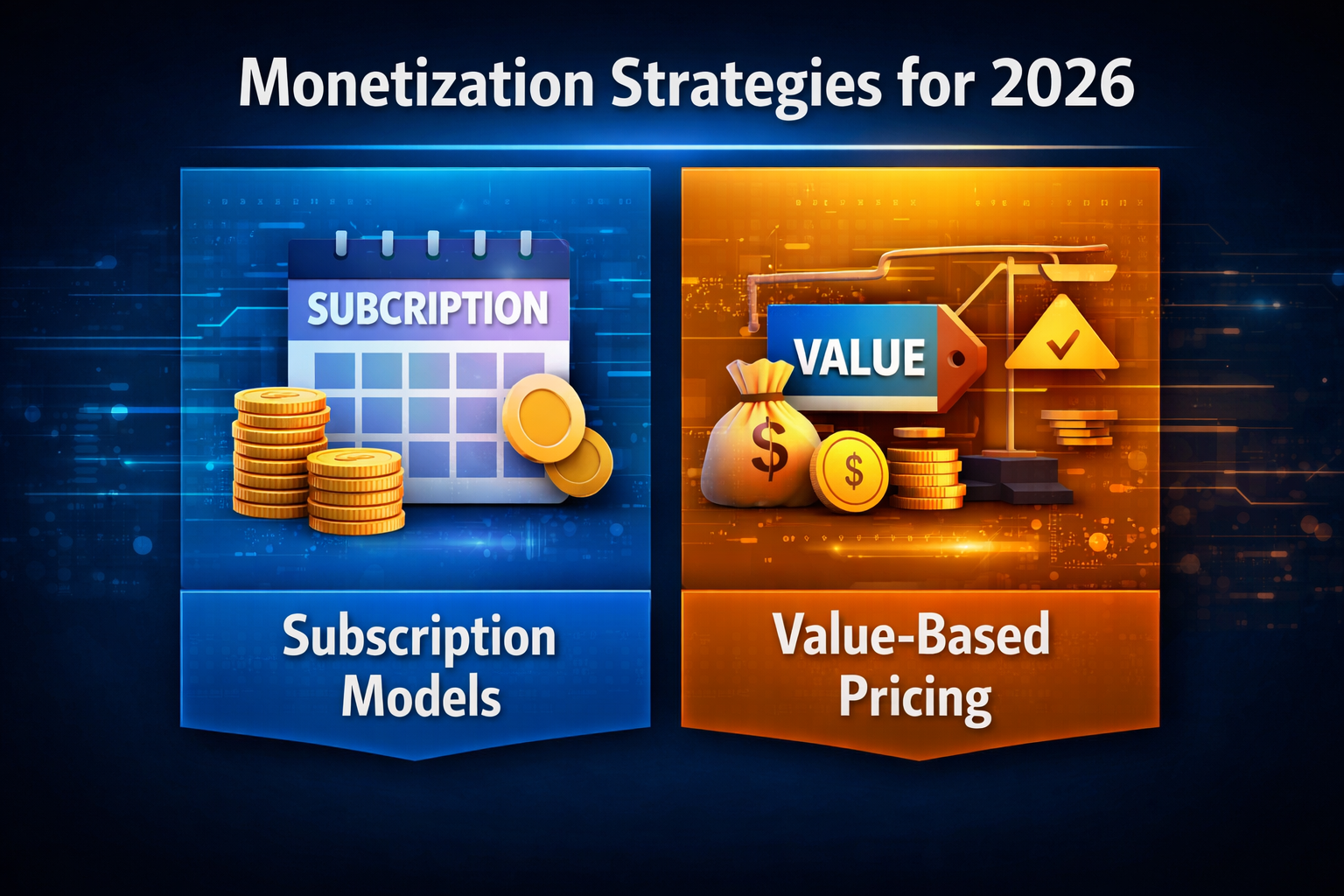
Monetization Strategies for 2026
Subscription Models
Recurring revenue is the holy grail of scalability. Subscription models provide predictable income and higher customer lifetime value.
Value-Based Pricing
Instead of pricing based on cost, price based on value. If your product saves a business ₹1,00,000, charging ₹10,000 is a no-brainer.
How to Build a High-Converting Sales Funnel for Bolt Business
A strong sales funnel is the backbone of any successful Bolt Business, especially in 2026 where competition is higher than ever. Without a proper funnel, even the best products fail to convert visitors into paying customers. Think of your sales funnel as a guided journey—it takes a stranger, builds trust, and gradually turns them into a loyal customer.
In the Bolt Business model, sales funnels are no longer manual or static. They are automated, data-driven, and optimized using AI tools. From lead generation to final conversion, every step is carefully designed to maximize efficiency and minimize drop-offs. For example, landing pages are now optimized in real-time based on user behavior, while email sequences are personalized using AI to increase engagement.
A high-converting funnel typically includes awareness, interest, decision, and action stages. However, what makes it powerful in a Bolt Business setup is automation. Tools can track user actions, send targeted follow-ups, and even retarget potential customers without human intervention. This means your funnel works 24/7, generating leads and sales even while you sleep.
Content Marketing Strategy for Scaling Bolt Business
Content marketing remains one of the most powerful tools for growing a Bolt Business, especially when done strategically. In 2026, content is not just about writing blogs—it’s about creating a complete ecosystem of value-driven content that attracts, engages, and converts your audience.
The key to success lies in consistency and relevance. Your content should solve real problems, answer user queries, and provide actionable insights. When your audience finds value in your content, they naturally trust your brand, making it easier to convert them into customers. This is why SEO-driven blog posts, videos, and social media content play a crucial role in scaling.
One of the biggest advantages of content marketing is that it generates organic traffic, reducing your dependency on paid ads. Over time, high-quality content compounds like an asset, bringing in leads continuously without additional costs. This makes it perfectly aligned with the Bolt Business principle of scalable growth.
Also Read
Bright Data Review: Web Data Collection Platform Explained
Exotic India: Complete Guide to Indian Art, Culture, and Products
Parcel ABC ES Review: Shipping Services and Delivery Options
Top 10 Reasons WP Engine Boosts Website Speed and SEO Performance
Compara CL Review: Features, Benefits, and Why It Matters for Digital Marketers
Email Marketing Automation for Bolt Business Growth
Email marketing is still one of the most powerful tools for scaling a Bolt Business, especially when combined with automation. Instead of sending manual emails, automated workflows allow you to nurture leads, onboard customers, and increase retention effortlessly. You can set up sequences like welcome emails, abandoned cart reminders, and personalized offers that run 24/7. This not only saves time but also improves conversion rates and customer engagement. In 2026, smart businesses use AI-driven email tools to send the right message at the right time, making email marketing a key driver of scalable growth.
Leveraging Social Media to Scale Bolt Business
Social media platforms have become essential for growing a Bolt Business quickly and effectively. With billions of active users, platforms like Instagram, LinkedIn, and YouTube offer massive opportunities to reach your target audience. The key is to focus on creating valuable and engaging content rather than just promotional posts. Short-form videos, educational posts, and storytelling content can help build trust and authority. When combined with consistent posting and audience interaction, social media can drive traffic, generate leads, and support long-term business growth.
SEO Strategies to Boost Bolt Business Visibility
Search Engine Optimization (SEO) plays a crucial role in the success of any Bolt Business. Ranking higher on search engines means more visibility, more traffic, and ultimately more sales. A strong SEO strategy includes keyword research, high-quality content creation, and technical optimization. By targeting the right keywords and creating valuable content, you can attract users who are actively searching for your solutions. Unlike paid ads, SEO provides long-term benefits and continuous traffic, making it a sustainable growth strategy for online businesses.
Common Mistakes to Avoid
Over-Reliance on Paid Ads
Paid ads can drive traffic, but they’re not sustainable long-term. Costs keep rising, and margins shrink.
Ignoring Unit Economics
Scaling without understanding your numbers is like driving blindfolded. It’s only a matter of time before you crash.
Future of Bolt Business
AI + Physical Business Integration
Interestingly, the future isn’t just digital. Experts suggest AI is now enabling physical businesses to scale faster, creating a blend of online and offline models.
Sustainable Growth Models
Sustainability isn’t just a buzzword—it’s becoming a competitive advantage. Businesses that align with customer values will win.
Conclusion
The concept of Bolt Business in 2026 is all about speed, scalability, and smart systems. It’s not enough to just start an online business—you need to build one that can grow without limits. By leveraging AI, automation, and scalable models, you can create a business that doesn’t just survive but thrives in a highly competitive environment.
If you take one thing away from this guide, let it be this: focus on systems, not just effort. That’s the real secret to scaling in 2026.
Frequently Asked Questions
Bolt Business refers to a fast, scalable online business model that leverages AI, automation, and efficient systems for rapid growth.
Yes, AI is essential for automation, personalization, and data-driven decision-making, making it a key component of scalable businesses.
SaaS, subscription-based models, and digital products are among the most scalable options.
Focus on organic strategies like SEO, community building, and product-led growth instead of relying solely on paid ads.
Ignoring unit economics and scaling without a clear understanding of profitability.
Table of Contents
Related Post

BeLight Software Review: Creative Tools for Designers and Developers
admin
March 19, 2026
Read More »