

Comparexpert
Comparison Between Company


Top 10 Reasons WP Engine Boosts Website Speed and SEO Performance
Discover the top 10 reasons WP Engine improves website speed and boosts SEO performance. Learn how advanced caching, global CDN, optimized servers, and built-in performance tools from WP Engine help WordPress websites load faster, enhance user experience, and achieve better search engine rankings.
Table of Contents
Understanding Why Website Speed Matters for SEO
Imagine clicking a website link and waiting five seconds for it to load. Frustrating, right? Most users feel the same way. In fact, slow-loading websites often drive visitors away before they even see the content. Search engines like Google understand this behavior very well, which is why page speed has become a major ranking factor in modern SEO strategies. Fast websites not only provide a better user experience but also improve visibility in search results.
Hosting plays a massive role in determining how quickly your website loads. Even if your website is well-designed and optimized, poor hosting can ruin performance. That’s where premium managed hosting providers like WP Engine come in. They specialize in WordPress-specific infrastructure designed for speed, security, and reliability. By optimizing servers, caching systems, and delivery networks, WP Engine helps websites load faster and perform better in search rankings.
Businesses, agencies, and bloggers increasingly rely on performance-focused hosting because SEO competition is intense. A fraction of a second can make the difference between ranking on page one or page two of search results. When your hosting platform handles caching, scalability, and performance automatically, you can focus on content and marketing rather than technical infrastructure.
WP Engine has built its reputation around high-performance WordPress hosting. With advanced technologies like EverCache, global CDNs, and optimized server architecture, it helps websites achieve faster load times and improved SEO performance. Understanding why these technologies matter can help you see how WP Engine transforms website performance.
Google’s Core Web Vitals and Ranking Signals
Google introduced Core Web Vitals to measure how users experience a website in real-world conditions. These metrics evaluate loading speed, interactivity, and visual stability. According to performance experts, these signals now sit alongside mobile-friendliness and HTTPS security as major ranking factors in search results.
Core Web Vitals include metrics such as:
- Loading performance is measured by Largest Contentful Paint (LCP)
- First Input Delay (FID) – Measures interactivity
- Visual stability is measured by Cumulative Layout Shift (CLS)
Hosting platforms directly influence these metrics. Slow servers or inefficient caching can dramatically worsen Core Web Vitals. WP Engine addresses this by optimizing server response times, implementing advanced caching layers, and distributing content globally through CDN networks.
The Relationship Between Page Speed and User Experience
User experience and SEO are tightly connected. If a website loads quickly, visitors stay longer, explore more pages, and interact with the content. These engagement signals send positive feedback to search engines.
Slow websites create the opposite effect. High bounce rates and short session durations can hurt rankings. Research consistently shows that even a one-second delay in page loading can reduce conversions significantly.
Think of a website like a restaurant. If customers wait too long for their meal, they leave before finishing the order. Fast websites serve information instantly, keeping visitors satisfied and engaged.
WP Engine helps eliminate these performance problems by delivering optimized infrastructure that focuses on speed from the ground up.
What Makes WP Engine Different from Traditional Hosting
Most traditional hosting providers offer generic servers designed to run many types of websites. WordPress sites share resources with other applications, which often leads to inconsistent performance.
WP Engine takes a completely different approach. Its platform is built specifically for WordPress, allowing engineers to fine-tune every part of the hosting environment. This specialization creates faster loading speeds, stronger security, and better scalability.
The company powers more than 1.5 million websites across 150 countries, demonstrating its global reach and reliability. Businesses ranging from startups to enterprises rely on this infrastructure to deliver high-performing websites.
Managed WordPress Infrastructure Explained
Managed hosting means the provider handles most technical tasks for you. Instead of managing servers, updates, and performance tuning yourself, the hosting platform takes care of everything behind the scenes.
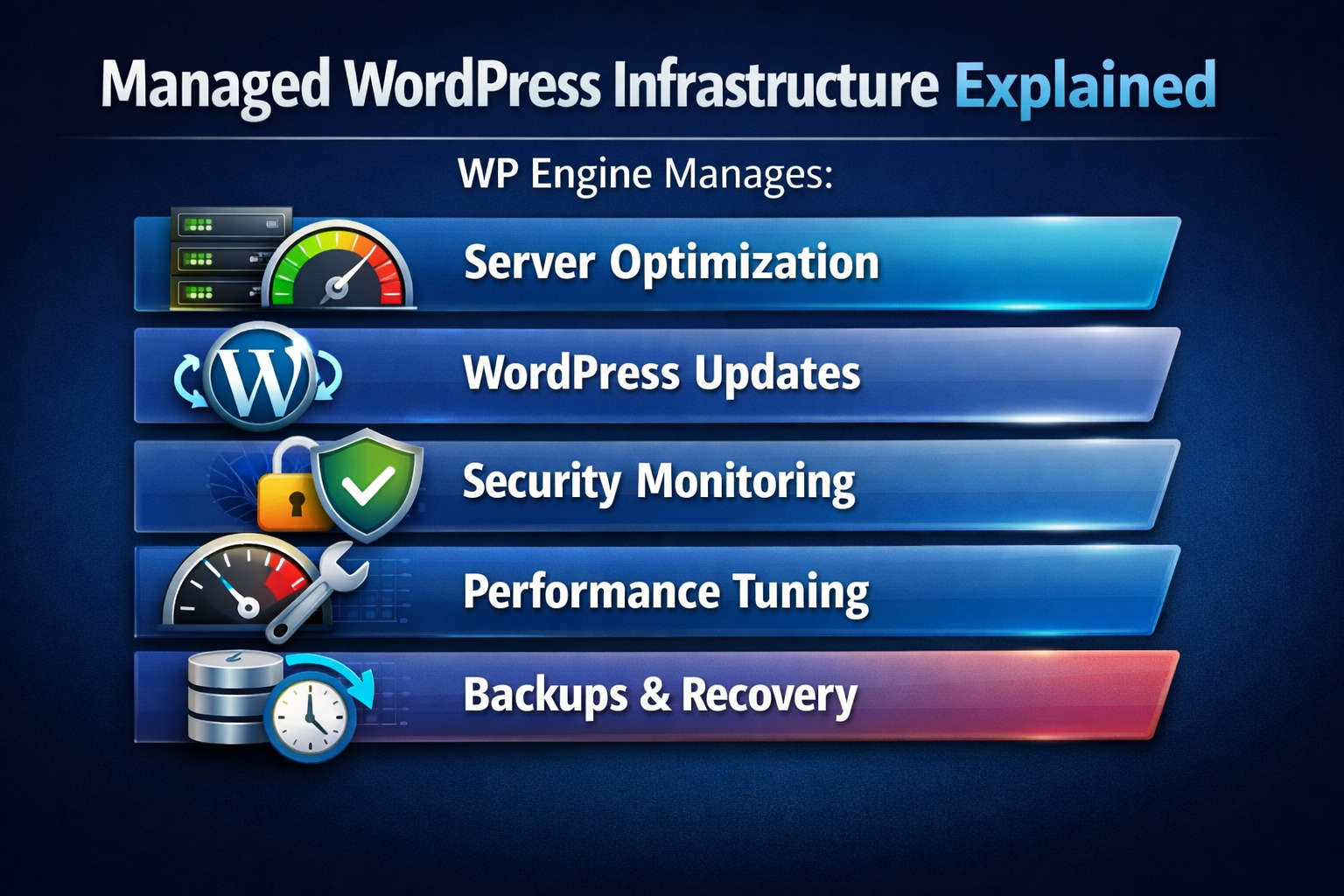
WP Engine manages:
- Server optimization
- WordPress updates
- Security monitoring
- Performance tuning
- Backups and recovery
This allows website owners to focus on content, design, and marketing rather than server management.
Performance-Optimized Environment for WordPress
Traditional hosting environments are like multipurpose rooms—they try to handle everything but aren’t optimized for anything specific. WP Engine’s infrastructure, however, is designed exclusively for WordPress performance.
Because of this focus, the platform can implement advanced caching, optimized databases, and efficient server configurations that significantly improve loading speeds.
Reason 1 – EverCache Technology for Advanced Caching
One of WP Engine’s most powerful performance features is EverCache, a proprietary caching system designed specifically for WordPress websites.
Caching works by storing pre-generated versions of web pages so they can be delivered instantly to visitors. Instead of rebuilding the page from scratch every time someone loads it, the server sends the cached version, drastically reducing processing time.
EverCache goes beyond basic caching plugins by integrating directly into the hosting infrastructure. It reduces server load and ensures websites can handle large traffic spikes without slowing down. Performance testing shows that this system efficiently delivers cached pages and handles high traffic loads.
The advantage of server-level caching is huge. Unlike plugin-based caching solutions, it operates faster and more efficiently because it’s built directly into the platform.
This means:
- Faster page load times
- Reduced server strain
- Improved SEO performance
For websites experiencing rapid growth or traffic surges, EverCache ensures consistent speed and reliability.
Reason 2 – Global Content Delivery Network (CDN)
Website visitors don’t always come from the same location. Someone in India accessing a server in the United States may experience slower load times due to distance.
A Content Delivery Network (CDN) solves this problem by distributing website assets across multiple global servers. When a visitor loads the site, the CDN delivers content from the nearest location.
This drastically reduces latency and improves page load speed. According to WP Engine documentation, CDNs distribute static assets like images and theme files across several locations, allowing users to download them faster.
The benefits of CDN integration include:
- Faster global load times
- Reduced server load
- Improved scalability
For businesses targeting international audiences, this feature is crucial for maintaining strong SEO performance worldwide.
Reason 3 – Optimized Server Architecture
Another reason WP Engine boosts website speed is its performance-optimized server architecture.
Generic hosting providers often rely on shared resources, meaning multiple websites compete for CPU power, memory, and bandwidth. When one site experiences heavy traffic, others slow down.
WP Engine uses isolated resources and optimized server configurations to prevent these issues.
This architecture includes:
- High-performance cloud infrastructure
- Optimized PHP and database configurations
- Load-balanced servers
These technologies work together to ensure fast response times and stable performance even under heavy traffic conditions.
Reason 4 – Page Speed Boost Optimization Tools
WP Engine also offers Page Speed Boost, a tool designed to improve website performance automatically.
This feature applies more than 30 code-level optimizations, improving page speed scores by an average of 30% on desktop and 128% on mobile devices.
These optimizations include:
- Code minification
- JavaScript optimization
- CSS compression
- Lazy loading of resources
The result is a faster website without requiring manual technical work.
Reason 5 – High Uptime and Reliability
Website downtime is one of the worst things for SEO. If search engines repeatedly find your website unavailable, rankings can drop quickly.
WP Engine offers 99.99% uptime guarantees, ensuring websites remain accessible to visitors and search engines.
Reliable uptime improves:
- Search engine crawling
- User trust
- Conversion rates
Impact of Uptime on SEO Rankings
Search engines prefer stable websites. Frequent downtime disrupts indexing and reduces trust signals. With WP Engine’s high uptime reliability, websites maintain consistent performance and visibility in search results.
Reason 6 – Built-In Performance Monitoring
WP Engine includes performance monitoring tools that analyze site latency, caching efficiency, and overall speed.
These tools combine latency scores and cache performance metrics to create a comprehensive site performance score.
Monitoring helps website owners quickly identify issues affecting speed or user experience.
Reason 7 – Scalable Infrastructure for High Traffic
Traffic spikes can destroy website performance on poorly configured hosting platforms. WP Engine’s infrastructure automatically scales to handle increased traffic loads.
This makes it ideal for:
- eCommerce stores
- viral marketing campaigns
- high-traffic blogs
Scalability ensures your site remains fast even when thousands of users visit simultaneously.
Reason 8 – Automatic Updates and Security Optimization
Security also affects website speed and SEO indirectly. Malware infections, outdated plugins, and vulnerabilities can slow down websites or cause downtime.
WP Engine handles:
- automatic WordPress updates
- daily backups
- threat detection
These features keep websites running smoothly and securely.
Reason 9 – Developer Tools That Improve Performance
Developers benefit from tools like staging environments, Git integration, and automated deployment systems.
These tools allow developers to test performance improvements before launching changes to the live website.
Reason 10 – WordPress-Specific Performance Optimization
The biggest advantage of WP Engine is its specialization in WordPress.
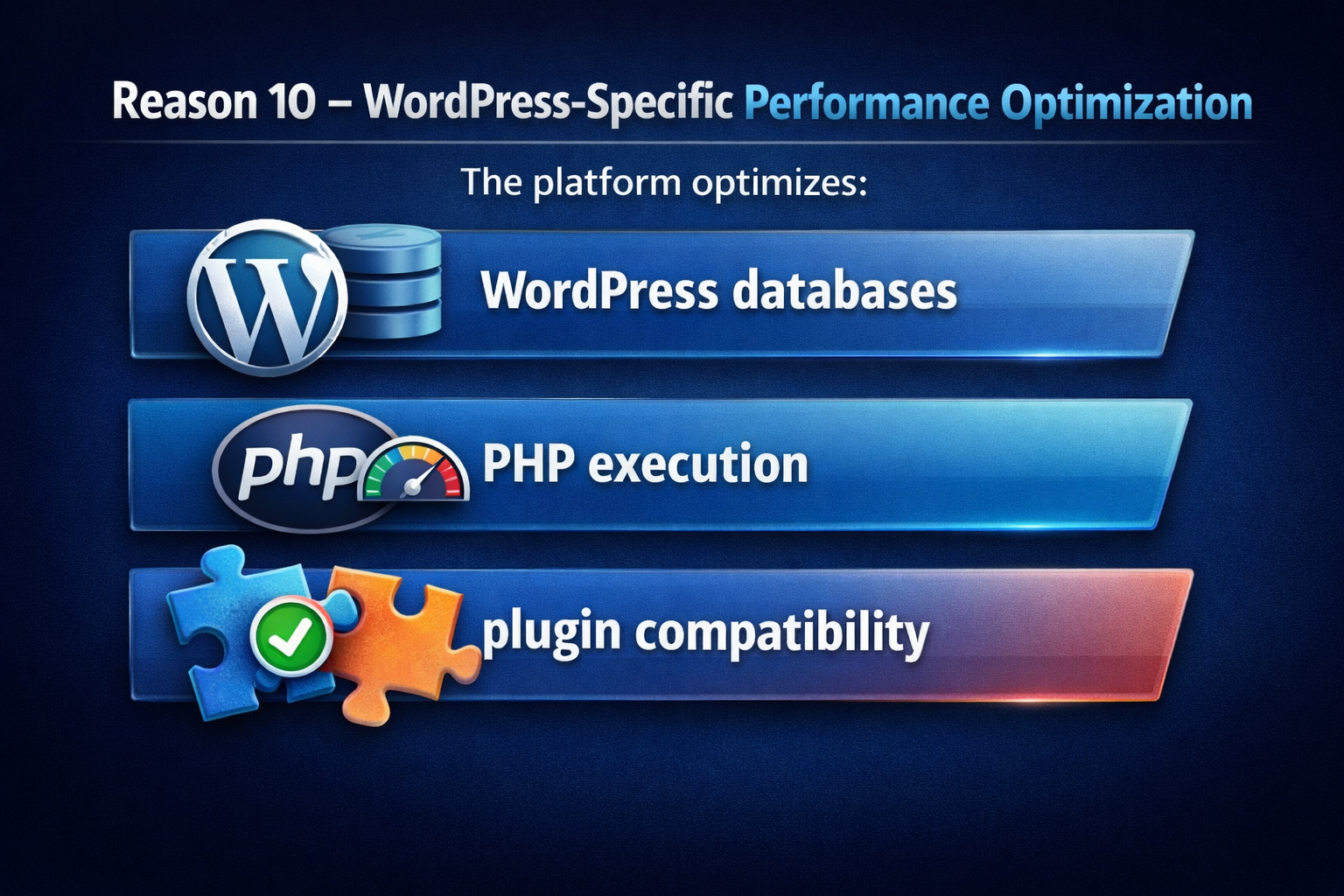
Instead of offering generic hosting, the platform optimizes:
- WordPress databases
- PHP execution
- plugin compatibility
This WordPress-focused infrastructure consistently delivers strong performance in benchmarking tests.
WP Engine vs Traditional Shared Hosting
Performance Comparison Table
Feature | WP Engine | Traditional Shared Hosting |
Caching System | EverCache server-level caching | Plugin-based caching |
CDN Integration | Built-in global CDN | Usually optional |
Server Optimization | WordPress optimized | Generic environment |
Uptime | 99.99% | Often lower |
Performance Tools | Built-in monitoring | Limited |
Scalability | High | Limited |
Also Read
How Jungle Scout Can Help You Find Winning Products on Amazon
Top 7 Reasons Zorgkiezer NL Is the Go-To Health Insurance Comparison Platform
Compara CL Review: Features, Benefits, and Why It Matters for Digital Marketers
How ConvertKit(Kit) Empowers Creators with Seamless Email Marketing
How Streak-CRM for Gmail Can Transform Your Sales Pipeline Management
Conclusion
Website speed is now necessary for SEO success; it is no longer an option. Search engines prioritize fast, reliable websites because they deliver better user experiences.
WP Engine provides a powerful hosting platform designed specifically for WordPress performance. Features like EverCache, global CDN integration, optimized servers, and automated performance tools work together to deliver faster load times and improved SEO rankings.
Businesses that rely on organic traffic can benefit greatly from these optimizations. When your hosting platform is engineered for speed, every aspect of your website—from user experience to search rankings—improves dramatically.
Choosing the right hosting provider isn’t just a technical decision; it’s a strategic one. With the right infrastructure, your website can load faster, rank higher, and convert more visitors into loyal customers.
Frequently Asked Questions
Yes. WP Engine improves SEO by providing faster loading speeds, better uptime, advanced caching, and global CDN integration, all of which contribute to stronger search engine rankings.
Yes. Features like EverCache, optimized servers, and Page Speed Boost help websites achieve better Core Web Vitals scores by reducing loading time and improving responsiveness.
In most cases, yes. WP Engine uses optimized infrastructure and caching systems designed specifically for WordPress, which typically deliver faster performance than traditional shared hosting.
Absolutely. Hosting influences page speed, uptime, and security—all important ranking factors used by search engines.
WP Engine is ideal for businesses, agencies, bloggers, and eCommerce stores that require high-performance WordPress hosting with reliable speed and scalability.
Table of Contents
Related Post

Finding Student Housing and Communities With Erasmusu: A Practical Guide
admin
September 19, 2026
Read More »

What Travelers Should Know About Iberostar (closed) and Its Hotel History
admin
September 18, 2026
Read More »

Planning a European Trip? Discover the Benefits of Direct Ferries
admin
September 17, 2026
Read More »

What Makes Der Gepflegte Mann a Notable Name in Men’s Personal Care
admin
September 16, 2026
Read More »