

Comparexpert
Comparison Between Company


A Complete Guide to Choosing the Right K9 Training Institute in India

Discover how to choose the best K9 Training Institute in India with this complete guide. Learn about training courses, experienced trainers, certification, fees, practical facilities, and career opportunities to make the right decision for your professional dog training journey.
Table of Contents
Understanding K9 Training
K9 training involves teaching dogs specific skills for obedience, security, detection, tracking, and other working roles. The right course depends on whether you want to become a professional dog trainer, work as a dog handler, or improve your own dog’s behaviour. A professional institute should teach both theory and practical handling, including canine behaviour, communication, health, and safety.
In India, specialised police K9 training is also conducted by government institutions. For example, the Central Reserve Police Force’s Dog Breeding and Training School in Bengaluru trains police service dogs and handlers for operational duties. Its programmes include tracking, explosive detection, and multitasking training.
This demonstrates why you should select an institute according to your career goal rather than choosing a course simply because it has an attractive name.
Types of K9 Training Courses
K9 institutes may offer different courses for pet obedience, professional dog handling, security work, and specialised detection. Basic obedience courses teach commands such as sit, stay, recall, and walking on a leash. Professional programmes may cover canine behaviour, handler communication, search exercises, and controlled working environments.
Before enrolling, check the complete syllabus and practical training hours. Some courses focus on pet dogs, while others are designed for working dogs and professional handlers. Ask whether the institute accepts beginners, provides supervised practice, and offers further training after the basic course. Choosing a course that matches your experience and career plans can help you avoid unnecessary expenses.
Police, Security, and Detection Training
If you want to work in police or security-related K9 services, look for a programme that clearly explains its specialised training and eligibility requirements. Depending on the course, training may involve tracking, scent detection, search procedures, handler control, and operational safety. These skills require consistent practice and professional supervision.
For example, the CRPF training school lists separate courses for tracking, explosive detection, dog management, and master trainers. Course durations differ according to the specialisation.
However, admission to government or force-specific programmes may be restricted to eligible personnel. Private institutes may offer other professional courses, so verify their entry requirements before paying any fees.
Check the Institute's Reputation
A trustworthy institute should have a clear address, transparent course information, experienced staff, and genuine student feedback. Search for independent reviews and ask former students about their practical experience, instructor support, and training outcomes. If possible, visit the facility before making your decision.
Be cautious of institutes that promise guaranteed jobs, instant expertise, or certificates that supposedly qualify you for every K9-related role. Ask for evidence supporting their claims and contact employers or relevant authorities when necessary. A recognised qualification can be useful, but its value depends on the issuing organisation and the requirements of the job you want.
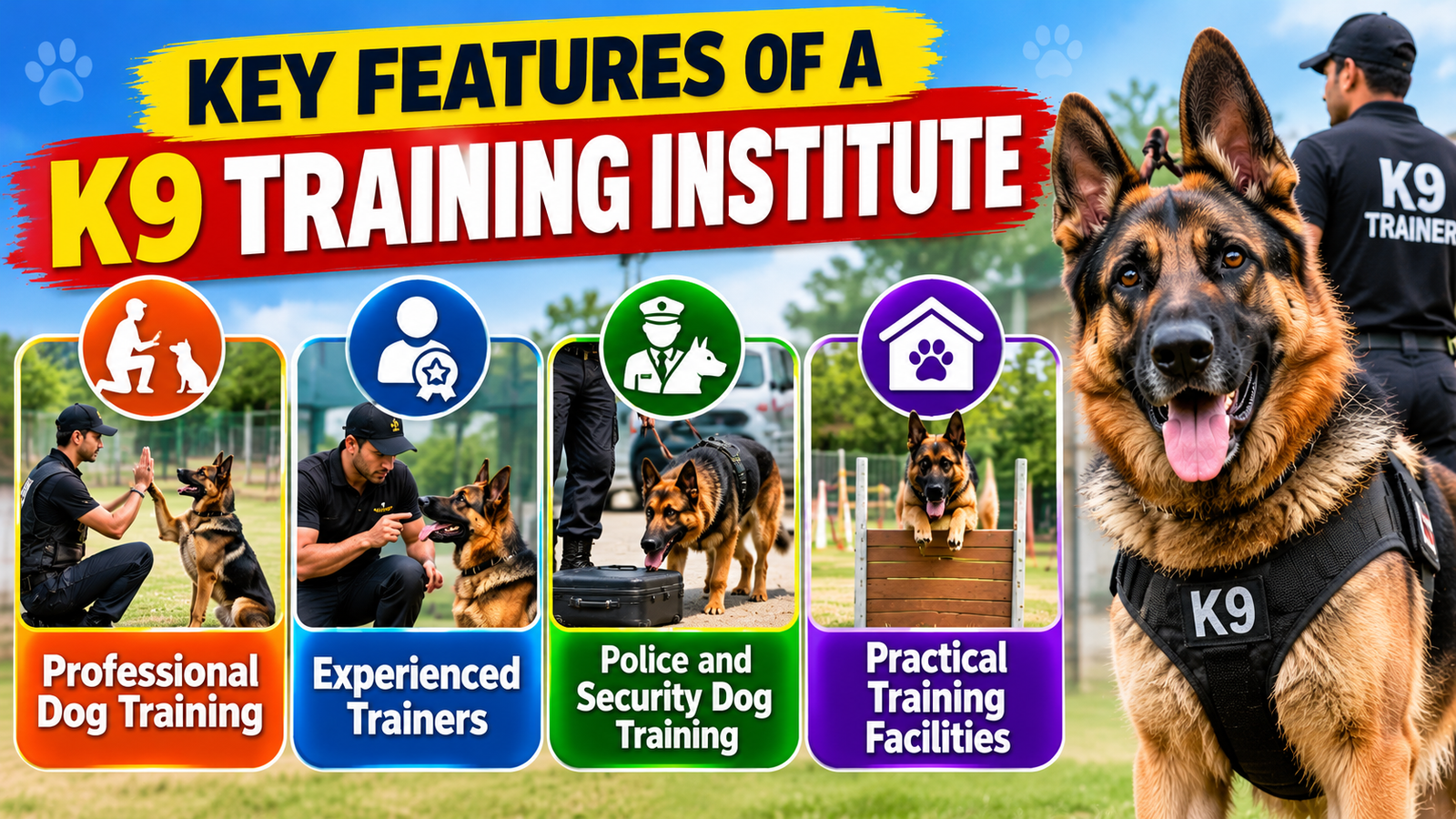
Key Features of a K9 Training Institute
1. Professional Dog Training – Teaches obedience, discipline, and essential canine handling skills.
2. Experienced Trainers – Provides guidance from skilled trainers with knowledge of dog behaviour and training techniques.
3. Police and Security Dog Training – Offers specialised training in tracking, detection, search operations, and security work.
4. Practical Training Facilities – Provides training grounds, equipment, and supervised hands-on practice.
Evaluate Trainers and Practical Facilities
Experienced trainers make a major difference in the quality of K9 education. Look for instructors who understand canine behaviour, demonstrate safe handling, and explain why particular training methods work. They should also recognise signs of fear, stress, and discomfort instead of relying on force to control a dog.
The institute should provide suitable training grounds, secure enclosures, appropriate equipment, and access to veterinary support. Students need opportunities to practise under supervision rather than spending the entire course watching demonstrations. Ask how many students share each training session and how practical performance is assessed.
Essential Skills You Can Learn at a K9 Training Institute
A good K9 training programme focuses on practical skills as well as theoretical knowledge. Students learn to understand canine body language, recognise behavioural signals, and use consistent commands. These skills help build trust between dogs and handlers.
Important skills may include:
- Basic obedience: Teaching commands such as sit, stay, recall, and heel.
- Canine behaviour: Understanding body language, fear, stress, and learning patterns.
- Leash handling: Maintaining control while walking and training dogs.
- Scent detection: Introducing dogs to scent-based search activities under supervision.
- Tracking skills: Learning the fundamentals of following a scent trail.
- Health and safety: Understanding responsible handling, hygiene, and animal welfare.
The exact skills taught will depend on the institute and the course you choose.
How to Identify a Reliable K9 Training Academy
Selecting a reliable academy requires more than checking advertisements or social media reviews. Start by examining the institute’s course details, instructor qualifications, training facilities, and student feedback. A professional academy should explain its teaching methods, practical sessions, assessment process, and certification arrangements clearly.
If possible, visit the campus and observe a training session. Check whether the dogs have adequate space, access to water, suitable rest periods, and appropriate veterinary care. You should also ask for a written fee structure and refund policy before making a payment. These steps can help you avoid misleading claims and choose an institute that meets your expectations.
K9 Training Institute Fees in India
The cost of joining a K9 training institute in India varies according to course duration, specialisation, facilities, and instructor experience. Basic obedience programmes may have different fees from advanced professional handler or detection courses. Accommodation, equipment, assessments, and certification may also affect the overall cost.
Instead of relying on a general price estimate, request current fee details directly from each institute. Compare the number of practical training hours, course content, and additional charges before deciding. A course with transparent pricing and sufficient supervised practice may offer better value than one advertised at a lower price without clear details.
Tips for Getting the Most Out of Your K9 Training Course
Your progress depends on regular practice, patience, and a willingness to learn. Attend every session, follow instructor guidance, and practise the techniques you learn in appropriate, supervised settings. Keep notes about commands, training progress, and behavioural challenges so you can identify areas that need improvement.
It is equally important to treat dogs with patience and respect. Avoid harsh punishment and learn to recognise signs of stress or discomfort. Ask instructors for feedback and continue learning after completing the course. Consistent practice and responsible handling are essential for developing reliable canine training skills.
Importance of Practical Training in K9 Education
Practical training is an essential part of learning how to handle and train dogs effectively. While classroom lessons explain canine behaviour and training principles, hands-on sessions allow students to apply that knowledge under an instructor’s supervision. Regular practice also helps students understand how different dogs respond to commands, rewards, and environmental distractions.
A good academy should provide structured exercises, individual feedback, and opportunities to practise with suitable dogs. Students should learn how to maintain control, recognise stress signals, and adapt their approach to each dog’s learning needs. Practical experience can help build confidence and prepare learners for the responsibilities associated with professional canine handling.
Facilities to Look for in a K9 Training Academy
The quality of an institute’s facilities can significantly influence the learning experience. Before choosing a K9 Training Institute in India, check whether it offers safe training grounds, suitable equipment, secure dog enclosures, and clean resting areas. The facilities should support the activities included in the course rather than simply look impressive during a campus visit.
You should also ask about veterinary assistance, sanitation, feeding arrangements, and emergency procedures. Dogs need access to clean water, appropriate shelter, exercise, and sufficient rest. An institute that prioritises animal welfare demonstrates a responsible approach to canine education and professional training.
Benefits of Joining a Professional K9 Training Institute
Joining a professional K9 Training Institute helps students develop practical dog-handling skills and understand canine behaviour. Structured training teaches you how to communicate with dogs, build obedience, and manage different situations safely. Experienced instructors can also help students identify common training challenges and improve their techniques through regular practice.
Another benefit is exposure to specialised training activities, depending on the course. These may include scent detection, tracking, agility, and security-related exercises. Professional training can provide a foundation for careers in dog training, canine handling, and related services. However, career opportunities depend on qualifications, experience, and employer requirements.

Compare Course Fees and Duration
Course fees vary according to the institute, course length, facilities, accommodation, and specialisation. Do not select a programme based only on the lowest advertised price. Check whether the total cost includes training equipment, assessment, certification, accommodation, and any additional charges.
Factor | What to check |
Course fees | Total cost and payment terms |
Duration | Theory and practical training hours |
Equipment | Whether training tools are included |
Accommodation | Availability and additional charges |
Certification | Issuing organisation and validity |
Placement support | Actual services and eligibility conditions |
Ask for a written fee structure before registering. Compare at least two or three suitable institutes and assess what each course offers for the price. A well-structured programme with adequate practical sessions may provide better value than a cheaper course with limited hands-on training.
Certification and Career Opportunities
Certification is an important consideration, but not every certificate has the same value. Before enrolling, find out who issues it, whether employers accept it, and whether it meets any relevant professional or government requirements. Do not assume that completing a private course automatically qualifies you for a police, military, or government position.
Possible career paths include pet dog training, canine handling, security support, boarding services, and specialised working-dog training. Requirements vary by employer and role. Some positions require recruitment through a particular department, additional experience, or specialist assessment. Ask the institute for verifiable information about alumni outcomes and placement assistance rather than relying on general promises.
Also Read
The Ultimate Guide to Choosing the Best Anolon Cookware for Your Kitchen
Top Reasons to Explore Rachael Ray Cookware and Kitchen Accessories
A Beginner’s Guide to Convenient Grocery Shopping with Walmart Online Grocery
Why Manfrotto Equipment Is Popular Among Photography Enthusiasts
Essential Trading Concepts You Need to Know About Square Off
Training Methods and Animal Welfare
Good K9 training should build reliable behaviour while protecting the dog’s physical and emotional well-being. Reward-based methods use treats, praise, toys, or play to encourage desired behaviour. The Canadian Veterinary Medical Association recommends positive reinforcement and discourages aversive methods, including shock collars.
During your institute visit, observe how trainers respond when a dog makes a mistake. Professional training should involve patience, consistent instructions, suitable rest periods, and appropriate veterinary care. Dogs should not be subjected to unnecessary pain or intimidation. A humane training environment helps develop trust between the dog and handler, which is essential for reliable performance.
Common Mistakes to Avoid
One common mistake is choosing an institute because of advertising alone. Professional-looking websites and impressive videos do not necessarily prove the quality of its teaching. Another mistake is confusing pet dog training with specialised police or detection training, which may require different skills, eligibility, and assessment.
Avoid paying the full fee without checking the syllabus, facilities, certificate details, and refund conditions. You should also be realistic about your own goals. Becoming a skilled dog trainer takes patience, observation, communication, and repeated practice. A short course can introduce essential skills, but professional competence develops through continued learning and experience.
Conclusion
Choosing the right K9 training institute in India requires careful research and a clear understanding of your goals. Compare the course syllabus, trainers, practical facilities, certification, fees, and career support before making a decision. Give equal importance to humane training methods and the well-being of dogs.
The best institute is not necessarily the most expensive or famous one. It is the one that provides relevant training, experienced guidance, supervised practice, and transparent information. Take time to compare your options, ask questions, and verify important claims before enrolling.
Frequently Asked Questions
A K9 training institute teaches dog handling, obedience, behaviour management, and specialised skills for pet care, security, detection, or other working roles.
Compare the syllabus, instructor experience, practical facilities, certification, course fees, and student reviews. Choose an institute that matches your career goals.
Course duration depends on the specialisation. Basic programmes may be shorter, while advanced professional and government training programmes can last several months.
No. A certificate does not guarantee employment. Job opportunities depend on employer requirements, practical skills, experience, and any applicable recruitment criteria.
Yes, some institutes accept beginners. Check the eligibility requirements and choose a course that provides foundational lessons and supervised practical training.
Table of Contents
Related Post

What Pet Owners Should Know About Pets Best Pet Insurance Before Buying
admin
October 20, 2026
Read More »

How Peanut Butter & Co. Stands Out in the Competitive Peanut Butter Market
admin
October 19, 2026
Read More »


The Ultimate Guide to Choosing the Best Anolon Cookware for Your Kitchen
admin
October 18, 2026
Read More »

Comparing Popular IQAir Air Purifiers for Different Home Environments
admin
October 17, 2026
Read More »