
Comparexpert
Comparison Between Company


How ConvertKit(Kit) Empowers Creators with Seamless Email Marketing
Discover how ConvertKit(Kit) empowers creators to build, grow, and monetize their audience with seamless email marketing tools. This blog post explores how ConvertKit(Kit) combines automation, tagging, landing pages, and built-in monetization features to help writers, coaches, and digital entrepreneurs take full ownership of their audience. Learn why ConvertKit(Kit) stands out in the creator economy and how it simplifies email marketing while maximizing engagement and revenue potential.
Table of Contents
The Evolution of ConvertKit into Kit
If you’ve been around the creator space for a while, you’ve probably heard of ConvertKit. What’s interesting is that the company officially rebranded to “Kit” in 2024, simplifying its identity to match its mission: provide creators with a complete toolkit rather than just an email tool. According to company announcements and recent updates from leadership , the shift wasn’t cosmetic—it reflected a deeper commitment to serving modern creators who are building businesses around newsletters, courses, digital products, and memberships.
There is more to the branding than just a name change. It represents a shift toward becoming a broader creator platform. Instead of positioning itself purely as email software, Kit now emphasizes monetization, ownership, and simplicity. In a world where creators juggle YouTube, Instagram, podcasts, and communities, Kit aims to be the calm center of the storm—the place where audience ownership lives.
The interesting part? The mission hasn’t changed. Founder Nathan Barry has long advocated for creators owning their audience rather than renting it from platforms. The rebrand simply sharpened that philosophy.
Why the Rebrand Happened
The economy of creators has flourished. Recent industry estimates value it in the hundreds of billions globally . With more independent writers, coaches, educators, and niche influencers launching businesses, the term “ConvertKit” felt limiting. “Kit” suggests modularity, flexibility, and completeness. It’s not just about converting subscribers anymore—it’s about equipping creators.
The platform expanded beyond newsletters into paid subscriptions, digital product sales, and integrated monetization tools. So the name evolved to match that broader ambition. Think of it like upgrading from a toolbox to a full workshop.
What Changed for Creators
For existing users, functionality remained familiar—but expanded. The interface became more streamlined. Monetization features became more central. The messaging shifted from “email marketing software” to “creator growth platform.” That subtle shift matters because creators don’t think like marketers. They think like builders, artists, educators, storytellers. Kit is able to communicate in their language.
The Creator Economy and the Need for Direct Ownership
The creator economy isn’t just a trend. It’s a structural shift in how people earn income. Individuals are building personal brands, micro-media companies, and education platforms without gatekeepers. But here’s the catch: social media platforms control reach.
Overnight, algorithms are altered. Engagement declines. Accounts get suspended. When that happens, creators realize something painful—they don’t own their audience.
Email changes that dynamic completely.
Why Email Still Beats Social Media
Social media feels immediate and flashy. But email is intimate. When someone joins your email list, they’re inviting you into their inbox. That’s private property. Open rates for engaged newsletters often outperform organic social reach dramatically, especially as platforms throttle visibility.
Unlike followers on Instagram or subscribers on YouTube, email subscribers belong to you. No algorithm decides whether your message gets delivered—email service providers do, but with far more predictable rules.
That’s why Kit focuses heavily on list ownership and segmentation. It’s not just about collecting emails; it’s about building relationships.
The Risks of Relying on Algorithms
Imagine building a 100,000-follower audience only to see your reach drop to 5%. That is not speculative; rather, it is typical. Platforms prioritize ads, trending content, and engagement loops. Your thoughtful newsletter announcement? It could vanish into thin air.
Email bypasses that volatility. Kit’s infrastructure ensures that when you hit send, your audience receives it—subject to normal deliverability standards, of course. That predictability is business stability.
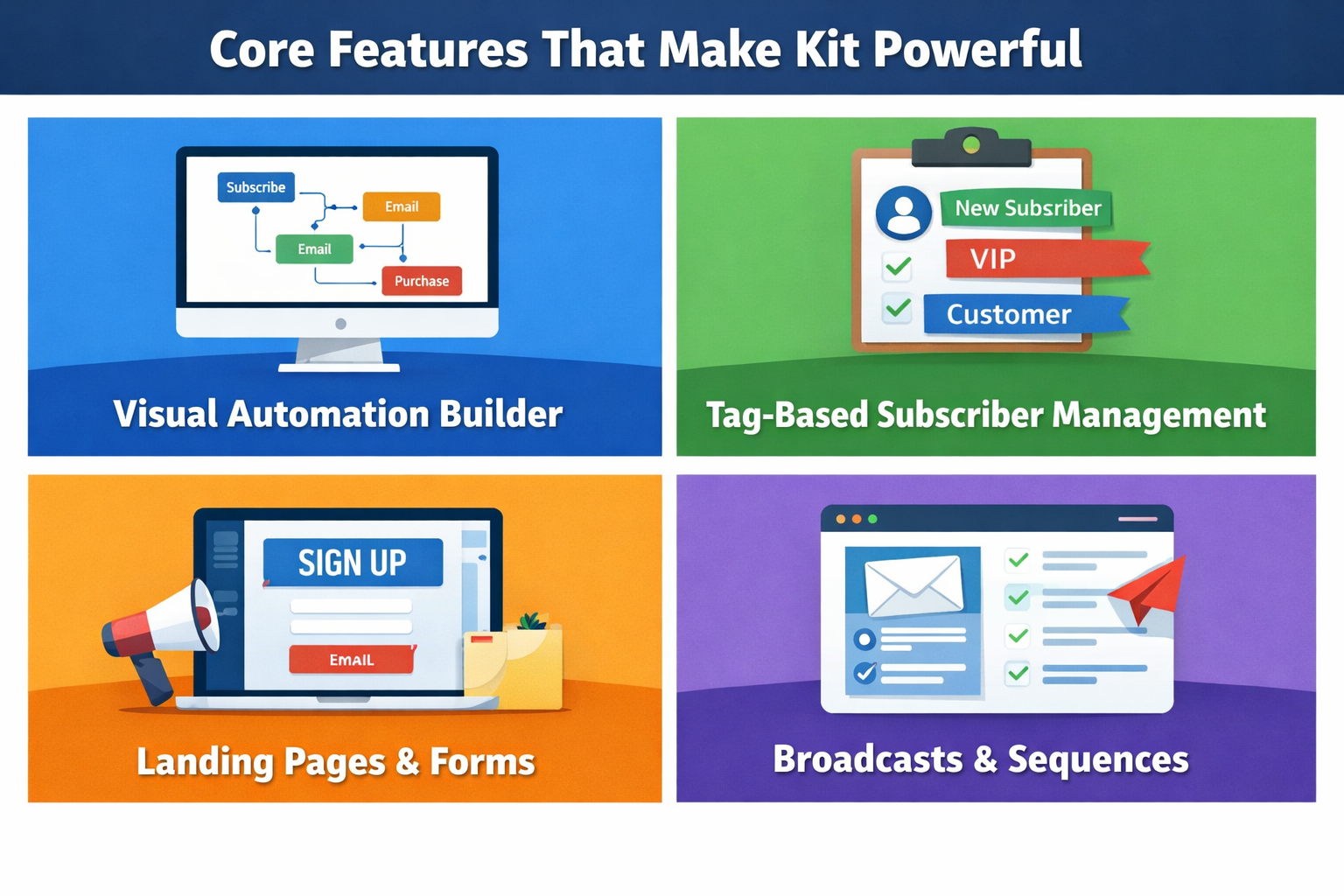
Core Features That Make Kit Powerful
At its heart, Kit remains a robust email marketing platform. But it’s designed differently from traditional corporate tools. Instead of overwhelming dashboards and CRM-style complexity, it focuses on clarity.
Visual Automation Builder
Automation is where Kit shines. The visual automation builder lets creators map subscriber journeys like flowcharts. Someone downloads a free guide? They enter a welcome sequence. Do they click on a certain link? They get tagged and routed to a relevant product pitch.
This isn’t just convenience—it’s scalability. You can nurture thousands of subscribers with personalized flows without manually managing anything.
Tag-Based Subscriber Administration
Unlike list-based systems, Kit uses tags. That may sound small, but it changes everything. Instead of duplicating subscribers across multiple lists (which can inflate costs), you assign tags based on behavior, interests, and purchases.
This means cleaner segmentation, smarter targeting, and better deliverability. It’s like organizing your audience with smart labels rather than stacking them into rigid boxes.
Landing Pages and Forms
Kit includes built-in landing pages and opt-in forms. You don’t need separate design software to launch a lead magnet. Templates are optimized for conversion, mobile-friendly, and customizable.
For creators who don’t want to wrestle with code or external builders, this simplicity removes friction. You can launch quickly, test ideas fast, and validate demand before investing heavily.
Broadcasts and Sequences
Broadcasts allow one-time announcements—perfect for launches or updates. Sequences automate multi-email funnels. The combination enables both spontaneity and strategy.
Writers launching a course can warm up their audience with educational emails before pitching. Coaches can onboard new clients with structured sequences. Podcasters can deliver evergreen value without constant manual effort.
Monetization Tools Built for Creators
Email marketing has a lot of power. However, producers make a living through monetization.
Newsletters that are paid for
Kit supports paid newsletter subscriptions, allowing creators to charge for premium content. This feature positions it as a competitor to platforms like Substack, but with more automation flexibility.
Creators can segment paid and free subscribers, offer exclusive content, and manage payments without switching tools. This integration reduces tech complexity.
Digital Product Sales
Beyond subscriptions, Kit enables creators to sell digital products—courses, ebooks, templates—directly from the platform. Payments integrate seamlessly, and delivery is automated.
For small creators, avoiding multiple tools saves both money and cognitive bandwidth. Instead of stitching together checkout systems and email platforms, Kit centralizes operations.
Comparing Kit with Other Email Platforms
Let’s be honest: Kit isn’t the only email marketing platform out there. But it positions itself differently.
Kit vs Mailchimp
Mailchimp is powerful and widely used, especially by ecommerce brands. It offers advanced analytics and extensive integrations. However, it often feels corporate and commerce-heavy.
Kit focuses on creators first. The interface feels lighter. Automation is intuitive. Tagging is flexible. For solo entrepreneurs and content creators, that focus makes a difference.
Feature | Kit | Mailchimp |
Primary Audience | Creators | Businesses & Ecommerce |
Tag-Based System | Yes | Limited |
Built-in Digital Sales | Yes | Limited |
Ease of Automation | High | Moderate |
Newsletter Focus | Strong | Moderate |
Kit vs Substack
Substack simplifies publishing and payments. It’s great for writers who want minimal setup. But flexibility is limited. Automation, segmentation, and integrations aren’t as robust.
Kit offers more control. You can design funnels, build sequences, and manage digital products beyond newsletters. Substack feels like renting a publishing platform; Kit feels like owning infrastructure.
Integrations and Ecosystem Compatibility
Modern creators use multiple tools—Shopify, WordPress, Teachable, Zapier. Kit integrates with hundreds of third-party apps, enabling data synchronization and automated workflows.
That compatibility ensures that as your business grows, your email infrastructure grows with it. You’re not boxed into a silo.
Pricing Structure and Value Proposition
Kit offers tiered pricing based on subscriber count. There’s a free plan for beginners, which lowers entry barriers significantly. Paid plans scale with growth, making it accessible for new creators while sustainable for large audiences.
When compared to hiring a developer or stitching together separate services, Kit’s all-in-one model often proves cost-effective. Time saved is money earned.
Real-World Use Cases and Success Stories
Thousands of creators use Kit to power newsletters, sell courses, and manage communities. Writers use it to monetize niche insights. Fitness coaches automate onboarding. Indie hackers launch SaaS newsletters. The flexibility supports diverse business models.
The platform’s creator-centric focus fosters loyalty. It’s not trying to serve massive enterprises—it’s serving individuals building independent brands.
Why Kit Is Built Specifically for Creators (Not Corporations)
Most email tools originated in corporate marketing. Kit originated in blogging and independent publishing. That DNA matters.
The tone, features, and workflows align with creative workflows. It’s not cluttered with enterprise-level CRM complexity. It’s streamlined for clarity and speed.
That’s why creators gravitate toward it—it feels built for them.
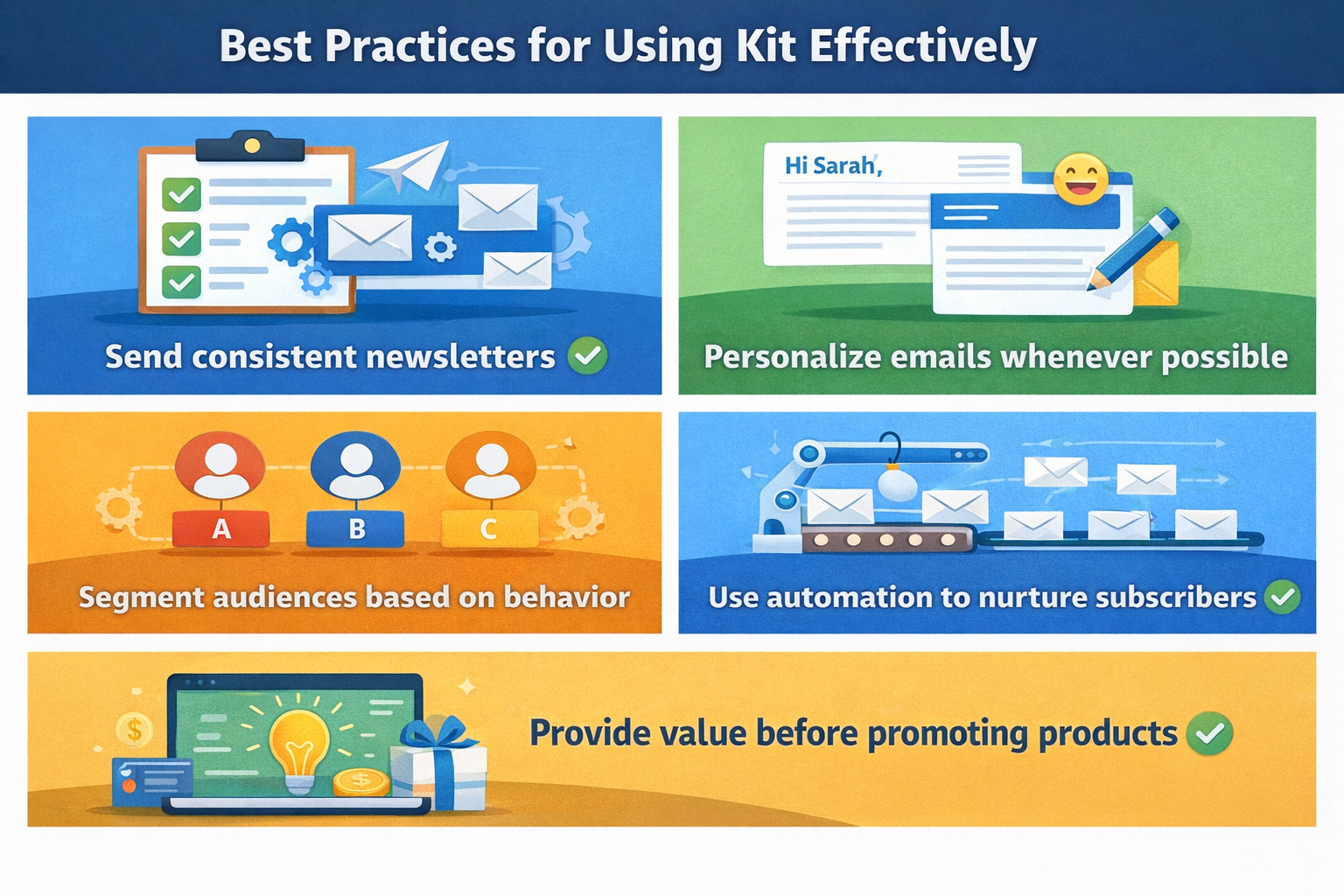
Best Practices for Using Kit Effectively
To maximize results with Kit, creators should focus on building authentic relationships with their audience.
Some key best practices include:
- Send consistent newsletters
- Personalize emails whenever possible
- Segment audiences based on behavior
- Use automation to nurture subscribers
- Provide value before promoting products
Email marketing works best when it feels personal rather than overly promotional.
How Creators Use Kit to Grow Their Audience
Successful creators often follow a similar strategy when using Kit:
- Create a valuable lead magnet.
- Build a landing page or signup form.
- Send automated welcome emails.
- Deliver consistent newsletters.
- Promote digital products or services.
Over time, this system builds trust and turns subscribers into loyal supporters and customers.
Kit Pricing and Plans Explained
Kit offers a flexible pricing structure designed for creators at different stages of growth.
Plan | Best For | Key Features | Price Range |
Newsletter (Free) | Beginners | Up to 10,000 subscribers, email campaigns, forms | Free |
Creator | Growing creators | Automation, integrations, unlimited sequences | Starting around $29/month |
Creator Pro | Advanced creators | Advanced analytics, engagement scoring, team access | Starting around $59/month |
Also Read
How Jungle Scout Can Help You Find Winning Products on Amazon
Process Street vs Trello: Which Tool Works Best for Your Business?
How Streak-CRM for Gmail Can Transform Your Sales Pipeline Management
How to Choose the Perfect Format for Your Marketing Content
The Future of Creator Email Marketing with Kit
As the creator economy grows, tools will either adapt or fade. Kit’s rebrand signals adaptation. By integrating monetization, automation, and audience ownership into one ecosystem, it positions itself as infrastructure for independent businesses.
Email remains stable amid platform volatility. Ownership remains critical. Kit doubles down on both.
Conclusion
ConvertKit’s transformation into Kit represents more than branding—it reflects the maturation of the creator economy. Email marketing isn’t dying; it’s evolving. Creators need tools that prioritize ownership, simplicity, and monetization. Kit delivers that blend with clarity.
In a digital landscape ruled by algorithms and fleeting trends, building an owned email list remains one of the most powerful strategies available. Kit equips creators with automation, segmentation, monetization, and integration—all under one roof. That goes beyond convenience. Leverage is that.
Frequently Asked Questions
Yes. The free plan and intuitive interface make it accessible even if you’ve never built an email list before.
It focuses specifically on creators rather than large businesses, emphasizing automation, tagging, and monetization.
Yes, you can sell digital products and manage paid newsletters within the platform.
It integrates with numerous third-party tools, allowing scalable workflows.
Absolutely. Email remains one of the highest ROI digital marketing channels due to direct audience ownership and consistent deliverability.
Table of Contents
Related Post
How Streak-CRM for Gmail Can Transform Your Sales Pipeline Management
admin
March 3, 2026
Read More »