

Comparexpert
Comparison Between Company


How to Choose the Perfect Format for Your Marketing Content

Learn how to choose the perfect Format for your marketing content based on your audience, goals, and platform. This blog post explains how different content formats—like blogs, videos, podcasts, and interactive media—impact engagement, SEO, and conversions. Discover practical strategies to match the right Format to your marketing objectives and maximize results.
Table of Contents
Introduction
If you’ve ever stared at a blank content calendar wondering whether to craft a blog post, shoot a video, or record a podcast, you’re not alone. Choosing the perfect format for your marketing content is more than a creative decision — it’s a strategic one that can make or break how your audience responds to your message. With content marketing growing into a multi-channel powerhouse, from written blogs to social videos, the stakes have never been higher. Understanding what content format fits your goals and audience isn’t just an advantage — it’s essential for success.
That’s because content marketing isn’t one-size-fits-all. The formats you choose dictate who sees your message, how they engage with it, and ultimately whether they take the action you want. Whether you’re aiming to build awareness, foster loyalty, or drive conversions, the formats you select should help you reach those goals efficiently and effectively. Let’s break down how to make those choices with confidence, backed by strategy and real-world insight.
What Is Content Format in Marketing?
In its simplest sense, a content format is the way you present your message to your audience — from the shape it takes (text, video, audio, etc.) to how it’s delivered. Think of formats as containers for your ideas. A blog post, infographic, podcast episode, or social post are all distinct formats, each suited to different uses and audiences. Essentially, format helps determine how your message is experienced.
Why Choosing the Right Format Matters
Selecting the right format is about putting yourself in your audience’s shoes. It influences how easily people can consume what you’ve created and whether they’ll take the next step with you. The format affects discoverability, engagement, conversion rates, and even your SEO performance. A well-chosen format amplifies impact and helps your content reach the right people at the right time.
Understanding Your Audience
Audience Demographics
Before anything else, understand who you’re trying to reach. Are they professionals with limited free time? Younger audiences who prefer short, dynamic formats? Or learners who crave deep dives? Gathering demographic data lets you understand the typical preferences and habits of your ideal viewer or reader, influencing the formats they’ll most likely engage with.
Consumption Habits
Different audiences consume content in different ways. Busy professionals might prefer audio content like podcasts they can listen to on the go, while visual learners gravitate toward infographics or videos. Paying attention to where your audience spends time — on mobile apps, long-form blogs, or audio platforms — helps you tailor your format choices for maximum impact.
Defining Your Marketing Goals
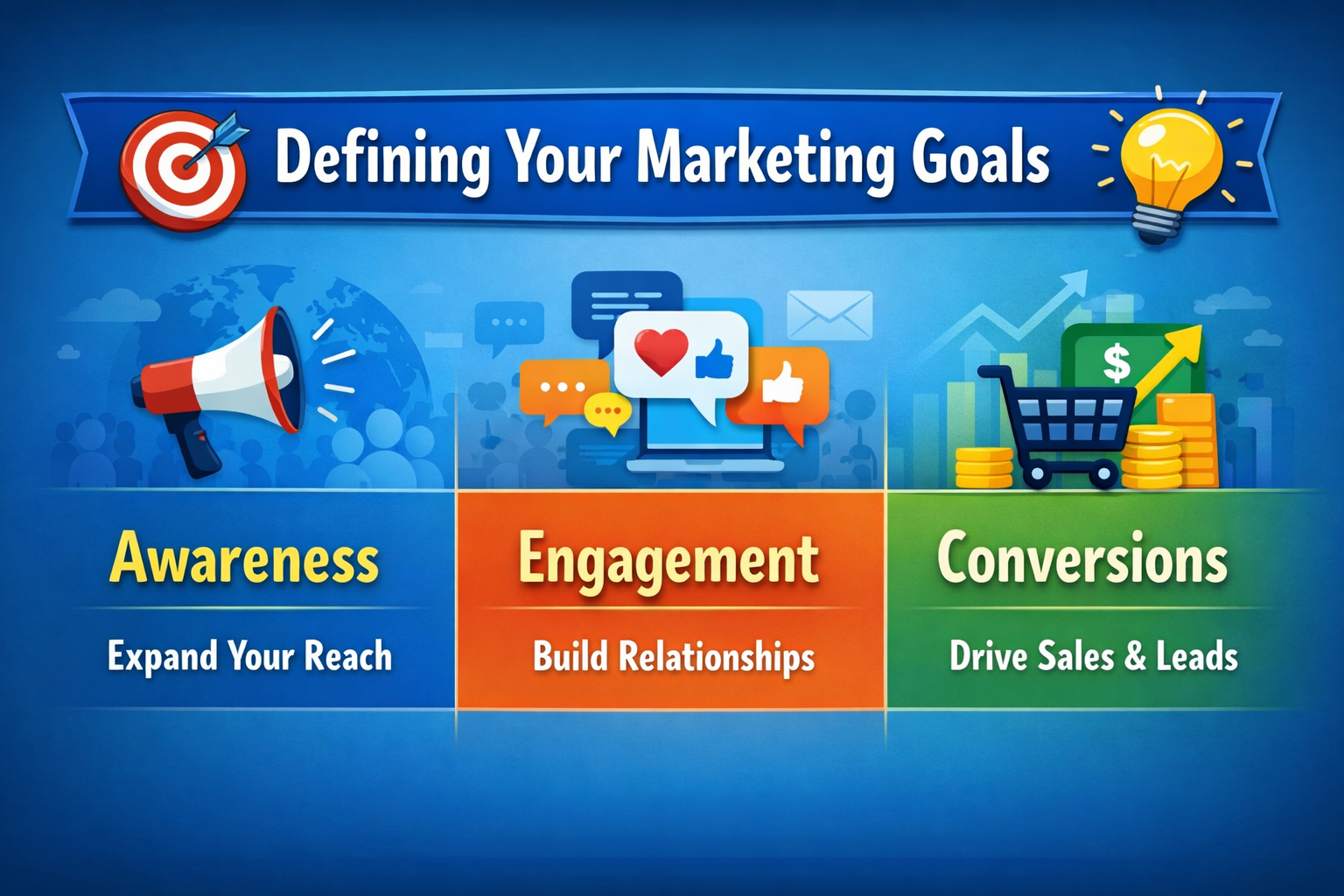
Your marketing goals should drive format selection. Are you trying to boost brand awareness, deepen engagement, or drive conversions? Each goal may align with different formats:
Awareness
Formats like social videos and infographics spread quickly and help you break into new audiences.
Engagement
Interactive content, webinars, and blogs can nurture conversations and build deeper relationships.
Conversions
Formats that provide detailed information — such as case studies and long-form articles — help guide prospects toward decisions.
Matching your goals to formats keeps your content efficient and focused.
Types of Marketing Content Formats
Here’s an overview of the main marketing formats you’ll encounter — and why each matters:
Written Content
Text-based content is foundational. It includes blog posts, whitepapers, long-form articles, and eBooks. It’s often the backbone of your SEO strategy, driving organic search traffic and helping educate your audience deeply. Written content is also versatile and highly shareable across channels.
Visual Content
Infographics, images, and videos fall here. Visuals capture attention quickly and communicate complex ideas more simply than text alone. With platforms like YouTube and Instagram dominating attention time, visual content has become a staple.
Audio Content
Podcasts and audio clips have exploded in popularity because they allow multitasking consumption — think listeners tuning in during commutes. This format builds familiarity and trust over time.
Interactive Content
Quizzes, tools, polls, and webinars offer engagement far beyond passive reading or viewing. They invite action, making your audience part of the experience.
Written Content Explained
Blog Posts
Blogs remain a core format for many brands because they feed SEO and educate potential customers. They’re adaptable, long-lasting content assets that both attract searches and nurture loyal readers over time.
Long-Form Articles & eBooks
These dive deep into topics. Longer pieces boost authority, provide detailed insights, and can serve as downloadable eBooks for lead generation.
Whitepapers & Case Studies
Typically data-driven, these formats are powerful tools in complex, B2B buyer journeys where decision-makers need evidence and proof before acting.
Visual Content Explained
Infographics
Infographics transform data or steps into visually digestible content. They work especially well when you need to explain or summarize complex topics attractively.
Videos
Video content — whether short social clips or full explainers — is highly engaging and increasingly expected by today’s audiences who favor dynamic visuals over static text.
Images & Animations
Even still images paired with impactful messaging can leave a strong impression, especially when optimized for social platforms.
Audio Content Explained
Podcasts
Podcasts help you develop a personal connection with audiences. As an intimate format, they can build loyalty over time, especially with niche topics and consistent episodes.
Audio Clips
Shorter audio clips — such as soundbites or audiograms — can support other formats or tease larger content pieces on social channels.
Interactive Content Explained
Quizzes & Tools
Interactive elements like quizzes or calculators actively involve your audience, often boosting time spent with content and overall engagement.
Webinars
Live or recorded webinars let you teach, interact, and nurture leads while showcasing expertise.
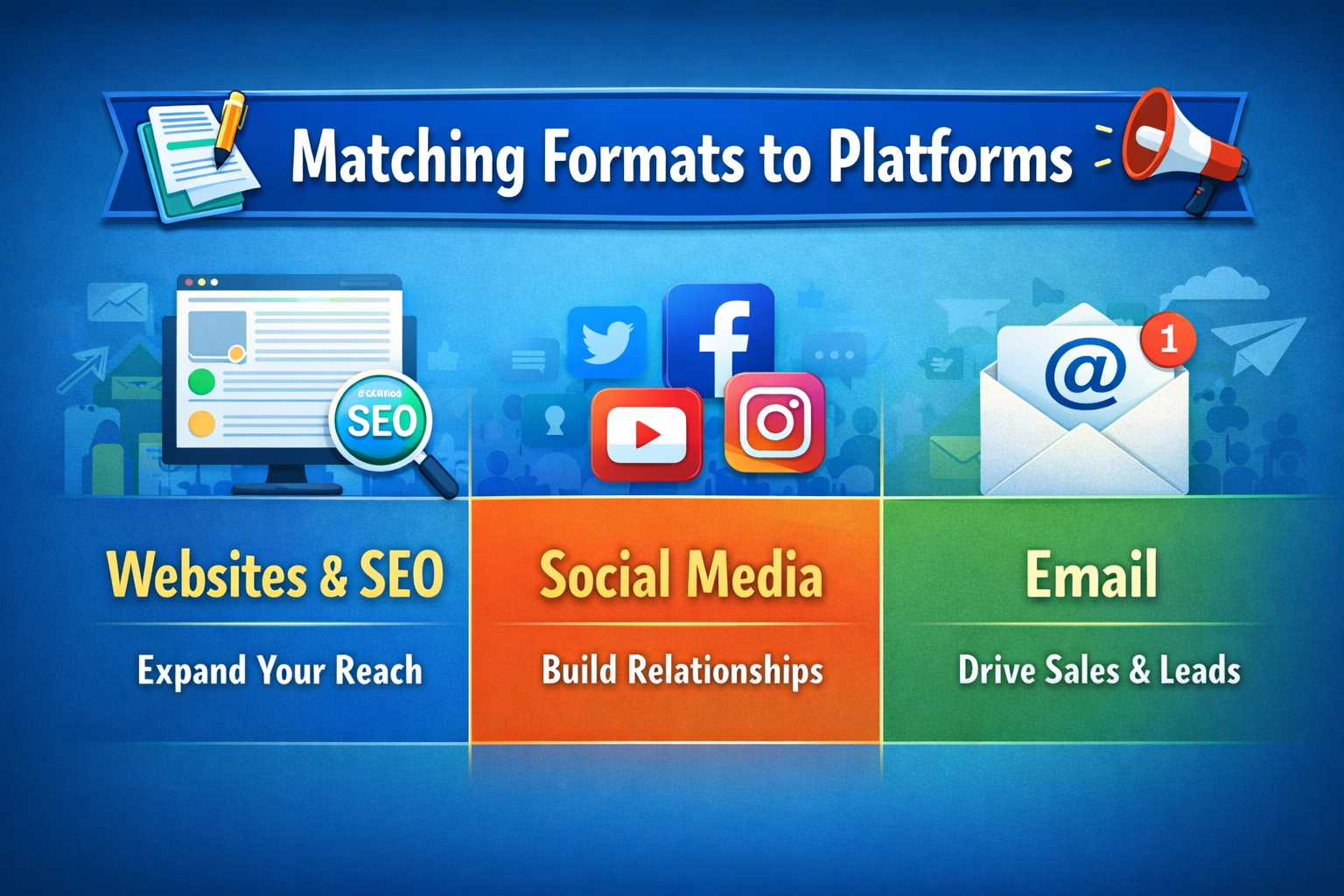
Matching Formats to Platforms
Websites & SEO
If your aim is SEO and organic traffic, written formats work best. They’re easy for search engines to index and help your site show up in relevant queries.
Social Media
Visual and short formats — videos, images, animations — thrive here. Each platform has its own sweet spots, but creativity and immediacy rule the day.
Use email as a distribution channel to amplify other content types, whether linking to blogs or embedding video snippets.
Balancing Resources and Constraints
Great content is resource-intensive. Some formats cost more time and money — like videos — while others are quicker to produce. Understanding your budget, team capacity, and tools informs what formats you can realistically pursue without sacrificing quality.
Testing & Learning: Why It Matters
No format selection is final. Testing different formats and measuring engagement lets you learn what resonates with your specific audience. This iterative approach ensures you keep improving your content strategy over time.
Also Read
How Jungle Scout Can Help You Find Winning Products on Amazon
How to Choose the Perfect Format for Your Marketing Content
How Streak-CRM for Gmail Can Transform Your Sales Pipeline Management
Process Street vs Trello: Which Tool Works Best for Your Business?
How ConvertKit(Kit) Empowers Creators with Seamless Email Marketing
Tools to Help You Choose Formats
Analytics tools, customer surveys, and engagement metrics give valuable insights into which formats drive traffic, engagement, and conversions. Tracking data helps justify format choices and refine your strategy.
Tracking and Analyzing Results
Metrics matter. Track views, clicks, shares, time on page, and conversions to understand performance. With regular analysis, you can adjust formats and optimize results continuously.
Future Trends in Content Format Choices
Emerging trends like interactive video, AI-driven personalization, and immersive formats (AR/VR) are shaping the future of content marketing. Keeping an eye on these trends can give you a competitive advantage.
Conclusion
Choosing the right content format isn’t just a creative choice — it’s a strategic one rooted in audience insight, business goals, platform behavior, and performance data. By understanding your audience’s preferences, defining clear goals, and experimenting with formats that align with your resources and channels, you can craft content that truly resonates and drives results. Whether through blogs, videos, podcasts, or interactive quizzes, the perfect format is the one that connects your message with the right audience at the right time — and keeps them coming back for more.
Frequently Asked Questions
Start with audience research — look at demographics, past engagement data, and platform behavior. Then test formats and measure results.
No single format is universally best — it depends on your goals and audience. A mix often works best.
Yes! For example, turn a long blog into a video or podcast, extending reach and engagement.
Regularly. As audience tastes and platforms evolve, testing quarterly or with major campaigns is wise.
If organic visibility is important to your strategy, prioritize formats like written content that support SEO.
Table of Contents
Related Post


Cowinaudio Marketing Strategy: What Makes Their Sound Tech Stand Out
admin
December 6, 2025
Read More »