

Comparexpert
Comparison Between Company


Common Challenges Faced by Instacart - Shoppers and How to Handle Them

Learn how Instacart – Shoppers can handle common challenges such as difficult batches, out-of-stock items, customer communication, traffic, heavy orders, ratings, and app issues. This practical guide offers simple tips to manage deliveries efficiently, reduce common problems, and make the Instacart shopping experience smoother.
Table of Contents
Understanding the Instacart Shopper Experience
Being an Instacart shopper can look simple from the outside: accept a batch, visit the store, collect groceries, deliver them, and get paid. In practice, each order can bring a different combination of problems. A store may be crowded, products may be unavailable, a customer may take a long time to answer, or a delivery address may be difficult to find. At the same time, shoppers need to think about fuel, mileage, time, vehicle maintenance, customer ratings, and the actual value of the batch before accepting it. Instacart currently says shoppers can see important information before accepting a batch, including the store, delivery distance, number of items and units, batch earnings, and expected tip.
The biggest lesson is that successful shopping is not only about moving quickly. It is about making sensible decisions before and during each order. A batch that looks attractive because of its headline payment may become less useful when it involves a long drive, many heavy items, multiple customers, or difficult parking. Think of every batch like a small business transaction: you have revenue, time, travel costs, and effort. Once you start looking at orders this way, many common Instacart problems become easier to manage.
How Instacart Shopper Earnings Work
Instacart explains that shopper earnings can include batch pay, promotions, and customer tips. Batch pay is calculated using factors such as travel distance, item quantity and weight, and expected shopping time. Instacart also states that shoppers receive 100% of customer tips, while some qualifying orders may include additional heavy pay or boosts.
That does not mean every batch will have the same value for every shopper. Your real result depends on how efficiently you shop, how far you travel, how long checkout and delivery take, and what operating expenses you have. This is why experienced shoppers often focus on the complete order rather than simply looking at the advertised dollar amount.
Challenge 1: Finding Profitable Batches
One of the most common challenges is deciding which batches are actually worth accepting. You may see several offers at once, but not all of them deserve your time. A batch with a high number of items can take much longer than expected, while a batch with fewer items may involve a long delivery distance. Multiple-order batches can also require additional organization because groceries for different customers must remain separated and delivered correctly.
Instacart says shoppers are shown key batch information before accepting an order and are not penalized simply for declining a batch. This gives shoppers an important opportunity to evaluate the order before committing. Instead of accepting automatically, consider the total payment, item count, distance, store, number of customers, and likely difficulty.
How to Evaluate a Batch
Before accepting, develop a quick mental checklist. Look at the total earnings, expected tip, number of items, units, mileage, store location, and delivery area. Also consider whether the store is familiar to you. A 30-item order at a store you know well may be easier than a 15-item order at a huge store where you regularly spend extra time searching for products.
Your goal should not be to accept every available batch. Your goal should be to choose orders that make sense for your available time and operating costs. This approach can reduce wasted driving and prevent you from spending a large part of your working day on orders that provide little return.
Challenge 2: Low or Unpredictable Tips
Tips can make a major difference to shopper earnings, but shoppers cannot completely control what customers choose to give. Instacart says customers can increase their tip for up to 14 days after delivery and cannot decrease it after two hours. The company also states that its tip protection can cover up to $10 when a customer removes a tip without reporting an associated order issue.
Community discussions show that tip expectations remain a frequent source of frustration among shoppers. Some shoppers report receiving low tips or seeing earnings that they consider difficult to justify after accounting for time and travel. These reports are individual experiences rather than evidence that every market operates the same way, but they illustrate why shoppers need a system for evaluating orders rather than relying on tips alone.
Protecting Your Expected Earnings
A practical strategy is to consider whether the batch makes sense before counting the tip as guaranteed income. If the order only looks attractive because of an unusually large expected tip, there is naturally more uncertainty than with a batch whose overall payment already makes sense.
Keep your own records of completed orders. Tracking total earnings, approximate hours, miles, fuel costs, and other vehicle expenses can help you understand your actual results. After a few weeks, you may notice patterns about which stores, delivery areas, and time periods work better for your schedule.
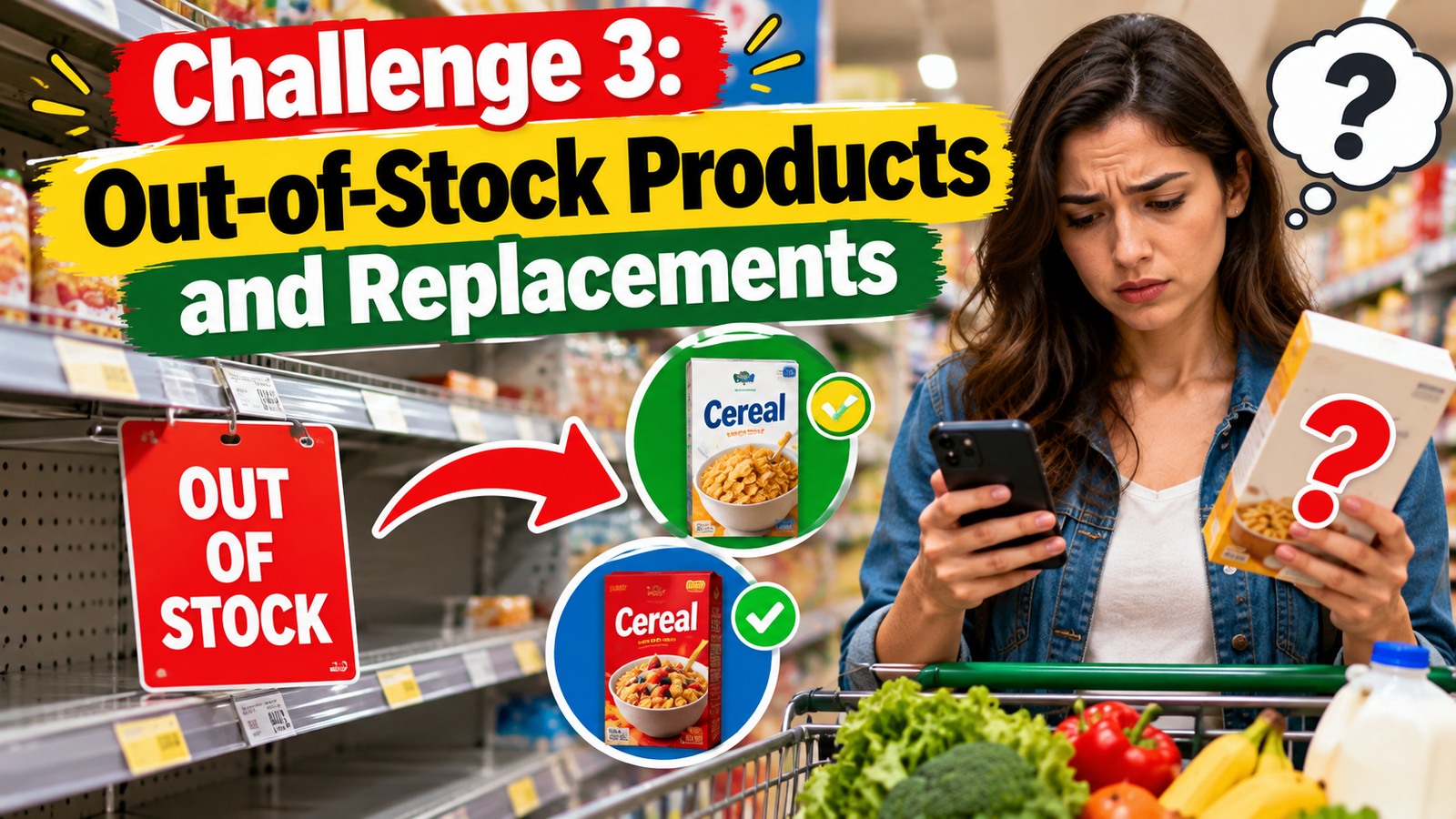
Challenge 3: Out-of-Stock Products and Replacements
Out-of-stock products are another everyday challenge. A customer may request a particular brand, size, flavor, or quantity, only for you to discover that the shelf is empty. Now you have a decision: find a replacement, refund the item, or contact the customer. The process becomes more difficult when the customer is not responding.
The best approach is to remain calm and follow the customer’s stated preferences whenever possible. Check nearby shelves, end displays, refrigerated sections, or other locations where the product may be placed. If an appropriate replacement is available, communicate clearly before making the change when the app requires customer approval.
Instacart has also advised shoppers to communicate directly with customers when entire orders are affected by inventory problems and to use photos when helpful.
A short message is usually better than a long explanation. Tell the customer what is unavailable, offer a realistic replacement, and give them a simple choice. This reduces confusion and can make the shopping process smoother.
Challenge 4: Difficult Customer Communication
Customer communication can become challenging when expectations are unclear. Some customers respond quickly and provide detailed instructions. Others may not answer messages at all. You may also encounter customers who request specific replacements, additional products, delivery instructions, or changes while you are already shopping.
The key is to stay professional without allowing communication to consume too much time. You do not need to write long messages for every small issue. Clear, polite communication can prevent misunderstandings while keeping you focused on completing the order.
Keeping Customer Messages Simple
Use short messages that explain the problem and provide an action. For example, instead of writing a long paragraph about why an item is unavailable, explain that the requested item is out of stock and provide one or two possible replacements.
Screenshots or photos can also help when an item is difficult to identify. The goal is to give the customer enough information to make a decision. Good communication works like a traffic signal: it should tell everyone what is happening without creating another problem.
Challenge 5: Traffic, Parking, and Long Delivery Distances
Delivery problems do not end when shopping is finished. Traffic, road construction, apartment complexes, parking restrictions, elevators, gated communities, and difficult addresses can all add time. A delivery that looks like a short distance on a map may take much longer in real conditions.
Instacart says batch pay considers travel distance and expected effort, but actual road conditions can still affect how long a trip takes. Some shoppers have also reported concerns about how unusual traffic or route conditions can affect time and distance tracking.
A useful habit is to check the delivery area before accepting. If you know that a particular neighborhood has difficult parking or frequent congestion, include that experience in your decision. Navigation apps can help, but they cannot predict every building entrance or parking problem.
Keeping your vehicle organized also helps. Make sure groceries are secure and separated properly before leaving the store. A few seconds spent organizing bags can save much more time during delivery.
Challenge 6: Large or Heavy Grocery Orders
Heavy and bulky orders can be physically demanding. Cases of water, large pet-food bags, multiple beverage packs, and other heavy products can quickly turn an ordinary shopping trip into a difficult delivery.
Instacart currently identifies qualifying heavy batches and says heavy pay can apply when an order contains qualifying heavy items. The company also allows shoppers to opt out of heavy batches in applicable circumstances.
The important point is to consider the complete workload. A large order may provide reasonable earnings, but if it requires several trips from the vehicle to an apartment, there is additional physical effort and time involved.
Shoppers should also protect themselves from unnecessary strain. Use carts when available, avoid unsafe lifting, and organize heavy products carefully. Your vehicle should be treated as part of your work equipment, not simply transportation.
Challenge 7: Ratings and Customer Complaints
Ratings can create another layer of pressure because shoppers want to maintain good service while dealing with factors outside their control. An item may be unavailable even though the customer expects it. A store may be extremely crowded. Traffic may delay delivery. None of these situations is necessarily caused by poor shopping, yet the customer experience can still be affected.
Instacart has described rating protections for certain situations, including some cases involving severe weather, low inventory, system outages, customer fraud, and unexpected incidents.
The best defense is consistency. Check items carefully, follow replacement instructions, communicate when necessary, protect temperature-sensitive groceries, and verify the delivery location before leaving. Instacart also says verified insulated bags can help protect temperature-sensitive items and may contribute to better ratings and tips.
Do not obsess over one rating. Instead, look for repeated patterns. If customers repeatedly mention missing items, poor replacements, or damaged groceries, that feedback can show you exactly where to improve.
Challenge 8: App, GPS, and Technical Problems
Because the Shopper app controls much of the workflow, technical problems can quickly become frustrating. GPS errors, weak mobile service, app freezes, checkout problems, or incorrect navigation can interrupt an otherwise normal order.
Instacart specifically recommends having a strong GPS signal and reliable internet connection because these factors affect access to batches and the shopper app experience.
A simple preparation routine can reduce technical trouble. Keep your phone charged, maintain a reliable mobile connection, update the app when appropriate, and carry a charging cable or power bank. If navigation behaves strangely, compare the app’s directions with another trusted navigation service rather than blindly following an obviously incorrect route.
When a technical issue affects an active order, document what happened. Screenshots, timestamps, and clear notes can be useful if you later need to explain the problem to support.
Challenge 9: Account Warnings and Deactivation Risks
Account security is one of the most serious concerns because shoppers depend on access to the platform. Instacart monitors account activity, and community discussions in 2026 include reports from shoppers who said their accounts were deactivated over alleged manipulation of time or mileage. These are individual reports and should not be treated as proof of how every deactivation decision is made.
The safest approach is simple: follow the platform’s rules and complete batches honestly. Do not intentionally manipulate shopping time, location, mileage, photographs, receipts, or other information. Avoid shortcuts that might appear harmless but could create an account problem later.
Keep records when something unusual happens. If traffic, road closures, store problems, customer communication, or app issues significantly affect a batch, maintaining accurate documentation can help you explain the situation if a dispute occurs.
Challenge 10: Managing Time and Operating Costs
One of the easiest mistakes for a new shopper is to focus only on gross earnings. Suppose you receive several batches and earn a certain amount during the day. That number does not tell the entire story. Your vehicle uses fuel, accumulates mileage, requires maintenance, and may involve insurance and other costs.
Time matters too. If a batch takes much longer than expected, your effective hourly earnings can fall. This is why keeping a basic record can be valuable.
Metric | Why It Matters |
Total batch earnings | Shows gross income |
Tips | Shows customer-added earnings |
Miles driven | Helps track vehicle use |
Time worked | Helps estimate effective hourly earnings |
Fuel cost | Shows direct operating expense |
Number of items | Indicates shopping workload |
Delivery distance | Helps evaluate travel efficiency |
You do not need complicated accounting software. A simple spreadsheet or notes app can be enough. After several weeks, the numbers can show which types of batches are taking too much time and which working periods fit your goals.
How Instacart Shoppers Can Prepare Before Starting
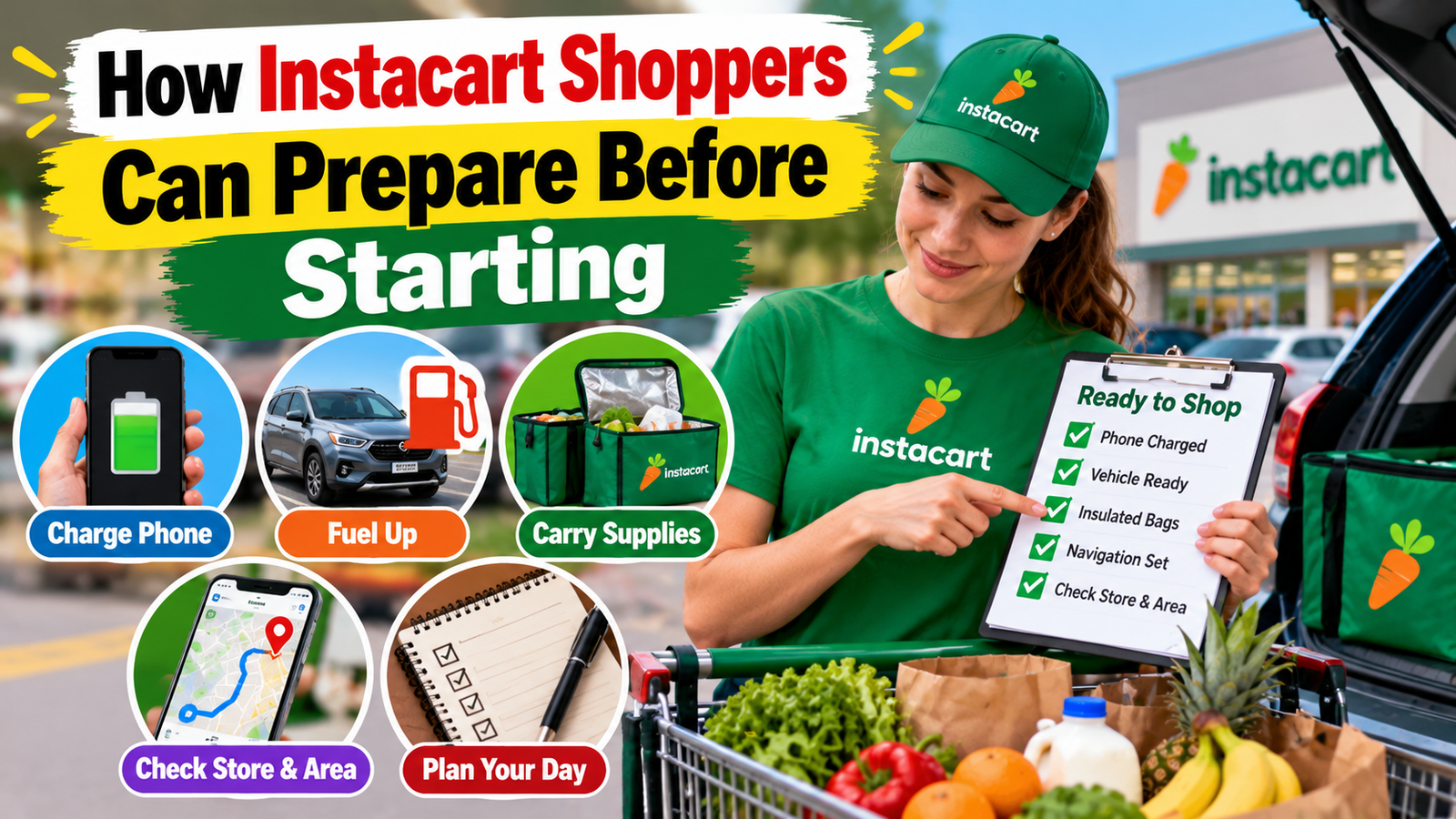
Preparation can make a big difference for Instacart – Shoppers. Before accepting orders, make sure your phone is fully charged, your vehicle has enough fuel, and you have useful items such as reusable bags, a phone charger, and an insulated bag when needed. It is also helpful to check the store location, delivery area, and expected distance before accepting a batch. A few minutes of preparation can prevent unnecessary delays later.
Experienced shoppers can also create a simple routine for starting their workday. Check the app, review the busiest nearby stores, and make sure your navigation and internet connection are working properly. Keeping your vehicle clean and organized can also make it easier to separate groceries when handling multiple orders.
Tips for Handling Multiple Orders
Multiple-order batches can become confusing when groceries are not properly separated. Instacart – Shoppers should organize each customer’s items carefully from the beginning. Using different sections of the cart or separate reusable bags can reduce the chance of mixing products.
Before leaving the store, check the order details again. Make sure the correct items are assigned to the correct customer and that refrigerated or frozen products are handled properly. Taking a few extra moments to organize everything can save time during delivery and reduce the possibility of missing or misplaced items.
How to Handle a Customer Who Does Not Respond
Sometimes a customer may not respond when you ask about a replacement. This can slow down the shopping process, especially when several items are unavailable. Instead of repeatedly sending messages, Instacart – Shoppers should follow the customer’s replacement preferences shown in the app when available.
If there is no suitable replacement preference, follow the instructions provided by the platform and use your best judgment. Keep communication polite and simple. Taking screenshots or keeping relevant information in the app can also help if you later need to explain what happened.
Also Read
The Benefits of Using ZipRecruiter for Job Searching and Recruitment
Exploring the Security and Optimization Features of Mackeeper
Smart Holiday Planning Tips for Travelers Using Pierre et Vacances
How Woox CZ-SK Improves Business Efficiency and Customer Experience
Is Modelones.com Legit? Honest Customer Reviews & Expert Analysis
Managing Busy Grocery Stores
Busy stores can make shopping much slower. Long checkout lines, crowded aisles, limited parking, and misplaced products can all affect delivery time. Instacart – Shoppers can reduce some of these problems by becoming familiar with the stores they visit regularly.
Learning where common products are located can save several minutes on every order. Shopping during less crowded periods may also help, depending on your local market. When you know a store well, you can move through it more efficiently instead of spending extra time searching for basic items.
Building a Better Routine as an Instacart Shopper
Success does not come from completing one perfect order. It comes from developing a consistent routine. Instacart – Shoppers can improve their workflow by learning familiar stores, planning their working hours, checking batches carefully, communicating clearly, and reviewing their performance regularly.
Think of each day as a learning opportunity. If a particular store always takes too long, make a note of it. If certain delivery areas have difficult parking, consider that before accepting future orders. Small adjustments can gradually make the entire shopping process more efficient.
Practical Tips for Becoming a More Efficient Instacart Shopper
Efficiency comes from building repeatable habits rather than rushing. Learn the layout of stores where you shop frequently. Keep your phone charged and your vehicle organized. Check the entire batch before accepting it, communicate clearly with customers, and avoid accepting an order simply because it appears quickly.
Instacart says shoppers can improve batch access by paying attention to location, device performance, and account-related eligibility. The company also says shoppers in Cart Star tiers may receive priority access when they meet the applicable requirements, including customer-rating and shopping-quality criteria.
Another useful strategy is to understand your local demand. Instacart provides information about projected peak earning times and busy stores to help shoppers plan when and where they work.
Do not assume that the busiest period automatically means the most profitable period for you. Your local traffic, store size, parking, competition, and customer demand all matter. Test different times, record the results, and adjust your schedule based on your own data.
Conclusion
Being an Instacart shopper comes with flexibility, but flexibility does not mean every batch will be easy. Low tips, difficult replacements, unavailable products, customer communication, traffic, heavy orders, ratings, technical problems, and account concerns can all affect the shopping experience.
The good news is that many of these challenges can be managed with preparation and better decision-making. Review batch information before accepting, consider distance and workload, track your real expenses, communicate clearly, protect groceries, and follow Instacart’s rules. Instacart itself provides information about batch earnings, access, ratings, heavy orders, and shopper eligibility that can help shoppers understand how the platform currently works.
The goal should not be to make every order perfect. The goal is to develop a repeatable process that helps you handle ordinary problems without allowing one difficult batch to ruin your entire day.
Frequently Asked Questions
The biggest challenges vary by location and individual circumstances. Common issues include finding worthwhile batches, managing shopping time, dealing with unavailable products, handling customer communication, controlling vehicle costs, and maintaining good service.
Yes. Instacart says shoppers choose which batches they take and are not penalized simply for not accepting a batch.
Check whether the product is available elsewhere in the store, review the customer's replacement preferences, and communicate clearly when a replacement or refund is needed. Photos can also help explain inventory problems.
Instacart says batch access can depend on factors including device performance, location, demand, and account eligibility. Cart Star priority access may also apply to eligible shoppers who meet the relevant requirements.
Focus on accurate shopping, careful replacements, clear communication, correct deliveries, and proper handling of groceries. Also remember that Instacart has described rating protections for certain circumstances, including some inventory, weather, fraud, and technical situations.
Table of Contents
Related Post

Why Users Explore Www.Swiftpublisher.Com for Publishing Solutions
admin
September 29, 2026
Read More »



How Small Businesses Can Improve Communication with Ooma Office
admin
September 27, 2026
Read More »

The Benefits of Using ZipRecruiter for Job Searching and Recruitment
admin
September 26, 2026
Read More »