

Comparexpert
Comparison Between Company


McKissock, LLC Review: Courses, Pricing & Benefits

When professionals think about continuing education (CE), real estate licensing, or appraisal courses, one name comes up over and over again: McKissock, LLC. Founded over 30 years ago as a provider of online professional education, McKissock has evolved into a major hub for courses that help licensed professionals maintain credentials, grow careers, and expand practical knowledge in their fields. With more than 300,000 professionals relying on its platform each yearand an average course rating around 4.3/5, this provider has earned attention—and opinions—across industries.
But beyond flashy ratings and large course libraries lies a more nuanced reality: Who benefits most from McKissock’s offerings? What are the real costs involved? And how does it compare to alternatives that might offer deeper educational experiences? This review addresses all that and more.
Table of Contents
What Is McKissock, LLC?
History and Background
McKissock, LLC (often branded as McKissock Learning) started as a specialized continuing education company focused on appraisal and real estate disciplines. Over time, it branched into additional professional fields like engineering, home inspection, and surveying. For more than three decades, its mission has centered on delivering online education solutions designed to be flexible, accessible, and professionally approved by regulatory boards.
Mission and Purpose
What sets McKissock apart is its goal: to help professionals not just meet licensing requirements but stay relevant in industries that evolve rapidly. Whether it’s updates to appraisal standards or new compliance requirements, McKissock aims to provide updated content that reflects current trends and regulatory expectations.
Who Is McKissock For?
Professionals in Real Estate
Real estate agents and brokers often need continuing education to renew their licenses. McKissock offers a wide range of courses tailored to state requirements, including regulatory updates, market trends, and specialized professional development topics.
Appraisers and Continuing Education
McKissock is particularly well known among real estate appraisers. Its appraisal courses—often used for both qualifying education and continuing education—are widely trusted. With more than 100 courses and tens of thousands of reviews from active appraisers, the company actually bills itself as the top appraisal school in the country.
These courses cover everything from foundational appraisal principles to professional development subjects like valuation bias and fair housing laws.
Other Licensing Fields
Beyond real estate and appraisal, McKissock provides education solutions for engineers (Professional Development Hours), home inspectors, land surveyors, and those in collateral risk disciplines. Offers vary by profession and state, but generally include both qualifying and continuing education options.
Course Categories Offered
One of McKissock’s biggest strengths is the range of educational categories it supports.
Appraisal Courses
Hundreds of hours of information, including webinars, professional development, renewal courses, and licenses, are available to appraisers.
Real Estate Licensing & CE
Agents and brokers can fulfill pre‑licensing, post‑licensing, and continuing education requirements through self‑paced or interactive classroom‑style courses.
Engineering & PDHs
Engineers seeking professional development hours will find structured courses that satisfy state board requirements.
Home Inspection
Home inspectors can meet licensing and renewal needs through state‑approved courses.
Land Surveying
Surveyors have access to specialized lessons aimed at fulfilling license requirements and expanding technical knowledge.
Collateral Risk and Other Topics
Additional niche categories help professionals in risk management and related disciplines expand their skill sets.
Delivery Format & Learning Experience
Today’s learners expect flexibility, and McKissock delivers with several formats:
Online Self‑Paced Courses
Individuals can complete courses on their own schedule, which is ideal for busy professionals. These are usually text‑based, with embedded quizzes and final exams.
Instructor‑Led Live Stream
For those who would prefer a classroom setting, McKissock offers livestream sessions with opportunities for in-the-moment Q&A.
Onsite Class Options
In select cases and locations, McKissock provides traditional in‑person classes, though these are not as common as the online versions.

Course Structure & Features
Board‑Approved and State‑Approved
All continuing education and qualifying courses are approved by relevant state boards, ensuring that they count toward renewal or licensure requirements.
Learning Tools and Resources
McKissock’s platform includes supplementary learning aids, templates, articles, videos, and webinars to help enrich the learning experience beyond simple course modules.
Certificate Tracking
A dashboard allows students to track completed hours, certificates earned, and remaining requirements—all in one place, which many reviewers find helpful.
Pricing Overview
Pricing varies significantly depending on course type, profession, and access duration.
Individual Course Costs
Specialty courses such as the USPAP 7‑hour update or valuation bias classes are typically sold individually, with prices set according to state reporting requirements.
Package Bundles
Many states have pre‑selected continuing education bundles costing in the hundreds to low‑thousands of dollars. For example, a basic 28‑hour CE package may be listed around $635, often bundled with the required USPAP course.
Unlimited Membership
Some professionals opt for unlimited learning subscriptions, which give access to the full CE library for a defined renewal cycle for a flat fee. This is often cost‑effective for heavy learners but may not be worth it for those needing only a few courses.
Benefits of Online Self-Paced Learning
One of the biggest advantages McKissock provides is flexibility. Professionals can complete courses from home, at their own pace, and even split them across multiple sessions. Unlike traditional classrooms, there’s no need to take time off work or travel. You can emphasize that self-paced courses allow learners to review complex topics multiple times, which is particularly beneficial for subjects like appraisal regulations or engineering PDHs. Adding a paragraph comparing self-paced learning to traditional methods can make this point more compelling.
Importance of State and Board Approval
Many readers might wonder why state approval matters. You can write a short section explaining that McKissock ensures all courses are board-approved and meet state-specific requirements, so they count toward license renewal. This can include a small example: “For example, in California, appraisers are required to complete 28 hours of CE every two years, and McKissock’s courses are fully approved to meet this requirement.” This adds credibility and practical advice.
User Experience and Platform Features
You can expand with more technical details about the platform. Talk about features like:
- Dashboard for tracking progress – learners can see completed hours and remaining requirements.
- Certificates downloadable instantly – no waiting for paperwork.
- Integrated quizzes and practice tests – helps retain knowledge.
- Mobile-friendly interface – learners can study on smartphones or tablets.
Adding a paragraph here shows your readers the practical benefits of the platform beyond just course content.
Real-Life Use Cases
Add anecdotes or examples, such as:
- A real estate agent who renewed all licenses in one weekend using McKissock.
- An appraiser who improved valuation skills through advanced professional development courses.
- An engineer who fulfilled PDH requirements on a business trip using mobile courses.
This makes your content relatable and actionable, while also improving engagement.
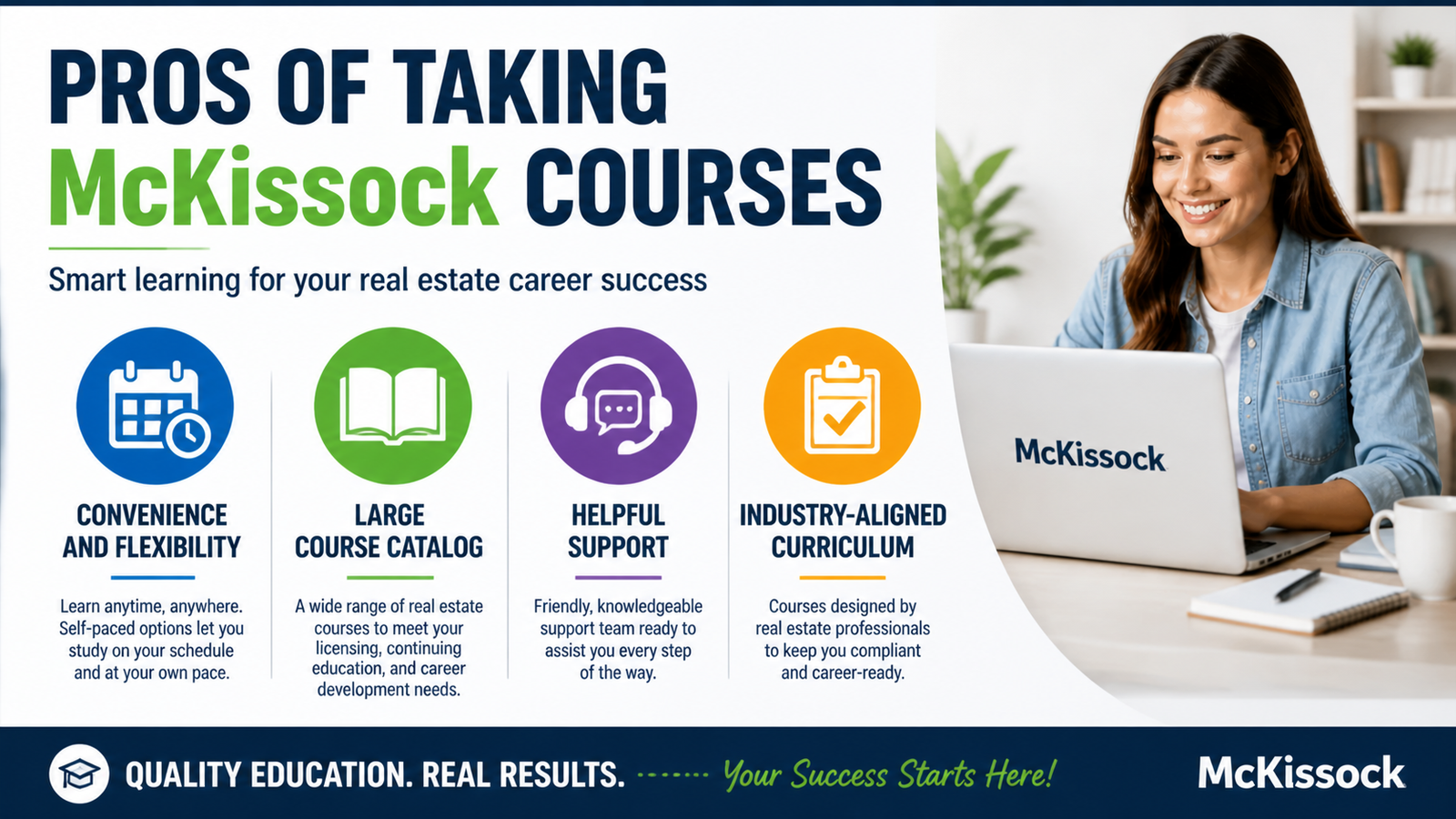
Pros of Taking McKissock Courses
Convenience and Flexibility
Professionals love the ability to complete courses whenever and wherever it fits their schedule—a major plus for those juggling full‑time work.
Large Course Catalog
With a vast selection of courses spanning multiple professions, McKissock is an all‑in‑one learning hub.
Helpful Support
Many users praise responsive customer service and accessible instructors for certain courses.
Industry‑Aligned Curriculum
State‑approved content means that what you learn will count toward official requirements—not just general professional development.
Cons and Criticisms
No provider is perfect, and McKissock has its critics.
Mixed User Experience
While many users enjoy the platform, others feel the experience is only “okay” or worse. Trustpilot indicates a range of experiences with some technical frustrations.
Website Navigation
Some users report that the platform can feel confusing, with difficulties navigating to the correct courses or tracking progress manually.
Course Engagement Issues
Community feedback suggests that certain courses are heavy on text and light on interactive elements, which can make longer sessions feel tedious.
Comparison With Competitors
McKissock vs Appraisal Institute
In online forums, some professionals note that McKissock’s general courses are cheaper than offerings from established bodies like the Appraisal Institute, though AI courses are sometimes perceived as deeper or more rigorous.
McKissock vs Smaller Providers
Smaller education providers may offer niche content or more interactive experiences, but they often can’t match McKissock’s breadth or state licensing approvals.
Also Read
KnowledgeHut Solutions Pvt. Ltd. Review: Courses, Pricing & Benefits
Heyup Review 2026: What is Heyup and How Does It Work?
SainSmart Review 2026: Is SainSmart Worth Buying?
Lasting Dynamics Review: Is Lasting Dynamics a Reliable Tech Partner?
Ranowear, Inc. Review: Quality, Pricing & Style
Customer Feedback Snapshot
Trustpilot Review Summary
McKissock Learning’s appraisal offerings average about a 4.0 Trustpilot score, with reviewers praising flexibility and customer service while noting areas for improvement like site usability and course engagement.
Reddit Community Feedback
Online discussions reveal that some find McKissock’s online courses tedious or less engaging, while others appreciate the flexibility and convenience. Experiences vary widely by individual expectation and learning style.
Is McKissock Worth It?
For busy professionals who need a reliable path to complete licensing requirements or continuing education, McKissock delivers clear value—especially given its approvals, flexibility, and large content library. If you’re seeking deep, hands‑on industry training beyond regulatory requirements, you might also consider supplemental providers. Balancing convenience, cost, and career goals will help determine its worth for you.
Conclusion
McKissock, LLC has firmly established itself as a trusted provider of professional education across multiple industries, from real estate and appraisal to engineering, home inspection, and surveying. Its extensive course catalog, state and board-approved curriculum, and flexible learning formats make it an ideal choice for busy professionals looking to meet licensing requirements, enhance skills, and advance their careers. While some users may experience minor navigation or engagement challenges, the overall convenience, affordability, and variety of courses outweigh these drawbacks.
Frequently Asked Questions
Yes—its continuing education courses are state‑approved and meet licensing board requirements across most disciplines.
Absolutely—many McKissock courses are self‑paced, allowing you to learn on your schedule.
Yes—McKissock offers membership packages that give access to its entire CE library for a renewal cycle.
Some reviews note occasional site navigation problems or frustrations with module formats.
McKissock tends to be more affordable and flexible, while competitors may offer deeper or more niche training experiences at a higher cost.
Table of Contents
Related Post

Finding Student Housing and Communities With Erasmusu: A Practical Guide
admin
September 19, 2026
Read More »

What Travelers Should Know About Iberostar (closed) and Its Hotel History
admin
September 18, 2026
Read More »

Planning a European Trip? Discover the Benefits of Direct Ferries
admin
September 17, 2026
Read More »

What Makes Der Gepflegte Mann a Notable Name in Men’s Personal Care
admin
September 16, 2026
Read More »