Comparexpert
Comparison Between Company


Online NL: Complete Guide to Digital Services in the Netherlands
Discover how Online NL makes life easier in the Netherlands by providing fast and secure access to digital government services. This guide explains essential platforms like DigiD, MijnOverheid, and eHerkenning, along with how citizens and businesses use them for taxes, healthcare, permits, and official communication. Learn how Online NL powers one of the world’s most advanced digital government ecosystems and simplifies everyday administrative tasks online.
Table of Contents
Understanding the Concept of Online NL
What “Online NL” Means in the Digital Ecosystem
The phrase Online NL generally refers to the comprehensive network of digital services available across the Netherlands. These services are part of a broader digital government ecosystem designed to simplify everyday interactions between citizens, businesses, and government authorities. Instead of visiting municipal offices, filling paper forms, or waiting in long queues, residents can now handle many official tasks online—from tax filing and healthcare declarations to benefit applications and municipal registrations.
Think of the Dutch digital ecosystem as a well-organized online city hall that never closes. Citizens log in, verify their identity, and access various services in minutes. The backbone of this system is a combination of secure digital identity tools, government portals, and integrated databases that communicate with each other seamlessly.
One reason Online NL has gained global attention is the country’s strong emphasis on user-friendly digital design and secure authentication. The government has invested heavily in systems that make services easy to navigate even for people who are not highly technical. This commitment has paid off. In fact, around 90% of Dutch residents aged 16 and above use government websites for services such as information searches, appointments, and document access.
From a broader perspective, Online NL represents more than convenience. It reflects a shift in how governments operate in the digital age—focusing on accessibility, efficiency, and transparency. By digitizing public services, the Netherlands has built a model that many countries now study and attempt to replicate.
Why the Netherlands Leads in Digital Transformation
The Netherlands consistently ranks among the most digitally advanced nations in Europe. Several factors contribute to this leadership: strong infrastructure, high digital literacy, progressive government policies, and widespread adoption of online tools by citizens and businesses.
One impressive statistic highlights the country’s digital maturity: 96% of Dutch government services are available online, significantly higher than the European average of 88%. This means nearly every interaction citizens need with public authorities—from requesting certificates to applying for benefits—can be handled digitally.
Another indicator is digital skills. Around 83% of people in the Netherlands possess at least basic digital skills, placing the country among the top in Europe. High digital literacy ensures that most citizens can comfortably navigate government portals, apps, and online forms.
But infrastructure and skills alone are not enough. What truly distinguishes the Dutch approach is its citizen-centric design philosophy. Many government services automatically pre-fill personal information to reduce paperwork and errors. In fact, 89% of digital services already include pre-filled personal data fields, dramatically simplifying processes for users.
The result? A digital environment where online services are not just available but genuinely convenient. This combination of usability, security, and accessibility is why Online NL is widely considered a benchmark for modern digital governance.
The Evolution of Digital Government in the Netherlands
Early Digitalization Initiatives
The journey toward Online NL began decades ago when the Dutch government realized that digital technology could transform public administration. Early efforts focused on digitizing records and improving internal communication between government agencies. Over time, these initiatives expanded into citizen-facing platforms that allowed people to access services directly online.
During the early 2000s, the government began building centralized digital infrastructure that would eventually connect different departments. This shift was critical because it eliminated silos that traditionally slowed down administrative processes. Instead of multiple departments asking citizens for the same information repeatedly, data could now be securely shared across systems.
A key milestone in this transformation was the creation of Logius, the digital government service responsible for managing authentication systems, data exchange standards, and secure communication between public institutions. This organization ensures that government services across ministries, municipalities, and agencies follow consistent digital standards.
These early investments created the foundation for today’s Online NL ecosystem. Without them, the seamless integration we see today—such as automatic benefit payments or pre-filled forms—would not have been possible.
The Dutch Digitalisation Strategy (NDS)
The Netherlands later introduced the Dutch Digitalisation Strategy (NDS) to guide national digital transformation. This policy framework outlines the country’s long-term goals for technology adoption, innovation, and digital governance.
The strategy focuses on several priorities, including cybersecurity, artificial intelligence, open data, and digital identity systems. It also encourages collaboration between government agencies, businesses, and academic institutions to ensure that digital services continue evolving alongside technological progress.
Under the NDS, the government aims to create an environment where digital services are not just efficient but also proactive. For example, some benefits or administrative actions can now be triggered automatically based on life events. When a second child is born, for instance, certain benefits may be provided without requiring parents to submit a new application.
This proactive approach represents the next stage of digital government. Instead of citizens requesting services manually, the system anticipates needs and delivers services automatically whenever possible.
Key Digital Identity Systems in the Netherlands
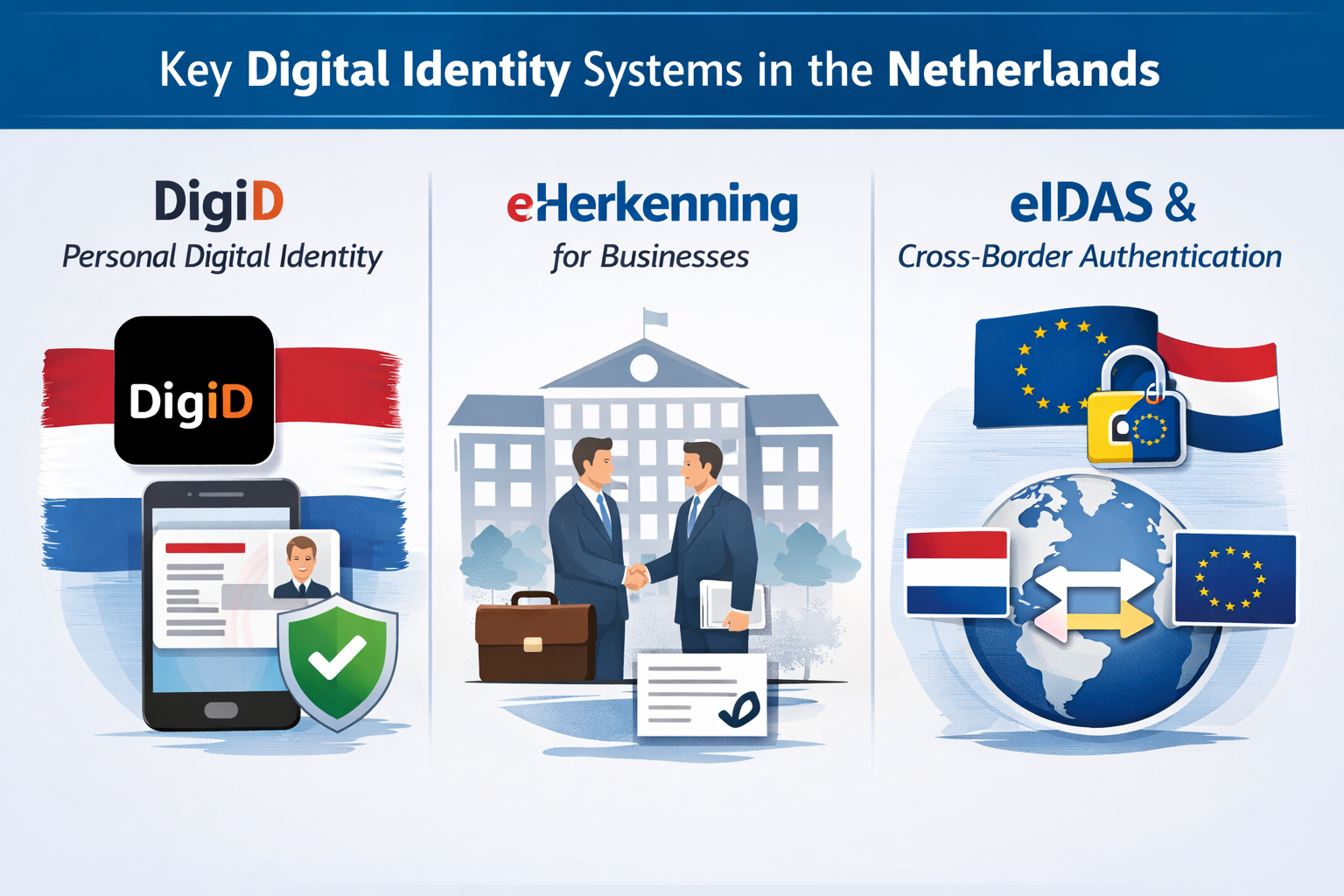
DigiD – Personal Digital Identity
At the heart of Online NL lies DigiD, the primary digital identity system used by residents of the Netherlands. DigiD functions like a secure digital passport that allows individuals to verify their identity when accessing government services online.
With DigiD, citizens can log in to platforms related to taxes, healthcare, education, and municipal services. This single sign-on approach eliminates the need for separate accounts for each government agency.
The scale of DigiD usage illustrates how deeply integrated it has become in Dutch society. In 2024 alone, the system recorded more than 550 million logins, reflecting its role in everyday digital interactions with government services.
Security is another major advantage of DigiD. The system uses multi-factor authentication methods such as SMS verification or mobile apps, ensuring that only authorized users can access sensitive information. For citizens, this means they can safely manage personal matters—tax returns, healthcare reimbursements, benefits—without visiting a physical office.
eHerkenning for Businesses
While DigiD serves individuals, eHerkenning is designed specifically for businesses. It acts as a secure digital identification system that allows companies to interact with government agencies online.
Entrepreneurs use eHerkenning to apply for permits, subsidies, or tax assessments. Instead of assigning digital identities to individuals alone, the system verifies the identity and authorization of organizations and their representatives.
Different security levels exist within eHerkenning, allowing businesses to choose the appropriate authentication strength depending on the type of service they need. For example, high-security levels may be required when dealing with financial or regulatory information.
eIDAS and Cross-Border Authentication
Beyond national systems, the Netherlands also participates in eIDAS, the European framework for electronic identification and trust services. This system enables secure digital interactions across European countries.
With eIDAS, individuals and businesses can use their national digital identities to access services in other European Economic Area (EEA) countries. The framework removes digital barriers between nations while maintaining strong privacy protections and authentication standards.
For international professionals and businesses operating within the EU, this interoperability is extremely valuable. It simplifies cross-border administration and ensures consistent security protocols across Europe.
Core Online Government Services
Tax Filing and Financial Services
One of the most widely used digital services in the Netherlands is online tax filing. Through secure portals connected to DigiD, citizens can submit income tax returns, review financial records, and manage payment schedules.
The system simplifies the process by automatically importing financial information from employers, banks, and other institutions. Instead of manually entering every detail, taxpayers simply verify the data and submit their return.
This automation significantly reduces administrative errors while saving time for both citizens and tax authorities. It also demonstrates how integrated digital systems can streamline complex bureaucratic processes.
Healthcare and Insurance Services
Healthcare services in the Netherlands are also heavily digitized. Citizens can access medical records, manage insurance claims, and communicate with healthcare providers through secure online portals.
Digital platforms allow patients to view prescriptions, schedule appointments, and track reimbursements from health insurers. Many hospitals and clinics also use online portals that integrate with national digital identity systems.
These tools empower patients to manage their healthcare more efficiently while reducing paperwork for medical institutions.
Municipal Services and Permits
Municipal governments across the Netherlands offer numerous online services through their websites. Residents can register addresses, request official documents, and apply for building permits without visiting municipal offices.
The digital approach saves time for citizens while helping municipalities process requests faster. In many cases, approvals and certificates are delivered electronically within days rather than weeks.
Digital Platforms Used by Citizens
MijnOverheid Portal
One of the most important platforms within Online NL is MijnOverheid, a centralized portal where citizens manage interactions with government authorities.
Through this platform, individuals can view personal data registered with government agencies, track administrative requests, and update certain records. The portal acts as a digital dashboard for official interactions.
Government Message Box (Berichtenbox)
Within MijnOverheid, users also access the Berichtenbox, a secure digital mailbox for official communications. Government agencies send messages, notifications, and documents directly to this mailbox instead of traditional mail.
The system ensures that citizens receive important updates quickly and securely. Over time, the Berichtenbox has become a critical communication channel between the government and residents.
Digital Infrastructure and Connectivity
Internet Penetration and Digital Skills
Digital services can only succeed if citizens have reliable internet access and the skills needed to use it. Fortunately, the Netherlands excels in both areas.
High-speed broadband is widely available across the country, and internet usage rates are among the highest in Europe. In fact, the Netherlands ranks among the EU leaders in digital skills, with over 80% of citizens possessing basic or higher digital competence.
This strong digital literacy enables widespread adoption of online services, making the Online NL ecosystem viable for most residents.
Security, Privacy, and Cyber Protection
Government Cybersecurity Initiatives
Security remains a critical component of Online NL. Digital government systems store sensitive personal data, making robust cybersecurity measures essential.
The Dutch government continuously invests in encryption technologies, secure authentication methods, and advanced monitoring systems to prevent data breaches.
Recent discussions in the Netherlands have even proposed providing citizens with a government-supported digital security package that could include tools like VPN services, antivirus software, and password managers. Such initiatives reflect growing awareness of the importance of protecting citizens in the digital age.
Benefits of Online NL for Citizens and Businesses
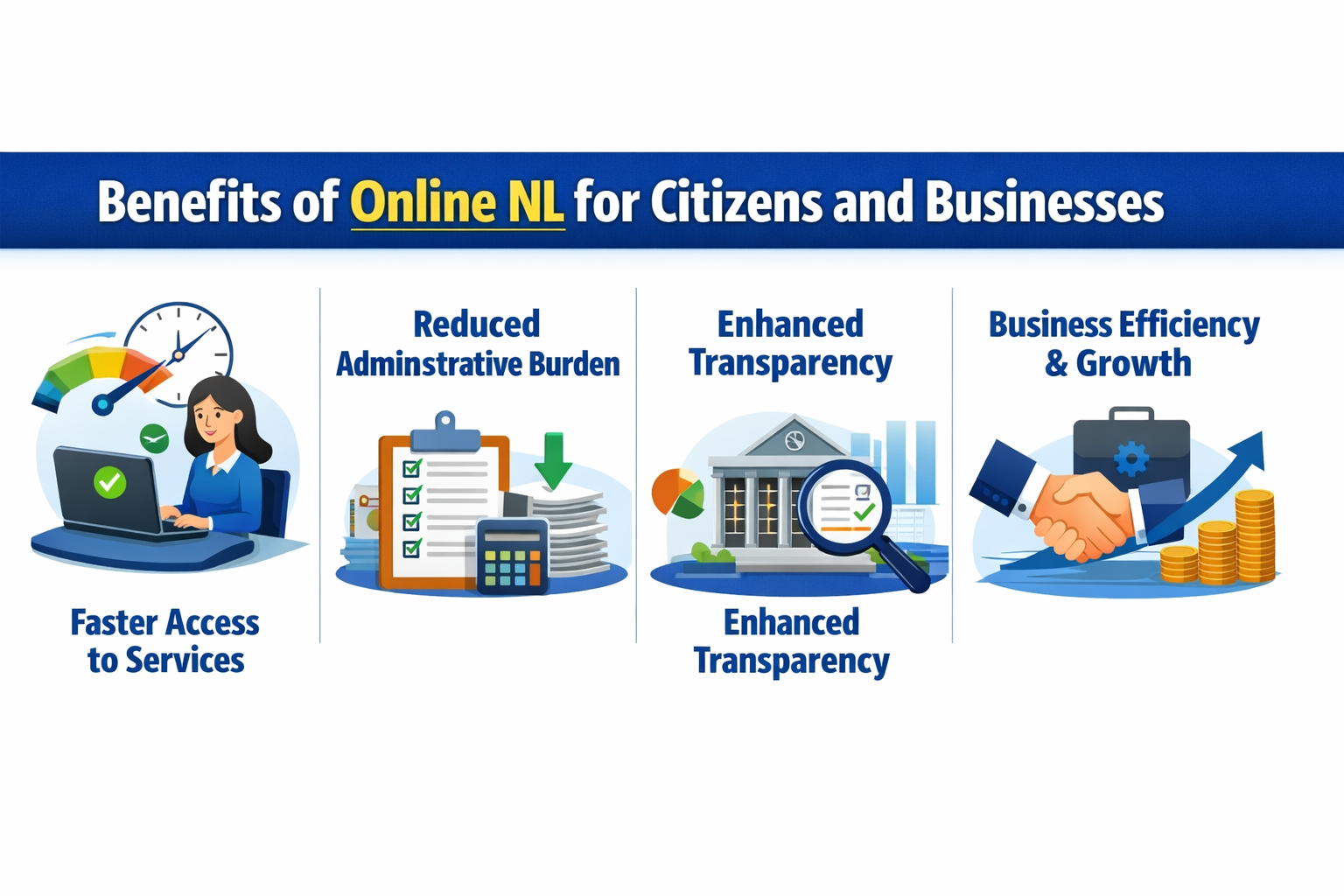
Online NL delivers numerous benefits to both residents and businesses. Citizens enjoy faster access to services, fewer administrative burdens, and improved transparency in government processes. Instead of waiting weeks for documents or approvals, many requests can now be completed within minutes online.
Businesses also benefit from simplified regulatory procedures. Through systems like eHerkenning, companies can handle tax matters, permits, and compliance requirements digitally. This efficiency reduces operational costs and encourages entrepreneurship.
The digital ecosystem also strengthens economic competitiveness. By integrating technology into public services, the Netherlands creates an environment where innovation and digital entrepreneurship thrive.
Challenges and Digital Inclusion Issues
Despite its success, Online NL still faces challenges. Not everyone has the same level of digital literacy or access to technology.
Research suggests that millions of Dutch adults struggle to understand or navigate digital government services, highlighting the importance of digital inclusion programs.
To address this issue, government agencies provide assistance through support centers, training programs, and simplified user interfaces.
Also Read
Parcel ABC UK Review: Shipping Services, Pricing, and Delivery Speed
Top 10 Ways Packhelp Helps Brands Build Stronger Packaging Identity
Top 10 Reasons WP Engine Boosts Website Speed and SEO Performance
How Simpel NL Attracts Customers with Smart Pricing: Insights for Marketers
How ConvertKit(Kit) Empowers Creators with Seamless Email Marketing
Future of Digital Services in the Netherlands
The future of Online NL will likely involve deeper integration of emerging technologies such as artificial intelligence, blockchain, and advanced data analytics.
These technologies could enable even more proactive services, where systems automatically anticipate citizen needs based on life events or administrative data.
At the same time, policymakers are exploring ways to strengthen digital sovereignty by developing domestic technology infrastructure and reducing dependence on foreign platforms.
Conclusion
Online NL represents one of the most advanced digital government ecosystems in the world. By combining secure digital identities, centralized portals, and high digital literacy, the Netherlands has created a system where citizens and businesses can manage most administrative tasks online.
The result is a government that operates faster, more transparently, and more efficiently than traditional bureaucratic models. From DigiD authentication to the MijnOverheid portal, every component of the system is designed to simplify interactions between people and public institutions.
As technology continues evolving, the Dutch digital ecosystem will likely expand even further. New innovations in cybersecurity, artificial intelligence, and digital identity could transform how governments deliver services—not just in the Netherlands but around the world.
Frequently Asked Questions
Online NL refers to the digital ecosystem of services in the Netherlands that allows citizens and businesses to interact with government institutions online.
DigiD is a secure digital identity system used by residents to access online government services such as taxes, healthcare, and municipal services.
eHerkenning is a digital authentication system used by businesses in the Netherlands to access government services securely.
MijnOverheid is a personal online portal where citizens can manage government interactions and receive official messages.
The Netherlands offers nearly all government services online, has high digital literacy rates, and uses advanced digital identity systems that make public services accessible and efficient.
Table of Contents
Related Post


Top 10 Ways Packhelp Helps Brands Build Stronger Packaging Identity
admin
March 11, 2026
Read More »