

Comparexpert
Comparison Between Company


THE HOME SECURIT: Complete Guide to Modern Home Security Solutions

THE HOME SECURIT guide explores modern home security solutions, including smart cameras, motion sensors, AI-powered surveillance, and wireless security systems. Learn how today’s technology helps protect your home, prevent intrusions, and monitor your property remotely with advanced smart home security features.
Table of Contents
Understanding Modern Home Security
What Is a Home Security System?
A home security system is essentially a network of connected devices designed to protect your house, family, and belongings from threats like burglary, intrusion, fire, or other emergencies. At its core, the system works by monitoring your home using a combination of sensors, cameras, alarms, and communication networks that instantly alert you when something unusual occurs. These systems often connect to a central control panel or a smartphone app that allows homeowners to manage and monitor their security remotely.
Think of it like having a digital watchdog guarding your property 24/7. Instead of relying only on traditional locks and keys, modern systems use intelligent technology that can detect motion, recognize suspicious activity, and even notify authorities automatically. Door and window sensors detect unauthorized openings, motion sensors track movement inside or outside the house, and cameras record footage whenever suspicious activity occurs.
Today’s home security systems have evolved into highly integrated ecosystems. They don’t just guard your property—they can also manage lighting, lock doors automatically, and provide real-time alerts to your phone. For example, if someone opens your front door unexpectedly, your system can send a notification, trigger cameras to record video, and activate alarms simultaneously.
Homeowners increasingly prefer such systems because they provide both peace of mind and convenience. Instead of wondering whether you locked the door or turned on the alarm, you can simply check your smartphone. With the rise of smart technology and automation, home security has transformed from a simple alarm system into a fully connected smart home protection network.
Why Home Security Is More Important Than Ever
Safety concerns have always existed, but in recent years the demand for reliable home protection has grown dramatically. Rising urban populations, increasing crime rates in some areas, and greater awareness of personal safety have all contributed to the popularity of modern security solutions.
The numbers speak for themselves. The global home security systems market was valued at about $72.4 billion in 2025 and is projected to reach $109.4 billion by 2030, growing at a compound annual growth rate of about 8.6%. That massive growth shows just how seriously homeowners now take security.
Another major factor driving adoption is technology itself. Smart devices are becoming more affordable, easier to install, and far more powerful than earlier generations. Features like facial recognition, cloud video storage, AI-based threat detection, and mobile alerts make it possible to monitor your home from anywhere in the world.
Beyond protection from burglars, modern systems also safeguard against other risks such as fire, gas leaks, and unauthorized access. Some systems even integrate with environmental sensors that detect smoke, carbon monoxide, or flooding. That means a home security system isn’t just about stopping criminals—it’s about protecting your entire living environment.
For many homeowners, installing a security system is also a financial decision. Insurance companies often offer lower premiums for homes equipped with monitored security systems, since these properties are less likely to experience successful break-ins. In other words, investing in home security can actually save money in the long run while improving safety.
The Evolution of Home Security Technology
Traditional Security Systems vs Smart Security Systems
Home security has come a long way from the days of simple alarm bells and mechanical locks. Traditional systems relied mainly on basic sensors and loud sirens designed to scare intruders away. While these systems offered some level of protection, they were limited in functionality and often required manual control.
Modern smart home security systems, on the other hand, operate as intelligent networks of devices connected through the internet. Instead of acting independently, cameras, sensors, locks, and alarms communicate with each other through a central hub or cloud platform. This interconnected design allows for automation, real-time alerts, and remote monitoring from smartphones or computers.
One of the most significant differences lies in accessibility. Traditional systems usually required you to be physically present to arm or disarm the alarm. Smart systems allow homeowners to manage everything through mobile apps, voice assistants, or automated schedules. You can lock doors, view camera feeds, or activate alarms from anywhere in the world.
Another advantage of smart systems is scalability. Traditional setups were difficult to upgrade without major wiring changes. Wireless smart devices can be added easily, allowing homeowners to expand their systems over time. Want to add a video doorbell or smart lock later? No problem—it’s usually just a matter of connecting another device to the network.
This shift from basic alarms to integrated smart ecosystems marks a major turning point in residential security. Instead of reacting to threats after they happen, modern systems focus on preventing incidents through real-time monitoring and intelligent detection.
How IoT and AI Are Transforming Home Protection
Two technologies are driving the modern security revolution: Internet of Things (IoT) and Artificial Intelligence (AI). Together, they’re turning ordinary homes into intelligent environments capable of detecting threats and responding instantly.
The Internet of Things (IoT) is a network of interconnected gadgets that can communicate with one another via the internet. In a smart home security system, this includes cameras, sensors, smart locks, alarms, lighting systems, and mobile apps. These devices share data in real time, creating a coordinated security response whenever something unusual happens.
Artificial intelligence adds another layer of intelligence to these systems. Instead of simply detecting motion, AI-powered cameras can distinguish between different types of movement. For instance, they can recognize whether the motion was caused by a person, a pet, or a passing car. This significantly reduces false alarms, which used to be a common problem with older systems.
AI also enables features like facial recognition and behavioral analysis. Some advanced systems can identify familiar faces and notify you only when an unknown person appears near your home. Others analyze activity patterns to detect suspicious behavior, such as someone lingering near your property for an extended period.
These technologies are driving explosive market growth. The smart home security market is expected to grow from about $40 billion in 2025 to over $145 billion by 2034, highlighting the rapid adoption of AI-powered security systems worldwide.
The combination of IoT connectivity and AI intelligence is turning home security into something far more proactive than ever before.
Essential Elements of a Contemporary Home Security System
Security Cameras and Video Surveillance
Security cameras are often the most visible and recognizable element of any home security system. These gadgets serve as both an investigation tool and a deterrent. Simply placing cameras around a property can discourage criminals from attempting a break-in because they know their actions will be recorded.
Modern cameras offer impressive capabilities compared to older surveillance systems. High-definition video, night vision, motion detection, and cloud storage allow homeowners to capture clear footage day or night. Some cameras even support 4K video resolution, providing extremely detailed recordings that can help identify intruders.
Smart cameras are also integrated with mobile apps, allowing homeowners to watch live video feeds anytime. Whether you’re at work, traveling, or just relaxing in another room, you can instantly check what’s happening around your home. Many cameras also include two-way audio, enabling you to speak directly to visitors or delivery personnel through the device.
Advanced features such as AI-based motion detection can recognize people, animals, and vehicles separately. This reduces unnecessary notifications and helps focus attention on real security threats. Some systems can even automatically track moving objects or trigger alarms if suspicious activity is detected.
With the rapid advancement of video technology and cloud storage, cameras have become a central component of modern home security solutions.
Motion Sensors and Entry Sensors
While cameras provide visual monitoring, sensors act as the invisible guardians of your home. Motion sensors and entry sensors are responsible for detecting physical activity or unauthorized access within your property.
Entry sensors are usually installed on doors and windows. They consist of two small components—one attached to the door or window frame and the other to the moving part. When the door or window opens unexpectedly, the connection between the sensors breaks, triggering an alert or alarm. This simple yet effective technology forms the backbone of most security systems.
Motion sensors, on the other hand, detect movement within a specific area. These sensors typically use infrared technology to identify changes in heat patterns caused by moving objects or people. When motion is detected, the system can activate cameras, send alerts, or trigger alarms.
Strategically placing motion sensors around hallways, entry points, and living spaces creates a protective barrier throughout the home. Even if an intruder manages to bypass an entry sensor, motion detectors can still identify their presence.
Together, these sensors create multiple layers of protection, ensuring that suspicious activity is detected quickly and accurately.

Smart Locks and Access Control
Locks have always been a fundamental part of home security, but modern smart locks take access control to an entirely new level. Instead of relying solely on physical keys, smart locks allow homeowners to manage entry using smartphones, fingerprints, PIN codes, or voice commands.
One of the biggest advantages of smart locks is convenience. You can lock or unlock doors remotely, grant temporary access to guests, and monitor who enters or leaves your home. For example, if a family member forgets their key, you can unlock the door for them from anywhere using a mobile app.
Smart locks also improve security by eliminating common risks associated with traditional keys. Lost or stolen keys are no longer a major concern because access permissions can be updated instantly through the system. Some locks even generate temporary digital keys for delivery drivers or service providers.
These devices often integrate with other security components as well. When a smart lock is activated, it may automatically arm the alarm system or trigger cameras to start recording.
This integration creates a seamless and highly secure entry system that adapts to modern lifestyles.
Types of Home Security Systems
Wired Home Security Systems
Wired security systems are among the oldest and most reliable forms of residential protection. These systems connect cameras, sensors, and alarms using physical cables installed throughout the house. Because they rely on direct wiring instead of wireless signals, they tend to be extremely stable and less vulnerable to signal interference.
Homeowners often choose wired systems for large properties or newly constructed houses where installing cables during construction is easier. Once installed, these systems typically require minimal maintenance and provide consistent performance.
However, wired systems can be expensive and difficult to modify. Adding new devices usually requires additional wiring, which can involve drilling walls or hiring professionals. This lack of flexibility is one reason many homeowners now prefer wireless solutions.
Despite these limitations, wired systems still offer strong reliability and are commonly used in commercial properties or high-security residential environments.
Wireless and Smart Security Systems
Wireless security systems represent the modern evolution of home protection. Instead of cables, these systems use Wi-Fi, Bluetooth, or specialized wireless protocols to connect devices. This makes installation much easier and allows homeowners to expand their systems without major modifications.
Most wireless systems operate through a central hub that communicates with cameras, sensors, and smart locks. The hub connects to the internet, enabling remote access through mobile apps or cloud platforms. This architecture makes it possible to monitor and control your home security from virtually anywhere.
Wireless systems are especially popular because they support smart home integration. Devices like smart lights, voice assistants, and thermostats can work together with security systems to create automated routines. For instance, lights might turn on automatically when motion is detected outside your home at night.
Another benefit is flexibility. If you move to a new house, you can simply uninstall the devices and reinstall them in the new location. That level of portability makes wireless systems attractive for renters as well as homeowners.
Monitored vs Unmonitored Security Systems
Home security systems generally fall into two monitoring categories: monitored systems and unmonitored systems. The difference lies in who responds when an alarm is triggered.
Monitored systems connect to a professional monitoring center that operates 24/7. When an alarm activates, the monitoring service receives an alert and can contact emergency responders if necessary. This provides an additional layer of protection, especially when homeowners are away or unable to respond immediately.
Unmonitored systems, by contrast, send alerts directly to the homeowner without involving a monitoring company. These systems rely on the user to take action if suspicious activity occurs. While they often cost less and avoid monthly subscription fees, they may not provide the same level of immediate response as professionally monitored systems.
Choosing between these options depends on budget, lifestyle, and security needs. Some homeowners prefer the reassurance of professional monitoring, while others are comfortable managing alerts themselves.
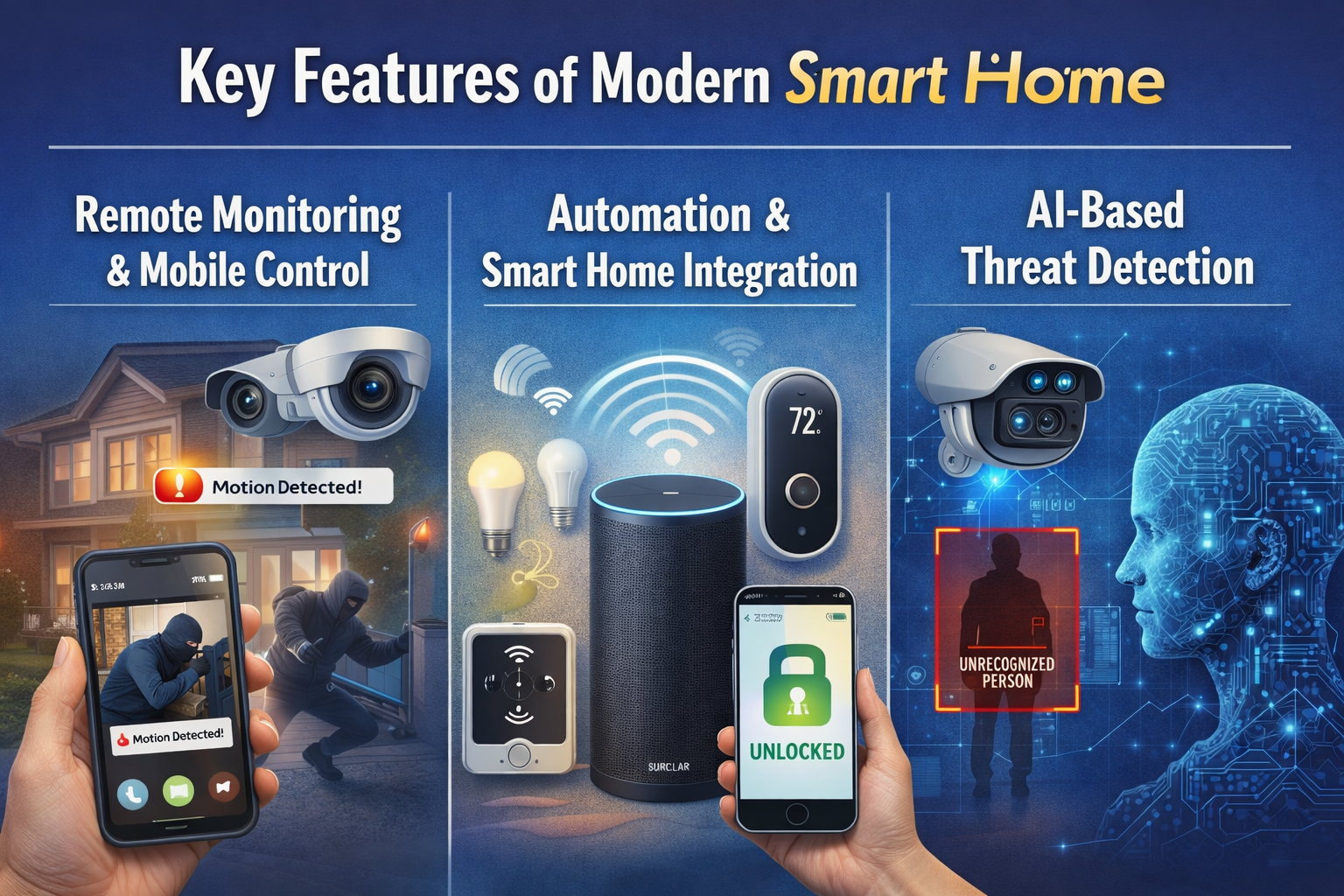
Key Features of Modern Smart Home Security
Remote Monitoring and Mobile Control
Remote monitoring has become one of the most important features of modern home security systems. Through smartphone apps or web dashboards, homeowners can view camera feeds, control locks, arm alarms, and receive notifications in real time.
Imagine being on vacation and receiving an alert that motion has been detected near your front door. Within seconds, you can open your app, watch the live camera feed, and determine whether it’s a delivery driver or something more suspicious.
This level of control gives homeowners unprecedented visibility into their property. Instead of relying solely on alarms, you can actively monitor and manage your security system from anywhere in the world.
Automation and Smart Home Integration
Automation takes home security a step further by allowing devices to respond automatically to certain events. For example, if a motion sensor detects activity outside your house at night, the system might automatically turn on outdoor lights and start recording video.
Smart home platforms like Google Home, Amazon Alexa, or Apple HomeKit allow security devices to interact with other smart appliances. Lights, thermostats, and even garage doors can be integrated into security routines, creating a more comprehensive protection system.
This interconnected ecosystem transforms your home into a responsive environment that adapts to potential threats.
AI-Based Threat Detection
Artificial intelligence is rapidly becoming the brain behind modern home security systems. AI algorithms analyze video feeds, sensor data, and behavioral patterns to detect unusual activity more accurately than traditional systems.
Instead of sending alerts for every movement, AI systems can identify genuine threats and ignore harmless events like pets walking through a room. This significantly reduces false alarms and ensures homeowners only receive notifications when something truly suspicious occurs.
As AI technology continues to improve, home security systems are becoming more proactive and intelligent than ever before.
Choosing the Right Home Security Solution
Factors to Consider Before Buying
Selecting the right home security system requires careful consideration of several factors, including property size, budget, installation preferences, and desired features. A small apartment might only require a few sensors and a camera, while a large house may need multiple surveillance devices and professional monitoring.
Other important considerations include video quality, storage options, battery life, and compatibility with existing smart home devices. The goal is to create a system that fits seamlessly into your lifestyle while providing strong protection.
Cost Comparison of Security Systems
Security System Type | Average Cost | Best For |
Basic Alarm System | $100 – $300 | Small homes or apartments |
Wireless Smart System | $300 – $800 | Smart home users |
Professional Monitored System | $500 – $1500+ | Maximum protection |
AI-Based Smart Security | $800 – $2000+ | Advanced security needs |
Costs vary widely depending on features, installation type, and monitoring services.
Installation and Setup Guide
DIY Installation vs Professional Installation
DIY installation has become extremely popular thanks to wireless technology. Many modern systems come with simple plug-and-play devices that homeowners can install themselves within minutes. This approach saves money and allows users to customize their setup easily.
Professional installation, however, may still be the best option for larger homes or more complex security systems. Professionals can ensure optimal placement of cameras and sensors, configure network settings, and provide ongoing support.
Also Read
Top 10 Reasons WP Engine Boosts Website Speed and SEO Performance
How Simpel NL Attracts Customers with Smart Pricing: Insights for Marketers
Compara CL Review: Features, Benefits, and Why It Matters for Digital Marketers
How ConvertKit(Kit) Empowers Creators with Seamless Email Marketing
Process Street vs Trello: Which Tool Works Best for Your Business?
Future Trends in Home Security
Biometric Security and AI Surveillance
The future of home security is moving toward biometric authentication and advanced AI surveillance. Fingerprint recognition, facial recognition, and even palm-vein scanning are already being integrated into smart locks and access control systems.
As AI technology evolves, systems will become better at predicting threats and identifying suspicious behavior before a crime occurs. Integration with smart cities, cloud analytics, and advanced automation will likely transform home security into an even more powerful protective ecosystem.
Conclusion
Modern home security solutions have transformed the way homeowners protect their properties. What once relied on simple locks and alarms has evolved into a sophisticated network of smart devices, sensors, cameras, and AI-driven analytics. These technologies not only detect threats but also provide proactive protection through automation and real-time monitoring.
With the global smart home security market expanding rapidly and new innovations emerging every year, investing in a reliable security system is becoming a necessity rather than a luxury. Whether you choose a basic alarm setup or a fully integrated smart home ecosystem, the ultimate goal remains the same: keeping your home, family, and peace of mind safe.
Frequently Asked Questions
The best system depends on your needs. Wireless smart systems are popular because they are easy to install, scalable, and integrate well with other smart home devices.
Most modern systems use encryption and secure cloud networks, but it’s important to use strong passwords, enable two-factor authentication, and keep software updated.
Some systems can function locally without internet, but features like remote monitoring and mobile alerts usually require an internet connection.
Professional monitoring services typically cost between $10 and $50 per month depending on features and provider.
Yes. Many modern wireless systems are designed for DIY installation and can be set up within minutes without professional assistance.
Table of Contents
Related Post

Finding Student Housing and Communities With Erasmusu: A Practical Guide
admin
September 19, 2026
Read More »

What Travelers Should Know About Iberostar (closed) and Its Hotel History
admin
September 18, 2026
Read More »

Planning a European Trip? Discover the Benefits of Direct Ferries
admin
September 17, 2026
Read More »

What Makes Der Gepflegte Mann a Notable Name in Men’s Personal Care
admin
September 16, 2026
Read More »