

Comparexpert
Comparison Between Company


SmallRig Technology (HK) Limited Review: Best Camera Accessories?
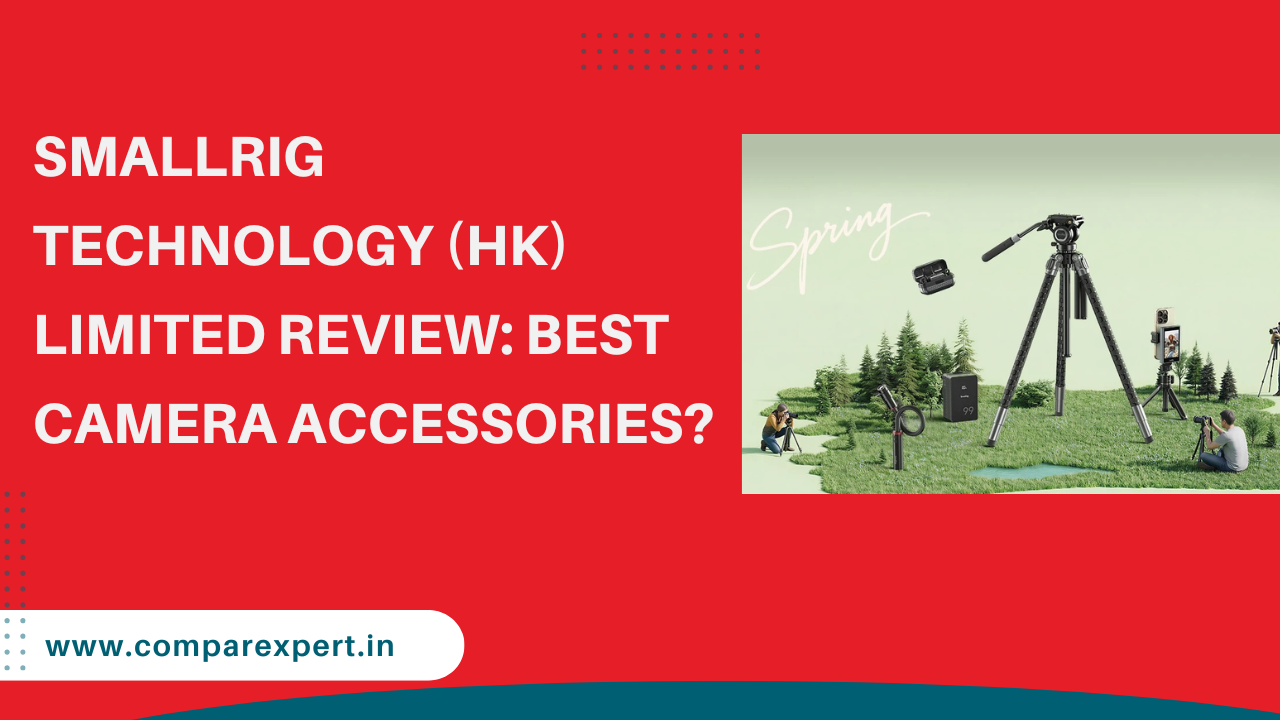
SmallRig Technology (HK) Limited has become a trusted name for creators looking for reliable, affordable, and versatile camera accessories. This review explores its camera cages, tripods, lighting tools, and rigging systems to help you decide if SmallRig Technology (HK) Limited offers the best value for photographers, vloggers, and filmmakers.
Table of Contents
What Is SmallRig and Why Is It So Popular?
If you spend even a little time around cameras, content creation, or filmmaking gear, chances are you have already bumped into SmallRig. It is one of those brands that seems to appear everywhere once you start looking for camera accessories. From YouTubers building compact desk setups to professional filmmakers rigging out cinema cameras, SmallRig has become the go-to name for practical camera support gear. That kind of popularity does not happen by accident. It usually means one thing: the brand is solving real problems for real users without charging absurd prices for it.
SmallRig is best known for making camera cages, handles, tripods, mounting systems, LED lights, batteries, and creator tools that help improve the way cameras are used in the real world. The company has built its reputation around one simple idea: make camera gear more flexible, more useful, and easier to customize. That approach has worked incredibly well because creators today want modular setups. Nobody wants to buy a rigid system that locks them into one style of shooting. People want gear that behaves more like Lego bricks than a fixed machine, and that is exactly where SmallRig shines.
The brand itself has grown rapidly over the last decade and now serves everyone from hobbyists to full-time production teams. SmallRig says its products are used across vlogging, live streaming, documentary production, commercial video, and even Hollywood workflows. That sounds like bold marketing, but the reason it lands is because the products are built around actual user needs rather than flashy branding.
A quick look at SmallRig’s brand story
SmallRig built its name by focusing on the kind of accessories most camera companies treat like an afterthought. Camera brands make the camera body. SmallRig makes the system around it. That difference matters more than it sounds. A great camera can still be frustrating to use if you cannot mount a monitor, attach a microphone properly, stabilize handheld footage, or build a comfortable shooting rig.
One of the smartest things SmallRig did was embrace user-driven design. The company openly pushed co-design programs and built products around creator feedback instead of designing in isolation. That strategy helped it stand out in a crowded market where accessory brands often release generic gear that technically works but feels disconnected from how creators actually shoot. SmallRig leaned in the opposite direction and built around usability.
That user-first mindset is a big reason the brand became so sticky. Once creators buy one cage or one handle and realize it solves a real pain point, they usually come back for more. It becomes less like buying a random accessory and more like entering an ecosystem. That is exactly how SmallRig turned from a niche accessory maker into one of the most recognizable names in creator gear.
Why creators keep recommending SmallRig
The simplest reason creators recommend SmallRig is because it solves annoying workflow problems without overcomplicating the solution. That sounds obvious, but it is surprisingly rare in camera gear. Many accessories either feel overpriced, overengineered, or oddly specific. SmallRig tends to hit the sweet spot between useful, affordable, and flexible.
Creators also like that most SmallRig gear feels practical instead of flashy. It is not trying to sell you on lifestyle branding. It is selling you on function. A cage gives you better mounting options. A handle improves grip and handheld movement. A monitor mount fixes awkward viewing angles. A battery solution keeps your setup running longer. These are not glamorous upgrades, but they are the kind that quietly improve every shoot.
There is also a strong value argument. Trustpilot currently shows SmallRig at roughly 4.0/5 stars with hundreds of reviews, with users repeatedly praising build quality, useful design, and solid value for the money. The most common complaints tend to be around shipping, tariffs, and occasional documentation issues rather than product failure itself, which is a meaningful distinction.
SmallRig Product Categories Explained
SmallRig’s catalog is huge, but most of its products fall into a few core categories. Understanding those categories makes it much easier to decide whether SmallRig is worth your money or just another gear rabbit hole waiting to drain your wallet.
Camera cages and protective rigs
If SmallRig has a signature product, it is the camera cage. These cages wrap around your camera body and add protection, mounting points, and better ergonomics. Think of them like turning your camera into a more expandable tool. Suddenly, you have places to mount microphones, SSDs, monitors, lights, and handles without awkward balancing acts.
For creators who shoot handheld, cages can genuinely improve the feel of a camera. They add grip, stability, and structure. That extra weight can actually smooth out small handheld jitters, which many shooters appreciate. Reddit users in r/videography repeatedly note that SmallRig cages are well-made and useful, especially when building more advanced rigs with monitors or follow-focus systems.
That said, cages are not magic. If you shoot mostly still photography or prefer a minimalist setup, a cage can feel like putting hiking boots on a house cat. Useful in the right situation, bulky in the wrong one. SmallRig cages are excellent, but only if your workflow actually benefits from modular rigging.
Tripods, handles, and support systems
SmallRig has become surprisingly strong in support gear. Its tripods, top handles, side handles, and mounting armshave become popular because they offer professional-friendly design without premium-brand pricing. This is one of the brand’s strongest value categories.
Top handles are especially useful for low-angle shooting, run-and-gun filming, and handheld stabilization. Side handles improve comfort during longer sessions and make compact rigs easier to control. Articulating arms and monitor mounts are another standout because they solve a constant frustration: where exactly do you put your monitor so it is visible but not in the way?
These are the kind of accessories that sound boring until you use them. Then suddenly they become essential. Like a good office chair, you barely think about them when they work well, but you notice immediately when they do not.
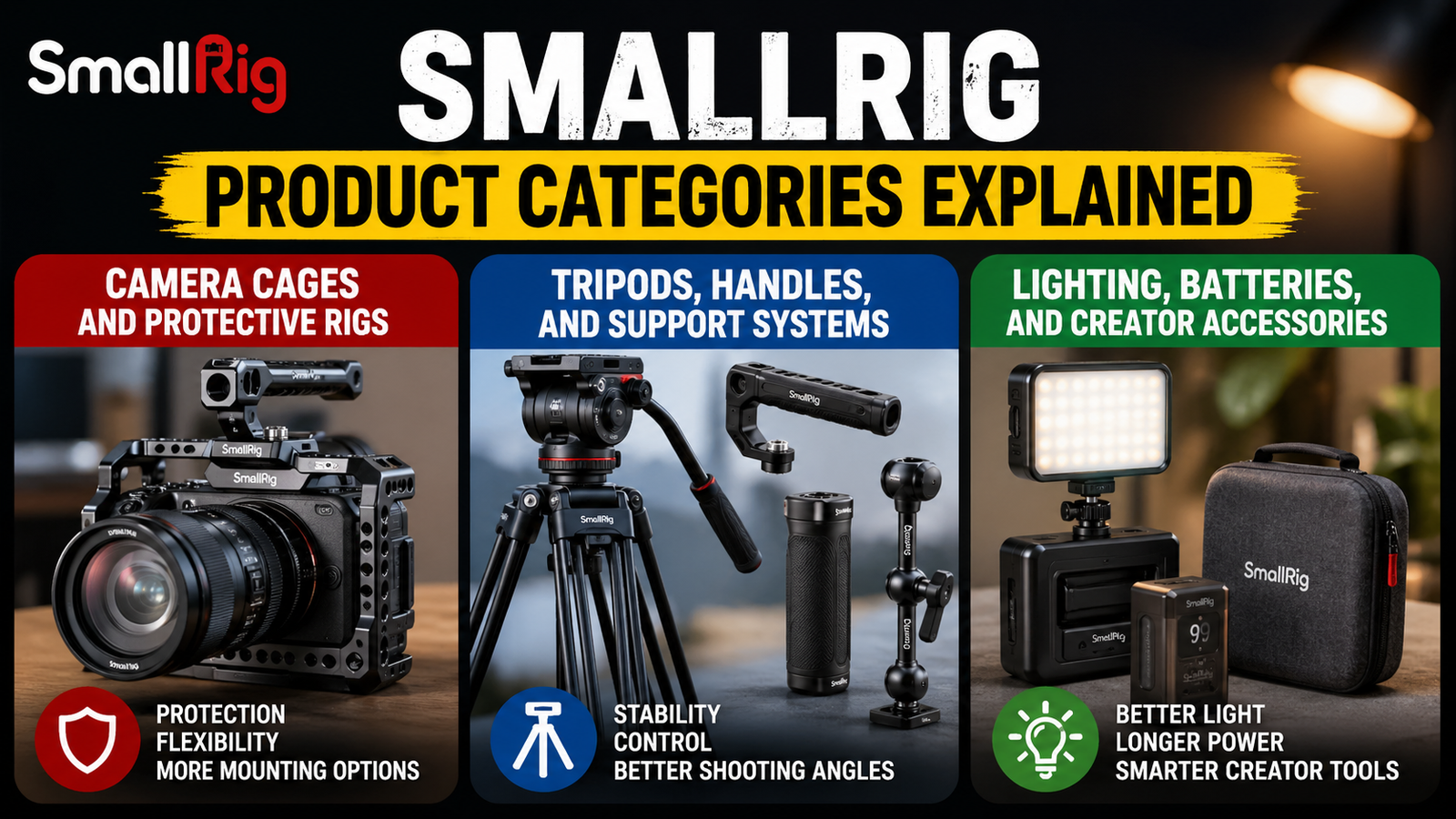
Lighting, batteries, and creator accessories
SmallRig has expanded far beyond metal rigs. The company now makes portable LED lights, V-mount battery systems, chargers, power accessories, smartphone rigs, and creator-focused desk gear. This matters because it shows SmallRig is no longer just a cage company. It is trying to become a full creator ecosystem.
Its portable lights have become especially popular with content creators because they are compact, practical, and designed around modern workflows. The same goes for battery systems, where SmallRig has pushed hard into mobile power for longer shoots. That broader catalog makes the brand much more useful than many accessory makers that stay stuck in one narrow category.
Build Quality and Design
SmallRig’s biggest strength is that its gear usually feels better than its price suggests. That is not a small compliment in the camera world, where cheap accessories often feel like temporary fixes disguised as products.
Materials, finish, and long-term durability
Most SmallRig hardware is built from aluminum alloy, and that choice gives the products a strong balance of durability and manageable weight. The gear usually feels sturdy in the hand, with clean machining, solid threading, and less flex than you would expect at this price point. This is one of the main reasons the brand built trust so quickly.
The finish is generally clean and professional. Nothing feels overly flashy, but it does feel purpose-built. That matters because camera accessories live hard lives. They get tossed in bags, mounted and removed constantly, bumped into desks, and dragged through travel. SmallRig gear usually holds up well under that kind of repeated abuse.
This is also where SmallRig beats a lot of low-cost competitors. Plenty of cheap accessories work fine for a month. SmallRig gear usually feels like it was made to survive actual use.
How modular design changes real-world shooting
SmallRig’s real genius is not just build quality. It is modularity. The brand understands that creators do not all shoot the same way. A vlogger, documentary shooter, wedding filmmaker, and product reviewer all need different setups. SmallRig designs around that reality.
That modular design means you can start small and expand later. Buy a cage now, add a handle next month, mount a monitor later, upgrade power when needed. That kind of flexibility is one of SmallRig’s biggest advantages because it lets creators grow their setup over time instead of replacing everything at once.
SmallRig Pricing and Value for Money
Is SmallRig affordable or just cheap?
This is the question that matters most. SmallRig is affordable, but it is not “cheap” in the bad sense of the word. There is a big difference between budget-friendly and disposable. SmallRig generally lands on the right side of that line.
The company’s biggest advantage is value density. You are usually getting thoughtful design, strong materials, and real usability improvements at prices that undercut premium brands. That makes SmallRig attractive to beginners, but it is also why professionals keep using it. Cheap gear gets abandoned. Good-value gear stays in the kit.
Brand | Pricing | Build Quality | Best For |
SmallRig | Mid-budget | Very Good | Most creators |
Tilta | Premium | Excellent | Cinema workflows |
Ulanzi | Budget | Good | Casual creators |
Best-value products worth buying first
If you are starting with SmallRig, the smartest first purchases are usually a camera cage, top handle, and monitor mount. Those three upgrades offer the most noticeable day-to-day workflow improvements for most creators. They are not flashy purchases, but they are the kind that immediately make a setup more usable.
SmallRig Customer Support and Warranty Experience
Buying camera gear is not just about the product itself. It is also about what happens when something goes wrong. That is where SmallRig Technology (HK) Limited has built a fairly dependable reputation. Most buyers report that the company responds reasonably fast to order issues, replacement requests, and product questions, especially when purchases are made directly through the official SmallRig store. This matters because camera accessories are not always simple plug-and-play tools. A cage might need specific mounting screws, a battery may require compatibility clarification, or a handle may need adjustment instructions before use.
SmallRig for YouTubers and Content Creators
One of the biggest reasons SmallRig Technology (HK) Limited has grown so quickly is its strong appeal to YouTubers and online creators. The company understands modern creator workflows better than many traditional camera accessory brands. It is not just making tools for film crews. It is building gear for solo creators who need compact, efficient, and flexible setups for everyday content production.
For YouTubers, SmallRig products solve several practical problems at once. A camera cage adds mounting points for microphones and lights. A side handle improves comfort during longer handheld shoots. A top handle makes low-angle filming easier. A compact LED light improves desk setups and talking-head videos without requiring bulky studio gear. These are not dramatic upgrades on paper, but together they make content creation smoother and faster. That is exactly what solo creators need.
Who Should Buy SmallRig Products?
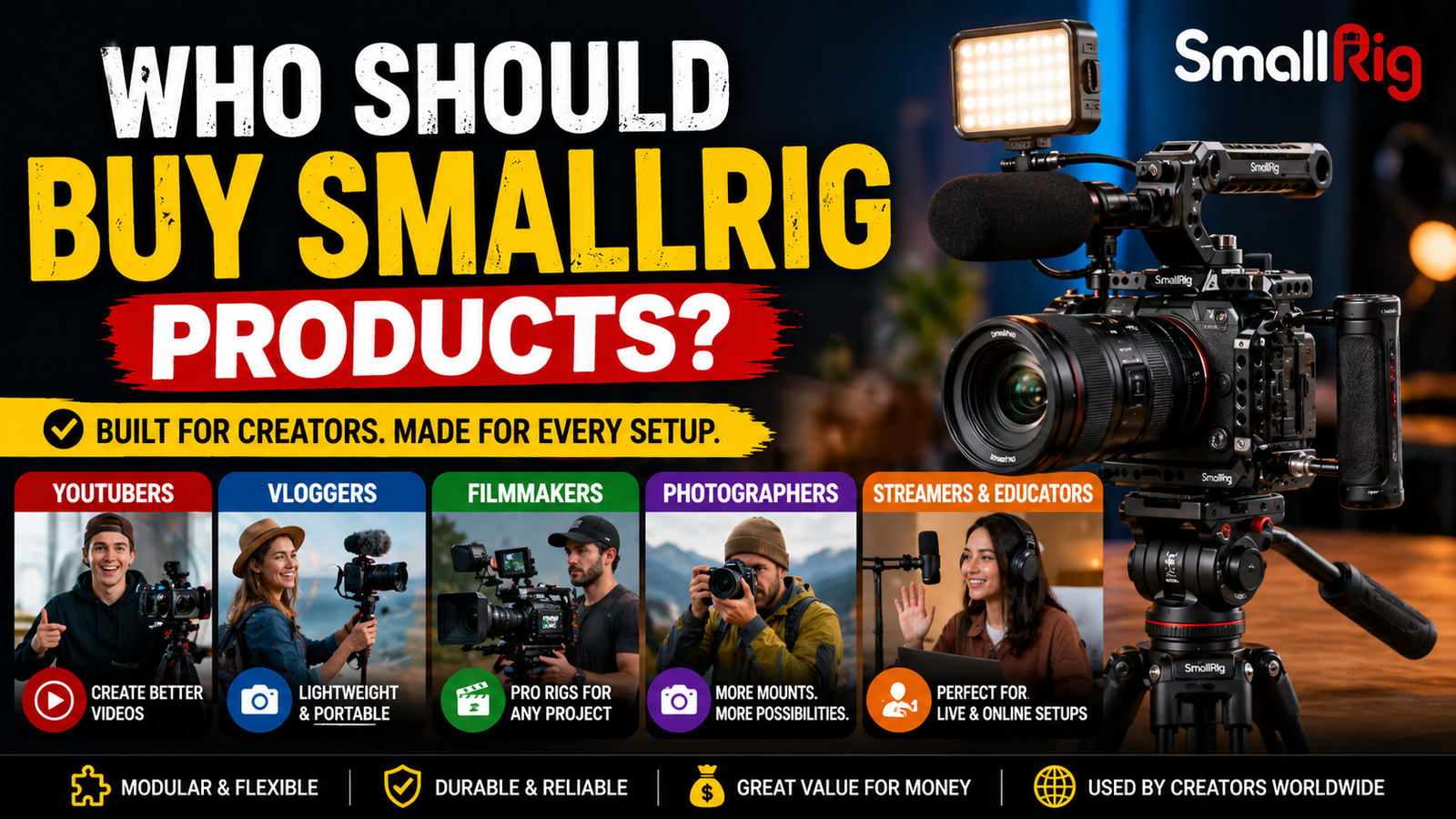
SmallRig is best suited for creators who care about practical upgrades and modular flexibility. That includes YouTubers, vloggers, filmmakers, photographers, live streamers, and even educators building online recording setups. If your workflow involves adding microphones, lights, monitors, SSDs, or external power to a camera, SmallRig likely has something useful for your setup.
It is especially ideal for creators who want to grow gradually. One of SmallRig’s biggest advantages is that you do not need to build a full rig all at once. You can start with a cage, add a handle later, then upgrade power or monitoring when your workflow demands it. That step-by-step flexibility makes SmallRig one of the most beginner-friendly ecosystems in camera accessories.
SmallRig for Professional Filmmakers
While SmallRig is often associated with YouTubers and budget-conscious creators, it has also earned respect among professional filmmakers. That may seem surprising at first, but it makes sense once you look at how professionals actually build rigs. Even on high-end productions, not every accessory needs to come from a premium cinema brand. Professionals often mix expensive core gear with practical support accessories that simply do the job well. That is where SmallRig fits perfectly.
Many professional users rely on SmallRig for secondary rigging components such as monitor mounts, top handles, baseplates, articulating arms, and quick-release accessories. These are the unsung parts of a camera setup that need to be dependable, but do not necessarily need luxury-brand pricing. SmallRig performs especially well in this role because it delivers strong utility at a cost that makes sense for support gear.
SmallRig vs Premium Camera Accessory Brands
A fair review of SmallRig Technology (HK) Limited has to address one important question: how does it compare to premium accessory brands? The answer depends on what kind of buyer you are. If you are building a full cinema rig with a large production budget, premium brands like Tilta, Wooden Camera, and Kondor Blue may offer more refined finishes, tighter integration, and higher-end ecosystem support. Those brands are built for demanding cinema workflows and often charge accordingly.
SmallRig takes a different approach. It focuses on practical performance and broad compatibility rather than premium exclusivity. That makes it more accessible to independent creators, smaller studios, and hybrid shooters who want reliable tools without paying premium production prices. It is not always the most luxurious option, but it is often the smartest value choice.
Also Read
Perimeter 81 Review: What Makes Perimeter 81 Unique?
Perk Clothing Review: Style, Pricing & Quality
Silicon3 Review: Services and Business Benefits
Sonetel Review 2026: Best Virtual Phone System for Businesses?
Dartmouth Brands Review: Are Their Products Worth Buying?
SmallRig Shipping, Delivery, and Global Availability
One of the most practical things buyers often want to know about SmallRig Technology (HK) Limited is how easy it is to actually get the products delivered. A camera accessory can look perfect on paper, but if shipping is slow, expensive, or unpredictable, the overall buying experience changes quickly. SmallRig has expanded its global reach significantly, and today its products are available in many regions through the official website, Amazon storefronts, and third-party retailers. That wider availability is one of the reasons the brand has become so accessible to creators around the world.
SmallRig Accessories for Smartphone Creators
SmallRig is no longer just a brand for mirrorless cameras and cinema rigs. One of its most interesting expansions has been into smartphone creator gear. This move makes a lot of sense because the line between traditional cameras and smartphone content production keeps getting thinner. Many creators now shoot short-form content, social media videos, mobile interviews, and even full product demos using smartphones, and SmallRig has adapted well to that shift.
SmallRig and the Rise of Modular Creator Gear
SmallRig’s success is tied closely to one major shift in content creation: the rise of modular gear. Modern creators do not want fixed setups anymore. They want systems they can expand, reconfigure, and adapt depending on the project. One day that might mean filming a desk review with lights and a top-down mount. The next day it could mean handheld outdoor shooting with a microphone, battery pack, and side handle. SmallRig has built its entire product strategy around that kind of flexibility.
This modular approach is one of the biggest reasons the brand resonates with so many creators. It lets users build their setup piece by piece, like assembling a toolkit rather than buying a single locked product. That is a major advantage because creator needs evolve fast. Someone starting as a beginner YouTuber may eventually need a monitor, external SSD, wireless audio mount, or V-mount battery support. SmallRig makes that growth path easier and more affordable.
Why SmallRig Continues to Grow in the Creator Market
SmallRig’s continued growth is not just about affordable gear. It is about timing, relevance, and understanding how creators actually work. The company expanded at the same time content creation became more professional, more competitive, and more gear-dependent. As creators started building more advanced setups, SmallRig positioned itself as the brand that could support that growth without making it financially painful.
This strategy gave SmallRig a huge advantage. Traditional camera brands focus on camera bodies and lenses. Premium rigging brands often focus on high-end production users. SmallRig found the middle ground and built products for the growing creator class in between. That includes YouTubers, freelancers, hybrid shooters, educators, streamers, and independent filmmakers who need practical tools more than prestige branding.
Conclusion
SmallRig has earned its reputation by doing something surprisingly rare in camera gear: making accessories that are actually useful, reasonably priced, and built for real workflows. That is the whole story in one sentence. It does not win by being flashy. It wins by being practical.
For most creators, that is exactly what matters. SmallRig gives you the freedom to build smarter, shoot more comfortably, and scale your setup without draining your budget. Whether you are a beginner buying your first cage or a professional refining a production rig, SmallRig remains one of the best value brands in camera accessories today.
Frequently Asked Questions
Yes, SmallRig is one of the best brands for beginners because it offers practical gear at accessible prices without feeling disposable.
Yes, especially if you use external monitors, microphones, SSDs, or handles. They add flexibility, protection, and better ergonomics.
SmallRig is better for value and flexibility. Tilta is better for premium cinema-focused builds.
Yes, SmallRig tripods are well-regarded for offering solid stability and useful features at competitive prices.
The most common downsides are shipping delays, import duties in some regions, and occasional lack of printed documentation.
Table of Contents
Related Post

Finding Student Housing and Communities With Erasmusu: A Practical Guide
admin
September 19, 2026
Read More »

What Travelers Should Know About Iberostar (closed) and Its Hotel History
admin
September 18, 2026
Read More »

Planning a European Trip? Discover the Benefits of Direct Ferries
admin
September 17, 2026
Read More »

What Makes Der Gepflegte Mann a Notable Name in Men’s Personal Care
admin
September 16, 2026
Read More »