

Comparexpert
Comparison Between Company


IKEA: The Ultimate Guide to Affordable and Stylish Home Furniture
IKEA is a comprehensive guide to transforming your home with affordable and stylish furniture that blends functionality with modern Scandinavian design. This blog post explores IKEA’s unique approach to “democratic design,” showing how the brand makes high-quality home solutions accessible to everyone. From space-saving storage ideas to minimalist living room setups, it highlights practical tips, popular furniture categories, and smart buying strategies. Whether you are decorating a small apartment or upgrading your home interiors, this guide helps you understand why IKEA remains a global leader in budget-friendly and stylish home furnishing.
Table of Contents
Introduction to IKEA and Its Global Influence
IKEA is more than just a furniture brand; it is a global design movement that changed how people think about home living. From small apartments in India to luxury apartments in Europe, IKEA has become a go-to choice for people who want stylish yet budget-friendly interiors. The brand has built a reputation for combining affordability with Scandinavian aesthetics, making modern home design accessible to millions. Over the years, IKEA has transformed from a simple Swedish retailer into a global lifestyle icon that influences how homes are designed, decorated, and experienced.
At its core, IKEA is built on the idea that good design should not be a luxury. Instead, it should be something every household can afford without compromising on style or functionality. This philosophy has helped IKEA expand into dozens of countries and adapt its products to different cultures while maintaining its signature identity. Whether it is a student furnishing a first apartment or a family redesigning a living room, IKEA offers solutions that feel practical and visually appealing.
The Story Behind IKEA’s Founding Philosophy
IKEA was founded in Sweden with a revolutionary idea: make furniture affordable for everyone. Instead of relying on expensive handcrafted furniture, IKEA reimagined the entire process of production and delivery. The founder’s vision was simple but powerful—reduce unnecessary costs and pass the savings to customers.
This approach led to innovations like flat-pack furniture, where items are shipped in compact boxes and assembled by customers. This not only reduces transportation costs but also makes storage and logistics far more efficient. The result is a business model that challenges traditional furniture industries and prioritizes accessibility over exclusivity.
Why IKEA Became a Household Name Worldwide
The global success of IKEA can be attributed to its consistency and adaptability. No matter where you go, IKEA stores offer a familiar experience—maze-like showrooms, inspirational room setups, and self-service warehouses. This consistency builds trust among customers.
At the same time, IKEA adapts its designs to local needs. In India, for example, storage solutions are more compact and practical for smaller homes. In Europe, larger modular furniture is more common. This balance between global identity and local relevance is what makes IKEA a dominant force in home furniture.
IKEA’s Design Philosophy Explained
Scandinavian Minimalism and Functionality
IKEA’s design philosophy is deeply rooted in Scandinavian minimalism, which emphasizes clean lines, neutral colors, and functional design. Instead of overly decorative furniture, IKEA focuses on simplicity and usability. Every product is designed with a purpose, ensuring that aesthetics never compromise functionality.
This design approach creates a calming environment in homes. It avoids clutter and promotes a sense of order, which is especially important in modern urban living where space is limited. IKEA furniture often blends seamlessly into different interior styles, making it highly versatile.
Democratic Design: Affordable for Everyone
One of IKEA’s core principles is “democratic design,” which means combining form, function, quality, sustainability, and low price. The goal is to make well-designed products available to as many people as possible.
This principle drives every stage of IKEA’s production process. From material selection to packaging, everything is optimized to reduce costs without sacrificing usability. It is this philosophy that allows IKEA to remain competitive in the global furniture market.
How IKEA Keeps Furniture Affordable
Flat-Pack Innovation and Cost Efficiency
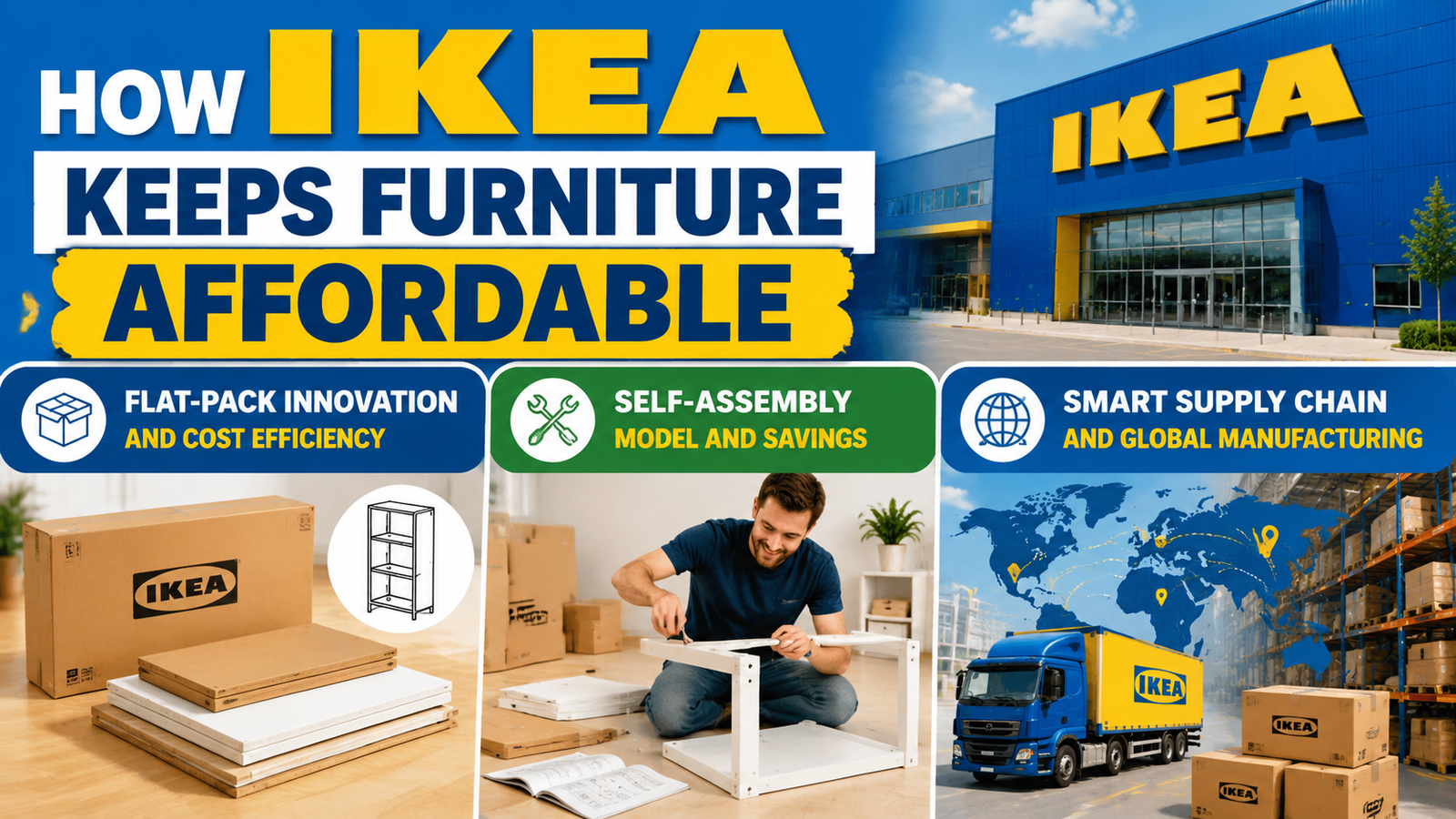
The flat-pack system is one of IKEA’s most important innovations. Instead of selling fully assembled furniture, IKEA ships products in compact packages. This reduces transportation costs, storage space, and damage during shipping.
It also allows customers to carry furniture easily and assemble it at home. This simple yet powerful idea has revolutionized the furniture industry and significantly lowered prices for consumers.
Self-Assembly Model and Savings
Self-assembly plays a major role in keeping IKEA products affordable. By eliminating the need for factory assembly or delivery installation, IKEA reduces labor costs. Customers essentially become part of the production process, which helps maintain low pricing.
While some people find assembly challenging, many appreciate the sense of accomplishment and customization it provides. It also allows IKEA to offer a wide range of products at competitive prices.
Smart Supply Chain and Global Manufacturing
IKEA operates a highly efficient global supply chain. Products are manufactured in multiple countries based on cost efficiency and material availability. Advanced logistics systems ensure smooth distribution across global markets.
This system helps IKEA maintain stable pricing even when raw material costs fluctuate. According to industry analysis, IKEA’s cost-conscious model is one of the main reasons it can continue offering affordable furniture worldwide.
Most Popular IKEA Furniture Categories
Living Room Essentials
Living room furniture from IKEA includes sofas, coffee tables, TV units, and modular seating. These products are designed for comfort and flexibility, often allowing users to customize layouts according to space.
Bedroom Solutions
IKEA bedrooms are known for smart storage beds, wardrobes, and minimalist bed frames. These designs focus on maximizing space, especially in small apartments.
Kitchen and Dining Furniture
IKEA kitchens are modular and highly customizable. Customers can design entire kitchen layouts using pre-planned systems that fit different budgets and spaces.
Storage and Organization Systems
Storage is one of IKEA’s strongest categories. From iconic shelving units to compact organizers, IKEA helps customers keep homes neat and functional.
IKEA PS 2026 and Modern Design Trends
Playful Functionality Concept
The IKEA PS 2026 collection represents a bold shift in modern furniture design. Instead of purely functional items, IKEA has introduced furniture that encourages interaction and playfulness. This concept brings joy into everyday living spaces.
Designers were encouraged to experiment with movement, flexibility, and multi-use features. As a result, furniture pieces now serve multiple purposes, such as chairs that transform into loungers or tables that double as storage units.
Multi-Functional Furniture Innovations
Modern homes demand flexibility, and IKEA responds with innovative solutions. For example, some furniture pieces can rotate, fold, or expand depending on user needs. These designs are especially useful in compact urban homes where space optimization is essential.
IKEA Pricing Strategy and Affordability Debate
Is IKEA Still Cheap in 2026?
While IKEA is still considered affordable, rising global costs have made some products more expensive compared to earlier years. However, IKEA continues to position itself as a value-driven brand rather than the cheapest option.
Value vs Quality Perspective
Customers often debate whether IKEA offers good value for money. While some products use engineered materials instead of solid wood, the trade-off is lower cost and easier availability. For many consumers, the balance between price, design, and durability makes IKEA a practical choice.
Sustainability and Circular Economy at IKEA
Buyback and Resell Programs
IKEA has introduced buyback programs where customers can return used furniture in exchange for store credit. These items are resold at lower prices, reducing waste and promoting a circular economy.
Eco-Friendly Materials and Practices
IKEA is increasingly focusing on sustainability by using renewable materials and improving energy efficiency. The brand aims to reduce environmental impact while maintaining affordability and design quality.
IKEA Shopping Experience and Online Growth
In-Store Experience vs Online Shopping
IKEA stores are designed like guided showrooms where customers explore fully furnished rooms. This experience helps customers visualize how products fit into real homes.
Online shopping, on the other hand, provides convenience and access to full catalogs. IKEA continues to invest heavily in digital platforms to improve customer experience.
Digital Tools and Planning Apps
IKEA offers design tools that allow users to plan rooms virtually. These tools help customers visualize furniture placement before making a purchase, reducing confusion and improving satisfaction.
Pros and Cons of Buying IKEA Furniture
Pros | Cons |
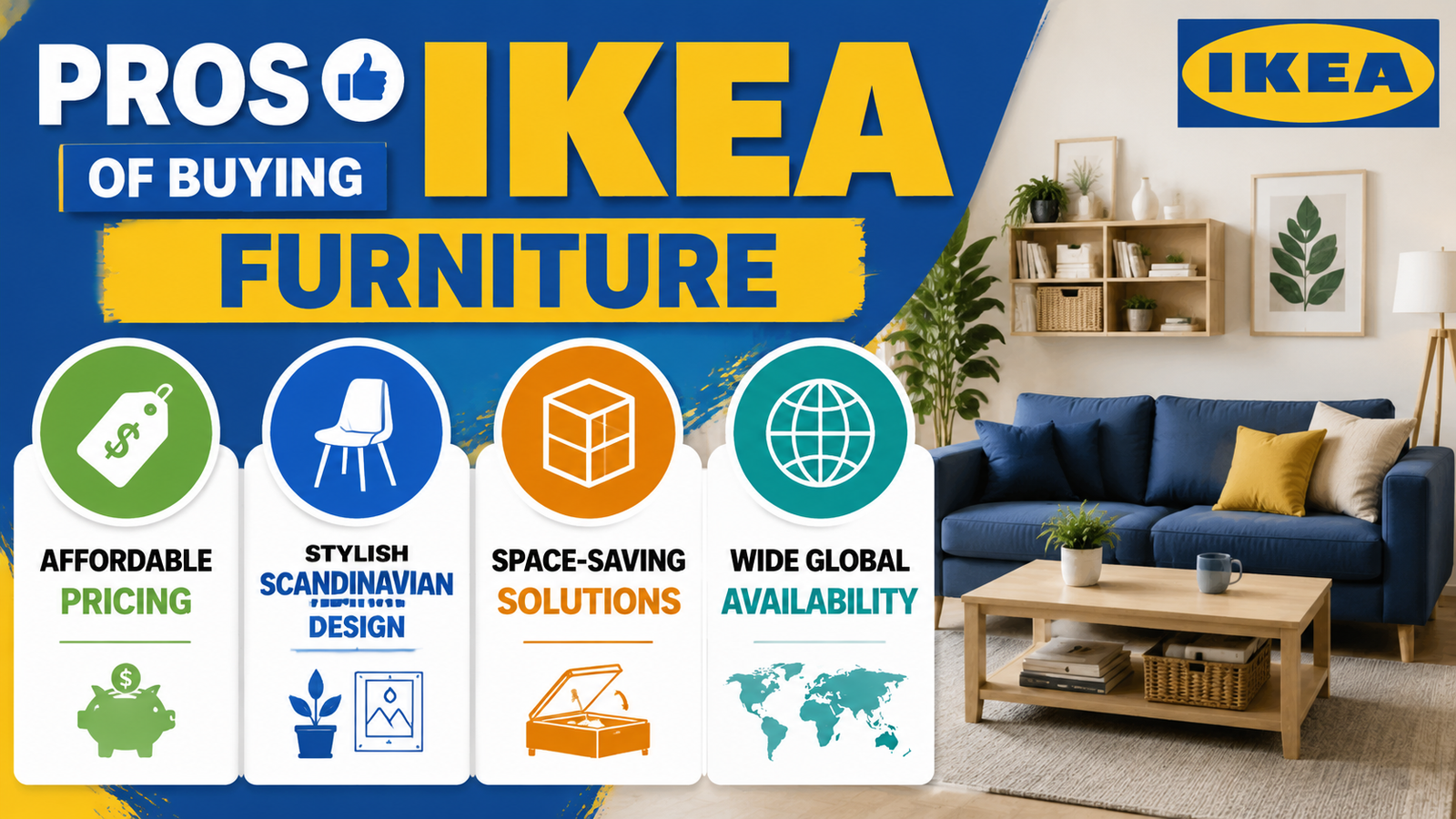
Affordable pricing | Assembly required |
Stylish Scandinavian design | Some products use engineered materials |
Space-saving solutions | Limited customization in some regions |
Wide global availability | Durability varies by product |
How IKEA Inspires Modern Home Design Trends
IKEA has a huge influence on how modern homes are designed today. Many interior designers and homeowners follow IKEA’s approach to minimalism, space efficiency, and functionality. The brand promotes the idea that a home should not only look beautiful but also feel practical and comfortable for everyday living. This has led to a global trend where people prefer clean layouts, neutral colors, and multi-purpose furniture. IKEA’s showroom designs also act as inspiration boards, helping customers visualize complete room setups instead of just individual furniture pieces.
Best IKEA Furniture Hacks for Small Homes
One of the most popular reasons people love IKEA is the flexibility of its furniture. IKEA products are often used in creative “hacks” to improve storage and functionality in small spaces. For example, a simple bookshelf can be turned into a TV unit, room divider, or even a study desk with slight modifications. This adaptability makes IKEA ideal for apartments, studio flats, and shared living spaces.
Many homeowners combine multiple IKEA products to create customized furniture solutions. Storage beds with hidden drawers, wall-mounted shelves, and foldable tables are commonly used to maximize space. These hacks are especially useful in urban cities where every square foot matters. The beauty of IKEA furniture lies in its simplicity, which allows users to personalize it according to their needs without expensive customization.
Also Read
BIK BOK Explained: Everything You Need to Know About This Fashion Brand
Terravision IT Pricing, Services, and Complete Guide for Beginners
How to Register and Play on bet-at-home.com AT Step-by-Step Guide
The Accountancy Partnership Explained: Services, Advantages, and Key Features
How Quinstreet Personal Loans (US) Helps Borrowers Find Loan Options
IKEA and the Rise of Minimalist Lifestyle
The popularity of IKEA has played a major role in the rise of minimalism as a lifestyle choice. Instead of filling homes with heavy, expensive, and unnecessary furniture, people are now choosing simple and functional designs. IKEA encourages this mindset by offering products that focus on usability rather than excess decoration.
Minimalist living is not just about design; it is also about mindset. It promotes the idea of owning fewer but more useful items, which reduces clutter and creates a peaceful environment. IKEA supports this lifestyle by designing furniture that serves multiple purposes. For example, a single table can be used for dining, studying, and working from home. This approach helps people create organized, stress-free living spaces.
IKEA Kitchen Planning: Smart and Customizable Solutions
IKEA kitchens are one of the brand’s strongest offerings. They are designed with a modular system that allows customers to plan their kitchen layout based on space, budget, and cooking habits. Instead of fixed designs, IKEA provides flexible components that can be arranged in multiple ways.
Customers can choose cabinets, drawers, countertops, and storage accessories according to their needs. This level of customization makes IKEA kitchens suitable for both small apartments and large homes. The planning tools offered by IKEA also help users visualize their kitchen before installation, making the entire process smooth and efficient. This combination of flexibility and affordability has made IKEA kitchens extremely popular worldwide.
Expert Opinions on IKEA’s Market Position
Experts often describe IKEA as a pioneer in “democratic design.” According to retail analysts, IKEA’s success lies in its ability to control costs without losing brand identity. Even as prices rise globally, IKEA continues to maintain strong customer loyalty because of its design consistency and accessibility.
Some critics argue that IKEA’s materials are not always premium, but supporters highlight the brand’s innovation in logistics and sustainability. This balance keeps IKEA relevant in an increasingly competitive furniture market.
Conclusion
IKEA has redefined what it means to furnish a home in the modern world. It blends affordability, design, and functionality in a way that few brands can match. From compact urban apartments to large family homes, IKEA offers solutions that adapt to every lifestyle. Its focus on democratic design ensures that good furniture is not reserved for the wealthy but available to everyone.
Even as trends evolve and prices shift, IKEA continues to remain a symbol of smart living and practical design. Its innovations in flat-pack systems, sustainability, and modular furniture ensure that it will remain a key player in the global home furniture industry for years to come.
Frequently Asked Questions
Yes, many IKEA products are designed for long-term use, especially items like storage systems and metal frames, though durability varies by product type.
IKEA reduces costs through flat-pack design, self-assembly, and efficient global supply chains, which eliminates unnecessary expenses.
Yes, IKEA provides delivery services in most regions and installation support for selected products and kitchens.
Products like the BILLY bookcase and KALLAX shelving units are among IKEA’s most popular items globally.
IKEA is increasingly focused on sustainability, including recycling programs, renewable materials, and energy-efficient production methods.
Table of Contents
Related Post

A Beginner’s Guide to Tally for Accounting, Inventory, and Business Management
admin
October 12, 2026
Read More »

Expert Tips for Savvy Car Insurance Savings When Comparing Insurance Policies
admin
October 11, 2026
Read More »


How to Choose the Right Coverage With Pets Best Pet Insurance for Your Pet
admin
October 10, 2026
Read More »