

Comparexpert
Comparison Between Company


How to Choose the Right Coverage With Pets Best Pet Insurance for Your Pet
Discover how to select the most suitable Pets Best Pet Insurance plan to meet your pet’s healthcare needs and your budget. Explore coverage options, premiums, deductibles, reimbursement rates, wellness benefits, and exclusions to find a suitable plan that protects your pet’s health while fitting your budget.
Table of Contents
Understanding Pets Best Pet Insurance
Pets Best Pet Insurance provides coverage options for cats and dogs, helping pet owners manage eligible veterinary costs resulting from sudden injuries or illnesses. Depending on your selected policy, covered expenses may include diagnostic tests, surgery, hospitalization, prescription medications, and treatment for certain chronic or hereditary conditions. The company offers accident-only coverage and accident and illness coverage, along with optional wellness benefits for eligible preventive care.
The best plan depends on your pet’s health risks and your financial situation. If you mainly want protection against accidental injuries, an accident-only plan may be worth considering. If you also want help with eligible illnesses, a more comprehensive accident and illness policy may offer greater protection. Before choosing, review the official Pets Best coverage options and compare the benefits available in your state.
Evaluate Your Pet's Healthcare Needs
Every pet has different healthcare needs. A young, active dog may be at risk of swallowing foreign objects or suffering an injury while playing, while an older cat may need ongoing care for a chronic illness. Think about your pet’s lifestyle, breed, age, activity level, and medical history before selecting a policy.
Consider how you would manage an unexpected veterinary bill. Would you comfortably pay a large emergency expense from savings, or would reimbursement-based insurance help you feel more financially prepared? Your answers can help determine whether basic accident protection or broader illness coverage is more appropriate.
Consider Age, Breed, and Medical History
Some breeds have a higher risk of hereditary conditions, such as hip dysplasia or certain eye disorders. Pets Best states that eligible hereditary and congenital conditions may be covered under accident and illness plans when policy requirements are met and the condition is not pre-existing.
Enrolling while your pet is healthy can help you avoid losing access to coverage for conditions that develop before the policy starts. Remember, however, that insurance does not guarantee every future treatment will be covered.
Compare Available Coverage Options
Pets Best offers different coverage types to suit different needs. Compare the main options before deciding which one best fits your pet.
Coverage type | What it may help cover | Best suited for |
Accident-only | Eligible injuries, poisoning, and swallowed objects | Pet owners seeking basic accident protection |
Accident and illness | Eligible accidents, illnesses, surgeries, and diagnostic tests | Owners seeking broader veterinary protection |
Optional wellness | Eligible preventive services, such as vaccinations and wellness exams | Owners budgeting for routine care |
Accident-Only vs. Accident and Illness Coverage
Accident-only coverage may suit pet owners who want a more limited policy focused on unexpected injuries. However, it generally will not provide the same protection for illnesses as an accident and illness plan. The broader option may be especially useful if you want financial support for eligible conditions such as infections, cancer, diabetes, or arthritis.
Compare the additional premium with the potential benefits before making your choice. A cheaper policy can be useful, but only if its coverage matches the risks you want to manage.
Key Features of Pets Best Pet Insurance
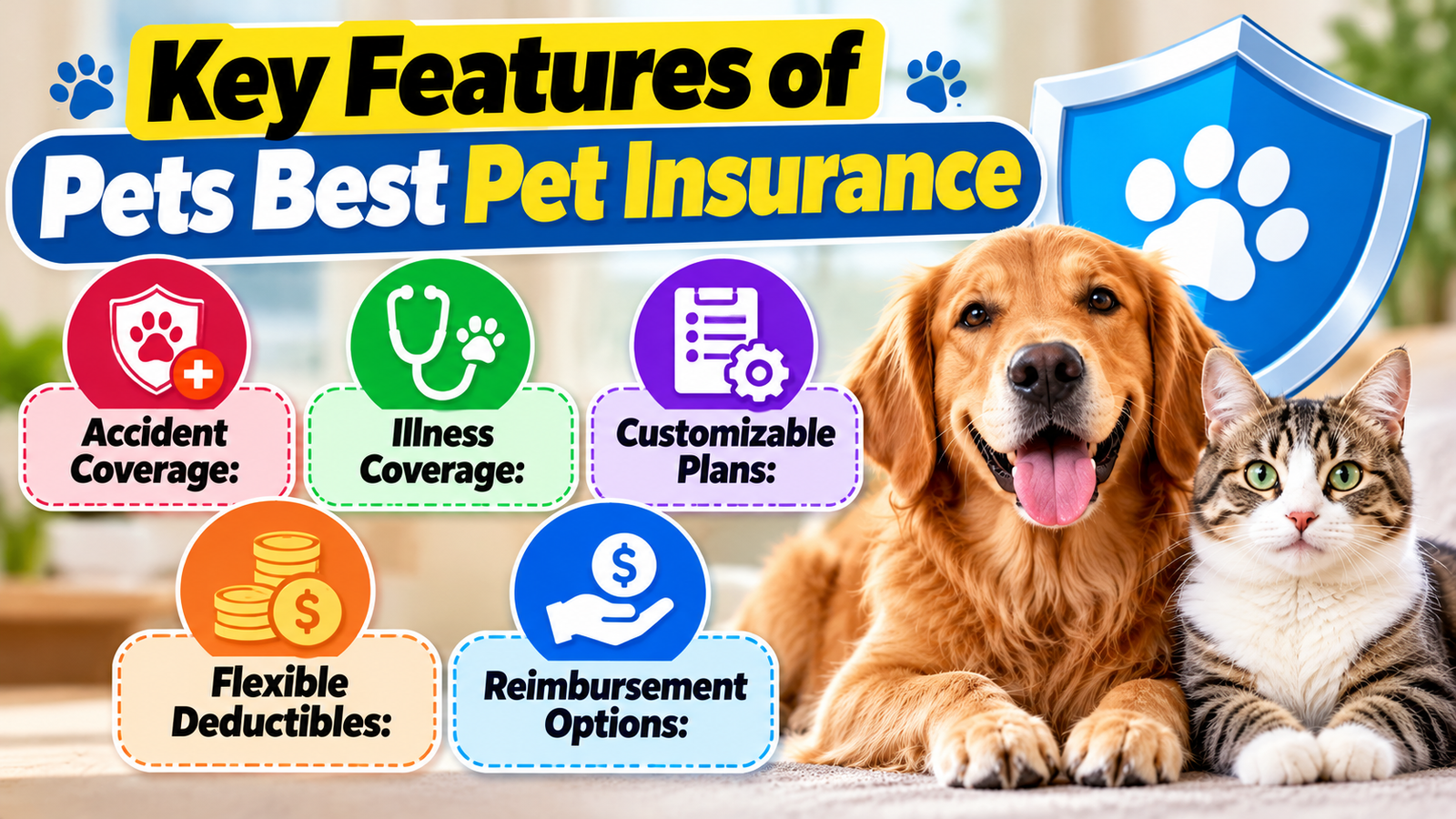
- Accident Coverage: Helps cover eligible veterinary expenses for unexpected injuries.
- Illness Coverage: Provides financial protection for eligible illnesses under qualifying plans.
- Customizable Plans: Choose from available coverage options to suit your pet’s needs.
- Flexible Deductibles: Select a deductible based on your budget and preferences.
- Reimbursement Options: Choose from available reimbursement rates for eligible veterinary expenses.
Understand Deductibles and Reimbursement Rates
Your deductible and reimbursement rate directly affect how much you pay out of pocket. A deductible is the amount you must pay toward eligible expenses before reimbursement applies under your policy. The reimbursement rate is the percentage of eligible expenses the insurer pays after applying the relevant policy terms.
For example, imagine you have a $500 deductible and an 80% reimbursement rate. If you have $2,000 in eligible expenses and have not yet met your annual deductible, a simplified calculation would leave $1,500 after the deductible. An 80% reimbursement of that amount would be $1,200, leaving you responsible for $800. This example assumes the expenses qualify and excludes other limits or adjustments.
When comparing plans, consider the following:
- A higher deductible may reduce your monthly premium but increase your initial costs.
- A higher reimbursement rate may reduce your share of eligible expenses.
- Your annual benefit limit determines how much the policy can pay within the policy year.
Choose a combination that offers reasonable premiums without leaving you unable to cover an emergency.
Review Coverage Limits and Exclusions
Before purchasing Pets Best insurance, read the policy documents carefully. Pay particular attention to annual coverage limits, waiting periods, exclusions, and any restrictions that apply to specific treatments.
Pets Best generally excludes pre-existing conditions, meaning conditions that existed before coverage began or developed during the applicable waiting period. Routine preventive care is also generally excluded from standard accident and illness coverage unless an eligible wellness benefit applies.
Ask questions about dental treatment, prescription medications, hereditary conditions, and chronic illnesses if these benefits matter to you. Policy terms can vary by state and plan, so avoid relying only on a general marketing description. Review the actual policy wording to understand what you are buying.
Compare Premiums and Your Budget
The cost of pet insurance depends on factors such as your pet’s age, breed, location, selected deductible, reimbursement rate, annual limit, and optional benefits.
Rather than choosing the lowest monthly price automatically, compare what each plan provides for that cost. A less expensive policy may have a higher deductible or lower reimbursement, while a more expensive plan may provide broader protection.
Create a simple monthly budget that includes the premium, routine veterinary visits, medications, and emergency savings. This approach helps you decide how much insurance you can maintain over time. Remember that premiums may change, so review renewal terms and future affordability before committing.
Consider Optional Wellness Coverage
Accident and illness insurance is designed primarily for unexpected veterinary expenses. Routine care, including vaccinations, wellness examinations, and preventive treatments, generally requires a separate wellness benefit if you want insurance reimbursement for eligible services.
Pets Best offers optional wellness coverage for certain preventive expenses, with benefits depending on the plan selected.
Before adding this option, estimate your expected annual preventive care costs. Compare those costs with the add-on premium and the specific reimbursement allowances. Wellness coverage may make budgeting easier, but it does not automatically mean every routine expense will be paid in full.
Understand Waiting Periods and Claims
A waiting period is the time between a policy’s effective date and when particular coverage becomes available. Pets Best applies waiting periods that can vary by coverage type and state. Conditions that begin during the applicable waiting period may be considered pre-existing under the policy.
Read the waiting-period rules before enrolling, and do not assume that an accident or illness will be covered immediately after purchasing a policy.
Pets Best generally operates on a reimbursement model: you visit a licensed veterinarian, pay the bill, submit a claim, and receive reimbursement for eligible expenses according to your policy. Keep itemized invoices, veterinary records, and other requested documents to help support your claim. Review the official Pets Best FAQ for current claims guidance.
Benefits of Choosing Pets Best Pet Insurance
Choosing the right pet insurance can make unexpected veterinary expenses easier to manage. Pets Best Pet Insurance offers coverage options for dogs and cats, allowing pet owners to select a plan based on their needs and budget. Depending on the policy, eligible expenses for accidents, illnesses, diagnostic tests, and treatments may qualify for reimbursement. Having suitable coverage can also help you focus on your pet’s recovery instead of worrying about every unexpected bill.
How to Select the Best Plan for Your Pet
Before choosing a policy, consider your pet’s age, breed, lifestyle, and medical history. Compare available plans to understand which veterinary expenses may be covered and which are excluded. You should also review the deductible, reimbursement percentage, annual coverage limits, and monthly premium. Selecting a plan that balances affordability with suitable protection can help you prepare for unexpected healthcare costs.
Benefits of Choosing Pets Best Pet Insurance
Choosing the right pet insurance can make unexpected veterinary expenses easier to manage. Pets Best Pet Insurance offers coverage options for dogs and cats, allowing pet owners to select a plan based on their needs and budget. Depending on the policy, eligible expenses for accidents, illnesses, diagnostic tests, and treatments may qualify for reimbursement. Having suitable coverage can also help you focus on your pet’s recovery instead of worrying about every unexpected bill.
Factors That Affect Pet Insurance Costs
The price of pet insurance depends on several factors, including your pet’s age, breed, location, and selected coverage options. A plan with a higher reimbursement rate or lower deductible may cost more than a policy with more limited benefits. Optional wellness coverage can also affect the overall price. Before enrolling, compare quotes and calculate whether the premium fits comfortably within your monthly budget.
What Is Not Covered by Pets Best Pet Insurance?
Understanding policy exclusions is just as important as knowing what is covered. Pre-existing conditions are generally excluded, and routine care may require an optional wellness plan. Certain treatments, services, or expenses may also be excluded depending on the policy terms. Review the official policy documents carefully so you understand the restrictions, waiting periods, and coverage limits before purchasing insurance.
Also Read
A Complete Guide to MYOB Accounting Software for Small Businesses
Important Things to Know Before Shopping on Banggood
How Drop Can Simplify Everyday Tasks and Improve Efficiency
What to Consider Before Choosing NordVPN for Your Devices
Understanding the Technology Behind Popular Olympus Imaging Products
Tips for Getting the Most From Your Pet Insurance
To make informed use of your policy, keep your pet’s veterinary records and itemized invoices organized. Read the claim submission instructions and provide all required documentation when requesting reimbursement. Schedule regular veterinary checkups and maintain preventive care, even when those expenses are not covered by your insurance plan. Review your policy at renewal to ensure that its benefits, costs, and coverage limits continue to meet your pet’s needs.
Is Pets Best Pet Insurance Worth Considering?
Pets Best Pet Insurance may be worth considering if you want financial assistance with eligible veterinary expenses for your dog or cat. The right choice depends on the benefits offered, exclusions, premium, and amount you can comfortably pay out of pocket. Compare the available options with your pet’s likely healthcare needs before making a decision. Remember that insurance helps manage eligible costs but does not eliminate every veterinary expense.
Common Mistakes to Avoid
One common mistake is buying insurance based only on its monthly price. A low premium may look attractive, but a high deductible or limited benefits could leave you paying more when your pet needs treatment. Another mistake is assuming pre-existing conditions, preventive care, and every veterinary service are automatically covered.
Avoid overlooking waiting periods and annual limits, too. These details can make a significant difference when you submit a claim. Finally, do not select a plan without considering whether you can comfortably maintain the premium over the long term.
Take time to compare quotes, read exclusions, and choose a policy based on your pet’s actual needs rather than promotional claims.
Conclusion
Choosing the right coverage with Pets Best Pet Insurance starts with understanding your pet’s health needs and your budget. Compare accident-only and accident and illness plans, review deductibles and reimbursement rates, and check annual limits and exclusions before purchasing.
Optional wellness coverage may also help with eligible preventive expenses. Most importantly, understand the policy’s waiting periods and pre-existing condition rules. By comparing your options carefully, you can select coverage that supports your pet’s healthcare needs while helping you prepare for unexpected veterinary costs.
Frequently Asked Questions
Depending on your plan, it may cover eligible accidents, illnesses, surgeries, diagnostic tests, hospitalization, and prescription medications. Optional wellness benefits may help with certain preventive expenses. Coverage is subject to policy terms and exclusions.
Generally, no. Conditions that existed before coverage began or developed during an applicable waiting period are typically excluded. Certain cured conditions may qualify for future coverage under specific policy requirements.
Accident-only coverage may suit owners primarily concerned about unexpected injuries. However, it does not offer the same illness protection as an accident and illness plan. Consider your pet's health risks and available budget before deciding.
Choose a deductible you could comfortably pay if your pet needs treatment. A higher deductible may reduce your premium, while a lower deductible can reduce the amount you pay before reimbursement applies. Compare the available options before enrolling.
Standard accident and illness coverage generally does not cover routine preventive care. Optional wellness coverage may reimburse eligible expenses such as wellness exams and vaccinations, depending on the selected plan.
Table of Contents
Related Post