

Comparexpert
Comparison Between Company


Exploring the Best Products, Features, and Innovations From Waterdrop (US)
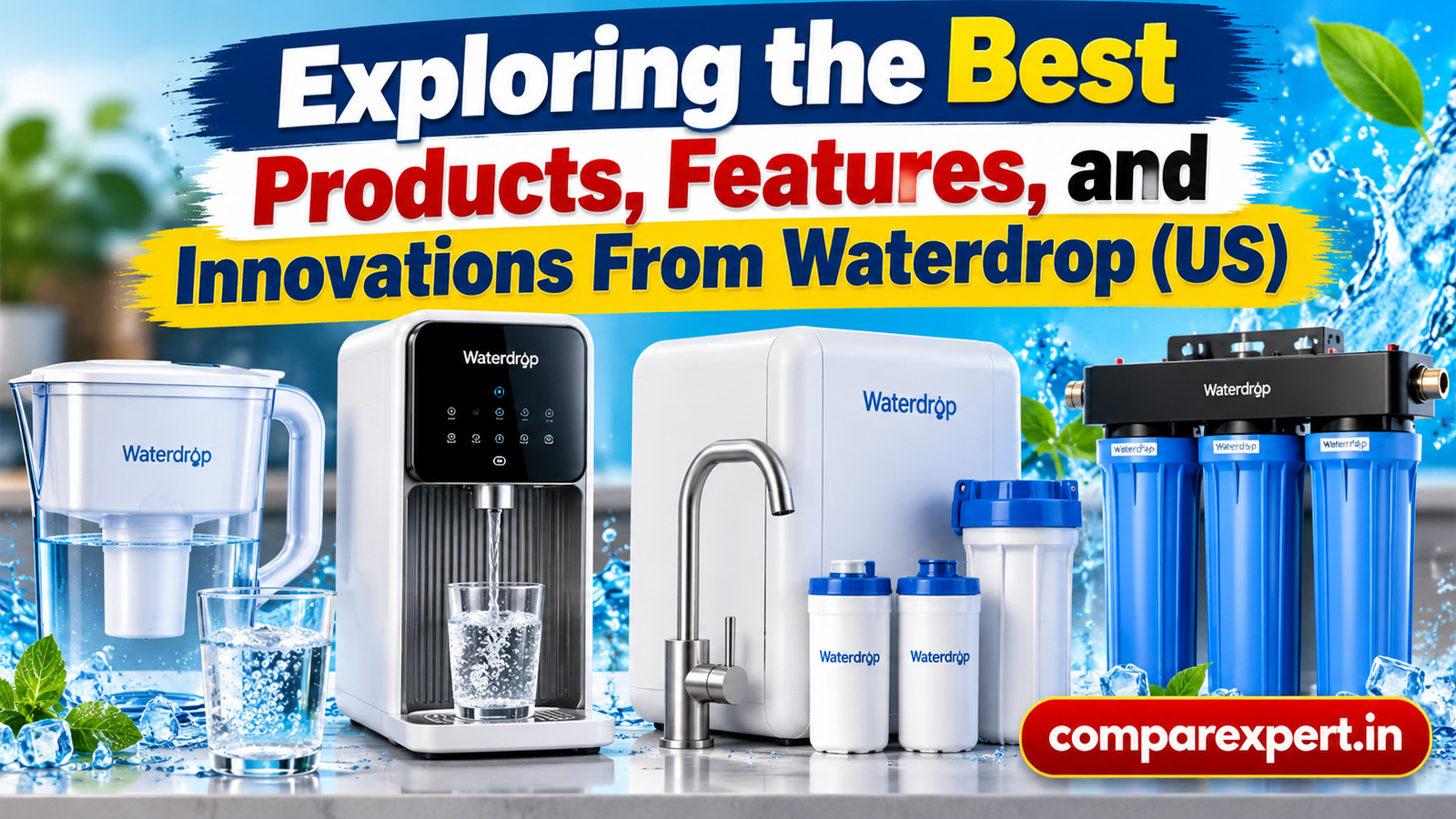
Explore Waterdrop (US) to discover the best water filtration products, innovative features, and advanced purification technologies. Learn about reverse osmosis systems, under-sink filters, countertop dispensers, and whole-house filtration solutions to find the right option for your home.
Table of Contents
Introduction to Waterdrop
Clean drinking water is an essential part of everyday life, and choosing the right filtration system can make a noticeable difference in your kitchen. Waterdrop (US) offers a wide range of water filtration products, including reverse osmosis systems, countertop dispensers, under-sink filters, and whole-house filtration solutions. Its product lineup focuses on combining water treatment technology with convenient designs for modern households.
Whether you want better-tasting drinking water, a compact solution for an apartment, or an advanced system for your entire home, Waterdrop offers several options worth exploring. The best choice depends on your water quality, available space, household size, and budget.
Best Waterdrop Products in the US
Waterdrop offers products for different needs, from simple filtration to advanced purification. Below are a few noteworthy options worth considering.
Waterdrop X Series Reverse Osmosis Systems
The Waterdrop X Series, including the X12 and X16, is designed for households that want high-capacity reverse osmosis filtration. The X12 offers a stated capacity of 1,200 gallons per day, while the X16 is rated at 1,600 gallons per day. The product range features multi-stage filtration, alkaline remineralization, and a smart faucet, depending on the model.
These systems are particularly suitable for busy households that regularly use filtered water for drinking, cooking, and preparing beverages. However, reverse osmosis systems generally cost more than basic carbon filters and require periodic replacement filters. Before purchasing, check the installation requirements and the specific contaminant-reduction claims for your chosen model.
Waterdrop G3P800 Tankless Reverse Osmosis System
For households looking for high-capacity filtration without a conventional storage tank, the Waterdrop G3P800 is another choice. Its advertised capacity is 800 gallons per day, and its tankless design helps save under-sink space. The company also highlights its fast installation and lead-reduction performance.
This model may suit families that want a steady supply of filtered water while keeping the area beneath the kitchen sink relatively uncluttered. Remember that the stated daily capacity is a laboratory or rated performance figure, not a guarantee of the exact amount you will receive under every household’s water pressure and operating conditions.
Waterdrop M6CG Countertop Reverse Osmosis System
The Waterdrop M6CG combines reverse osmosis filtration with hot and cold water dispensing and remineralization features. Its countertop design makes it attractive to people who want filtered water without installing a permanent under-sink system. The manufacturer advertises adjustable water dispensing and a detachable glass pitcher for everyday use.
This type of product can be convenient for renters, small kitchens, and households that frequently prepare tea, coffee, or cold drinks. Since countertop models occupy space on your work surface and may require refilling a water tank, measure your available area and consider your daily water consumption before buying.
Waterdrop Under-Sink Carbon and Ultrafiltration Filters
For people who prefer a simpler installation, Waterdrop sells direct-connect carbon filtration and ultrafiltration systems. These products can be suitable when the main goal is improving taste, reducing chlorine, or targeting other contaminants specified for the particular filter. Some models list NSF/ANSI certifications for particular standards, so it is important to verify the exact certification and model before purchasing.
Compared with reverse osmosis systems, these filters may be more affordable and easier to maintain. However, they do not necessarily remove the same range of dissolved substances as reverse osmosis. Always match the filtration technology to your water test results and the contaminants you actually need to address.
Key Features of Waterdrop Products
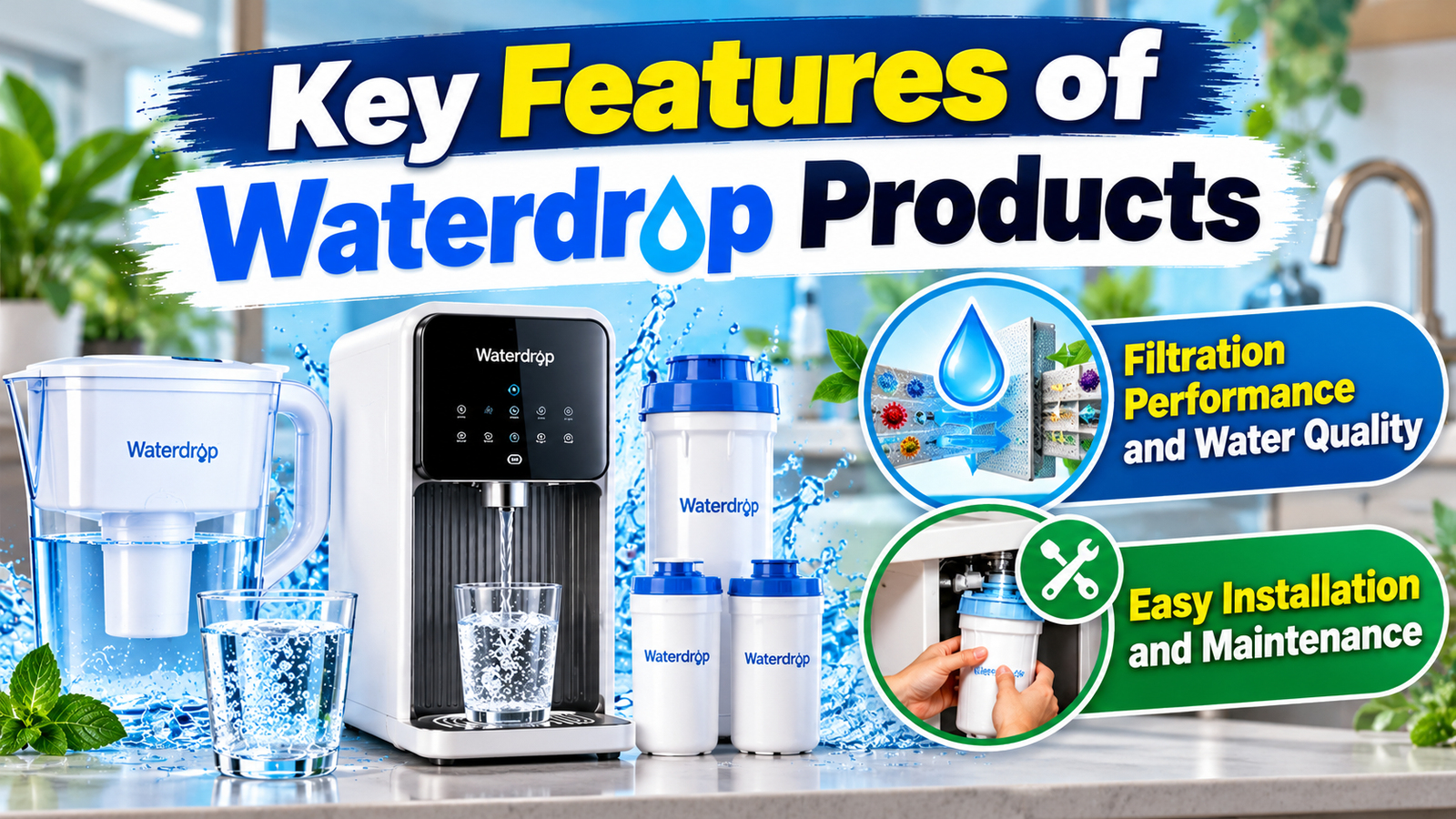
Filtration Performance and Water Quality
Waterdrop’s product range includes carbon filtration, ultrafiltration, and reverse osmosis technologies. Carbon filters commonly help reduce chlorine and improve taste and odor, while ultrafiltration targets particles and substances specified by its membrane design. Reverse osmosis can reduce many dissolved contaminants, although performance depends on the system and the substances being tested.
Certifications are especially important when comparing products. Look for the exact model’s independent certification and the applicable NSF/ANSI standard, rather than relying on general statements about a brand or filtration technology. For example, NSF/ANSI 42 relates to aesthetic effects such as taste and odor, while NSF/ANSI 58 covers reverse osmosis systems. A certification under one standard does not prove removal of every possible contaminant.
Easy Installation and Maintenance
Installation requirements vary across Waterdrop products. Some direct-connect filters are designed to fit beneath a sink, while countertop systems generally require less permanent plumbing work. Tankless reverse osmosis systems can save storage space, but they may still need a suitable water connection, drainage, and an electrical outlet.
Maintenance is equally important. Filters need replacement according to their recommended service life, water usage, and local water conditions. Keeping track of replacement schedules helps maintain performance and avoids assuming that an old filter will continue working effectively indefinitely.
Waterdrop's Innovations in Water Filtration
Waterdrop’s recent product development highlights the growing demand for convenient, space-saving, and feature-rich water treatment. Its X Series emphasizes high-capacity tankless reverse osmosis, while countertop systems such as the M6CG combine filtration with hot and cold dispensing. These designs aim to make filtered water easier to access throughout daily routines.
At the 2026 Kitchen & Bath Industry Show, Waterdrop also presented products including the MASTER WHS01 whole-house reverse osmosis system and the IM1 countertop reverse osmosis system with an integrated ice maker. These announcements illustrate the company’s interest in expanding beyond traditional drinking-water filters. Product availability and final specifications should be confirmed on the US website before making a purchase.
Waterdrop (US): Smart Solutions for Everyday Drinking Water
Water quality is an important part of maintaining a comfortable and healthy home. Waterdrop (US) offers a variety of filtration solutions designed to make access to filtered water more convenient. From compact countertop purifiers to advanced reverse osmosis systems, its products cater to different household needs and kitchen layouts. When choosing a filtration system, consider your local water quality, available space, daily consumption, and the specific contaminants you want to reduce.
Advanced Filtration Technology for Modern Homes
One of the main attractions of Waterdrop products is the variety of filtration technologies available. Carbon filters can help improve water taste and odor, while reverse osmosis systems can reduce many dissolved contaminants when designed and certified for that purpose. Some models also incorporate multiple filtration stages to address different types of impurities. Before purchasing, review the performance specifications and independent certifications of the exact model to understand what it can and cannot remove.
Waterdrop (US) and Space-Saving Designs
Modern kitchens often have limited storage space, making product design an important consideration. Waterdrop’s tankless under-sink systems are designed to reduce the space occupied by traditional storage tanks, while countertop models offer an alternative for people who prefer not to modify their plumbing. These options can be especially useful in apartments, smaller homes, or renovated kitchens. Comparing product dimensions, installation requirements, and access to replacement filters can help you find a practical long-term solution.
Maintenance and Filter Replacement Tips
Regular maintenance helps keep a water filtration system operating as intended. Filter replacement frequency depends on the model, water quality, and the amount of water used each day. Waiting too long to replace a cartridge may affect filtration performance and water flow, so follow the manufacturer’s recommended schedule. It is also helpful to check replacement-filter prices before buying a system, because ongoing maintenance contributes to the total cost of ownership.
Is Waterdrop (US) Worth Considering?
Waterdrop (US) may be worth considering if you want to compare different filtration technologies and product styles in one brand’s lineup. Its range includes options for people who need basic taste improvement as well as households looking for more advanced reverse osmosis filtration. However, the most expensive or feature-rich model is not necessarily the best choice for everyone. Identify your water treatment needs first, then compare certifications, capacity, installation costs, warranty terms, and replacement-filter availability.
Waterdrop (US) for Different Household Needs
Every household has different water filtration requirements, so choosing a suitable system depends on how you use water throughout the day. Waterdrop (US) offers options for individuals, couples, and families who want convenient access to filtered water. Smaller households may prefer a countertop purifier, while larger families might benefit from a higher-capacity reverse osmosis system. Comparing daily water consumption, filtration performance, and maintenance requirements can help you make a more informed decision.
Benefits of Choosing Waterdrop
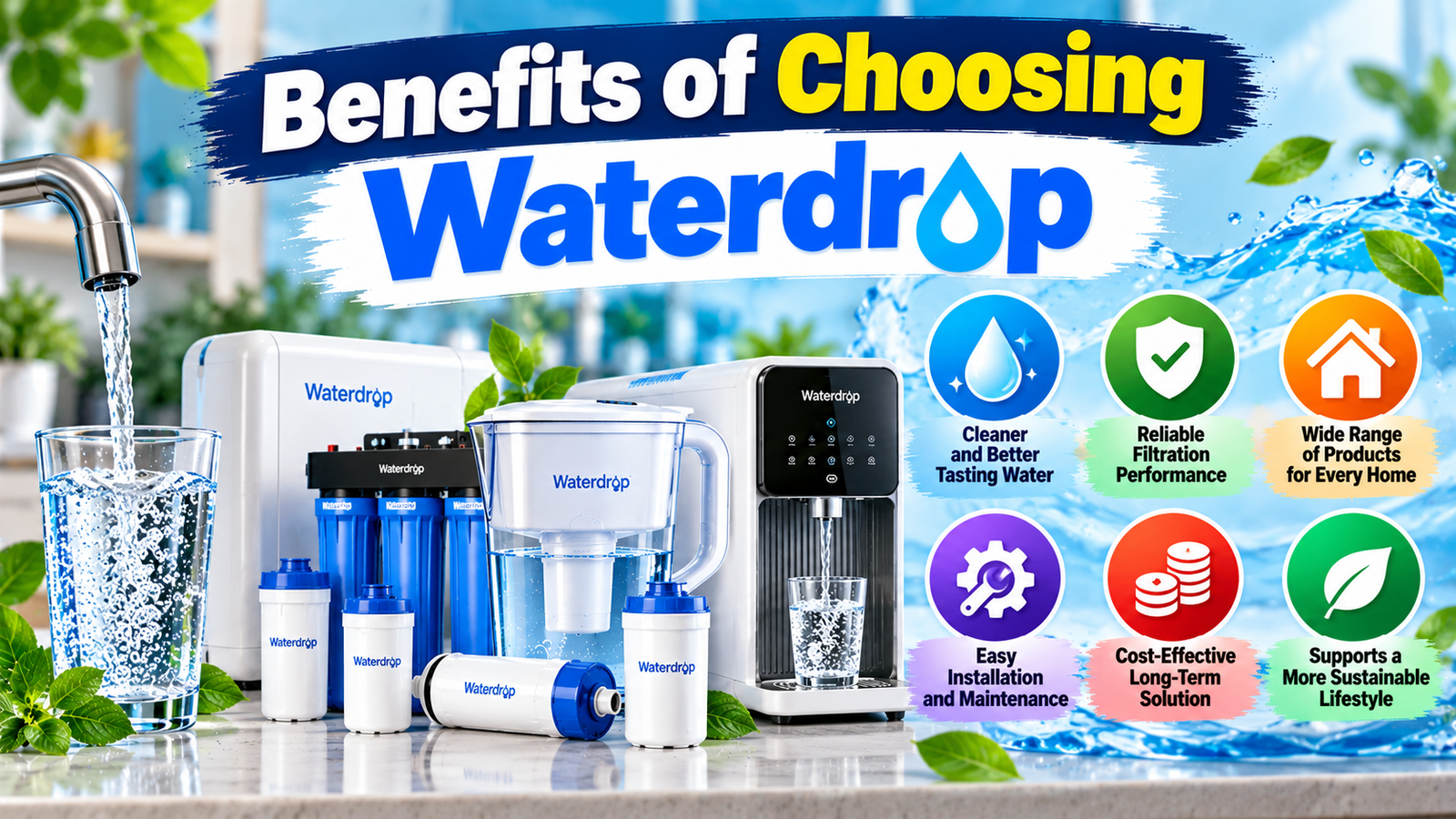
One advantage of Waterdrop is its variety. Instead of offering only one type of filter, the company provides solutions for different kitchens, budgets, and water treatment needs. Customers can compare countertop systems, under-sink filters, reverse osmosis units, and whole-house products in one product range.
Convenience is another potential benefit. Tankless designs can free up cabinet space, while countertop dispensers with temperature controls can simplify making hot drinks or accessing chilled water. The actual benefit depends on your household’s habits, available space, and willingness to maintain the equipment.
Long-term cost also deserves attention. A filtration system may reduce your dependence on bottled water, but the initial price, replacement cartridges, electricity, water usage, and installation expenses all contribute to the total cost of ownership.
How to Choose the Right Waterdrop Product
Choosing the best Waterdrop filter starts with understanding your water supply and everyday needs. If your municipal water already meets applicable drinking-water standards and your main concern is taste, a basic carbon filter may be sufficient. If testing identifies dissolved contaminants that require more advanced treatment, a suitably certified reverse osmosis system may be a better choice.
Your home setup matters, too. Renters may prefer portable countertop systems, while homeowners planning a permanent kitchen upgrade might consider an under-sink model. Larger households should compare rated capacity, filter life, flow rate, and the cost of replacement cartridges before deciding.
Your requirement | Product type to consider |
Better taste and odor | Carbon water filter |
Advanced dissolved-contaminant reduction | Reverse osmosis system |
Limited kitchen space | Compact tankless system |
Hot and cold filtered water | Countertop RO dispenser |
Treatment at multiple household taps | Whole-house filtration |
Understanding Waterdrop Filter Replacement Costs
The purchase price is only one part of the cost of owning a water filtration system. Replacement cartridges, installation, electricity for powered units, and other operating expenses can affect your long-term budget. Before choosing a Waterdrop water filter, check the price and availability of compatible replacement cartridges and confirm the recommended replacement interval. A system with a lower upfront cost may not always be the least expensive option over several years.
Also Read
A Complete Guide to Choosing the Right K9 Training Institute in India
The Ultimate Guide to Choosing the Best Anolon Cookware for Your Kitchen
How Does Uber Eats Global Delivery Work Across Different Countries?
What Investors Should Know Before Choosing Hargreaves Lansdown
Everything You Need to Know About Breeze Before Choosing It
Waterdrop and Sustainable Water Consumption
Using a home filtration system may help some households reduce their reliance on single-use bottled water. Reusable bottles and refillable containers can also make filtered water easier to carry to work, school, or outdoor activities. However, sustainability depends on the product’s filter materials, packaging, lifespan, electricity use, and water efficiency. Reverse osmosis systems can produce wastewater, so comparing their water recovery rates is particularly useful if water conservation is a priority.
What to Check Before Installing a Waterdrop System
Before installation, make sure the selected product is compatible with your home’s plumbing and water supply. Check the required water pressure, available cabinet dimensions, electrical requirements, and whether a drain connection is needed. Some systems are designed for DIY installation, while others may require professional assistance. Following the manufacturer’s installation instructions helps avoid leaks, connection problems, and unnecessary maintenance issues.
Pros and Cons of Waterdrop Products
Waterdrop’s main strength is its broad product selection, which allows customers to choose between simple filtration and more advanced systems. Features such as tankless designs, countertop dispensing, and integrated temperature controls can also make filtered water more convenient.
However, some advanced models require a larger initial investment and ongoing maintenance. Reverse osmosis systems may produce wastewater, depending on their design and operating conditions, while countertop units take up valuable counter space. Performance also varies between models, so no single product should be assumed to remove every contaminant.
Pros | Cons |
Wide range of filtration options | Advanced models can be expensive |
Space-saving tankless designs | Replacement filters add ongoing costs |
Convenient countertop dispensing options | Some systems require plumbing or electricity |
Options for different household needs | Filtration performance varies by model |
Conclusion
Waterdrop (US) offers a diverse selection of water filtration products, from straightforward under-sink filters to high-capacity reverse osmosis systems and multifunction countertop dispensers. Models such as the X12, G3P800, and M6CG stand out for their different approaches to capacity, space efficiency, and convenience.
The best product ultimately depends on your water quality, budget, household size, and installation preferences. Compare independent certification details, contaminant-reduction claims, maintenance costs, and filter availability before buying. With the right system, you can make filtered water a convenient part of your daily routine.
Frequently Asked Questions
Waterdrop offers a broad range of filtration technologies and product designs. Whether it is right for you depends on the particular model's performance, certification, price, and maintenance requirements.
A compact countertop dispenser or tankless under-sink system may be suitable. Choose based on your available space, plumbing access, and daily water requirements.
Some Waterdrop models advertise lead reduction. Check the exact product's independently verified performance claims and applicable certification before purchasing.
Replacement intervals depend on the model, filter type, water quality, and usage. Follow the manufacturer's instructions for your specific system rather than applying one schedule to every product.
Reverse osmosis can reduce a broader range of dissolved contaminants than many basic carbon filters. However, the best option depends on which contaminants are present and what treatment your water actually needs.
Table of Contents
Related Post


Top Benefits of Using Sesame Care for Convenient Online Medical Consultations
admin
October 21, 2026
Read More »

A Complete Guide to Choosing the Right K9 Training Institute in India
admin
October 21, 2026
Read More »

What Pet Owners Should Know About Pets Best Pet Insurance Before Buying
admin
October 20, 2026
Read More »

How Peanut Butter & Co. Stands Out in the Competitive Peanut Butter Market
admin
October 19, 2026
Read More »